
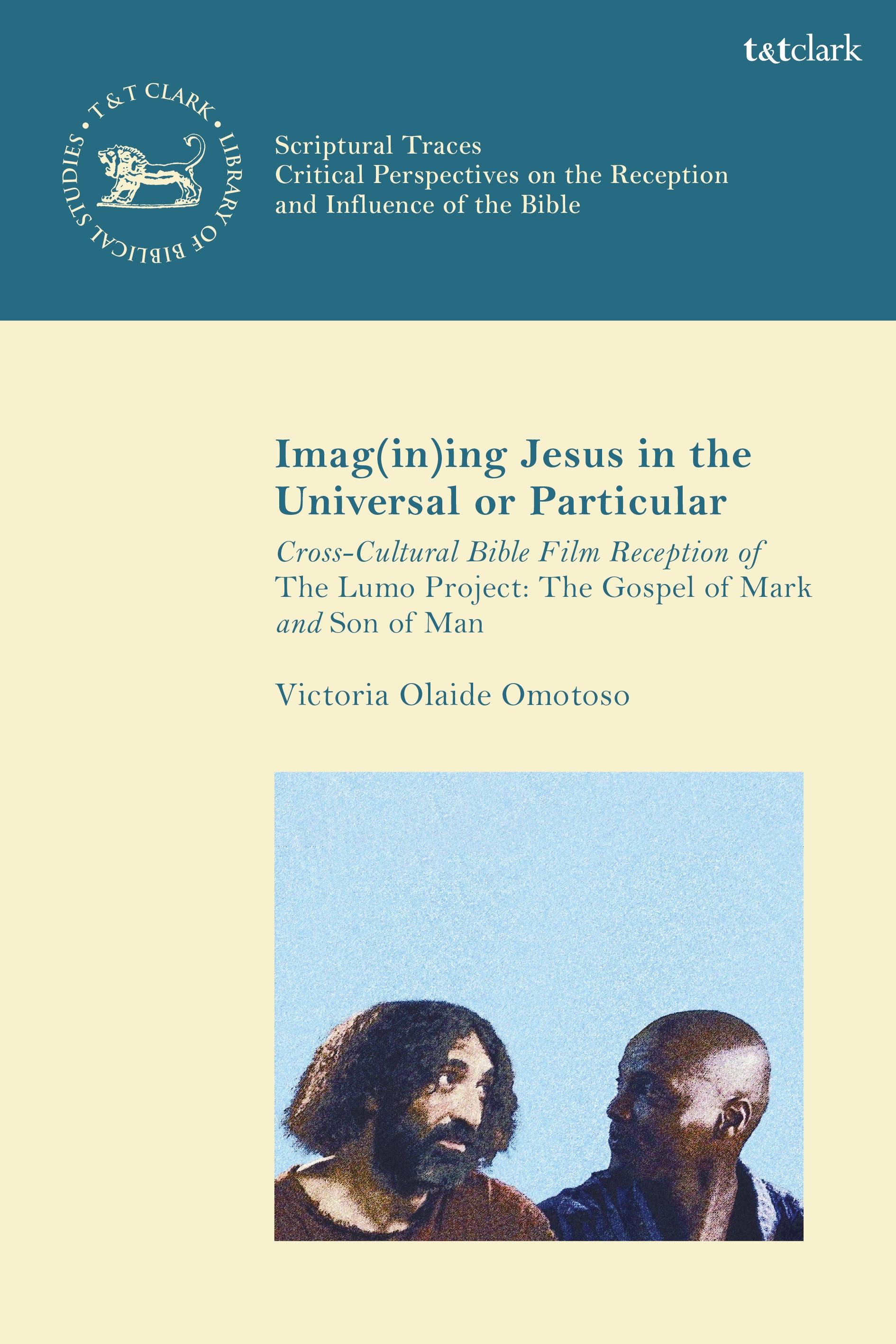
This volume is a critical exploration of cross-cultural Bible film reception presented through an analysis of the responses of UK and South African audiences to The Lumo Project: The Gospel of Mark (2014) and Son of Man (2006). Victoria Olaide Omotoso places emphasis on audience reception and highlighting the non-Western experience of biblical films by examining the responses of audiences from different cultural contexts to identical media, with a cross-cultural audience discourse facilitated by cultural dynamics: fidelity to the (biblical) text, ethnicity, music, and gender. By examining historic and cinematic debates, audience responses and filmmaker responses, Omotoso explores the ethnicity of Jesus, theological contexts and implications, and the presentation of Jesus in an androcentric world.
Omotoso adopts the concepts of universality and particularity as frameworks to determine the ways through which the filmmakers attempt to identify their cinematic visions and locations. She defines universality as a phenomenon through which the filmmaker seeks to place the narrative within a trans-cultural frame for a global audience; in contrast, her definition of particularity is envisioning a unitary and specific cultural context for the narrative. By exploring fidelity to the text, the ethnic identity of Jesus, musical contexts, masculinity and female agency, the universal and particular are shown as complex, contested, and shifting concepts within the process of cross-cultural audience reception, which frequently destabilizes the intentions of the filmmakers.
Omotoso adopts the concepts of universality and particularity as frameworks to determine the ways through which the filmmakers attempt to identify their cinematic visions and locations. She defines universality as a phenomenon through which the filmmaker seeks to place the narrative within a trans-cultural frame for a global audience; in contrast, her definition of particularity is envisioning a unitary and specific cultural context for the narrative. By exploring fidelity to the text, the ethnic identity of Jesus, musical contexts, masculinity and female agency, the universal and particular are shown as complex, contested, and shifting concepts within the process of cross-cultural audience reception, which frequently destabilizes the intentions of the filmmakers.
Paga facilmente con carta, Klarna, Apple Pay o Google Pay. Non sei soddisfatto? Hai sempre 14 giorni per il rimborso. Leggi di più nei nostri termini. Per qualsiasi domanda, scrivici a hello@memmo.org.
Memmo rende lo studio più facile, ovunque tu sia nel mondo. Qui trovi i tuoi libri di testo e strumenti di studio intelligenti, tutto in un unico posto: riassunti, quiz, podcast e flashcard. E poi c'è Ted, il tuo compagno di studio che risponde a ogni tua domanda. Oltre 50.000 studenti studiano già qui: è stato creato per aiutarti a imparare più velocemente e a stressarti meno.