
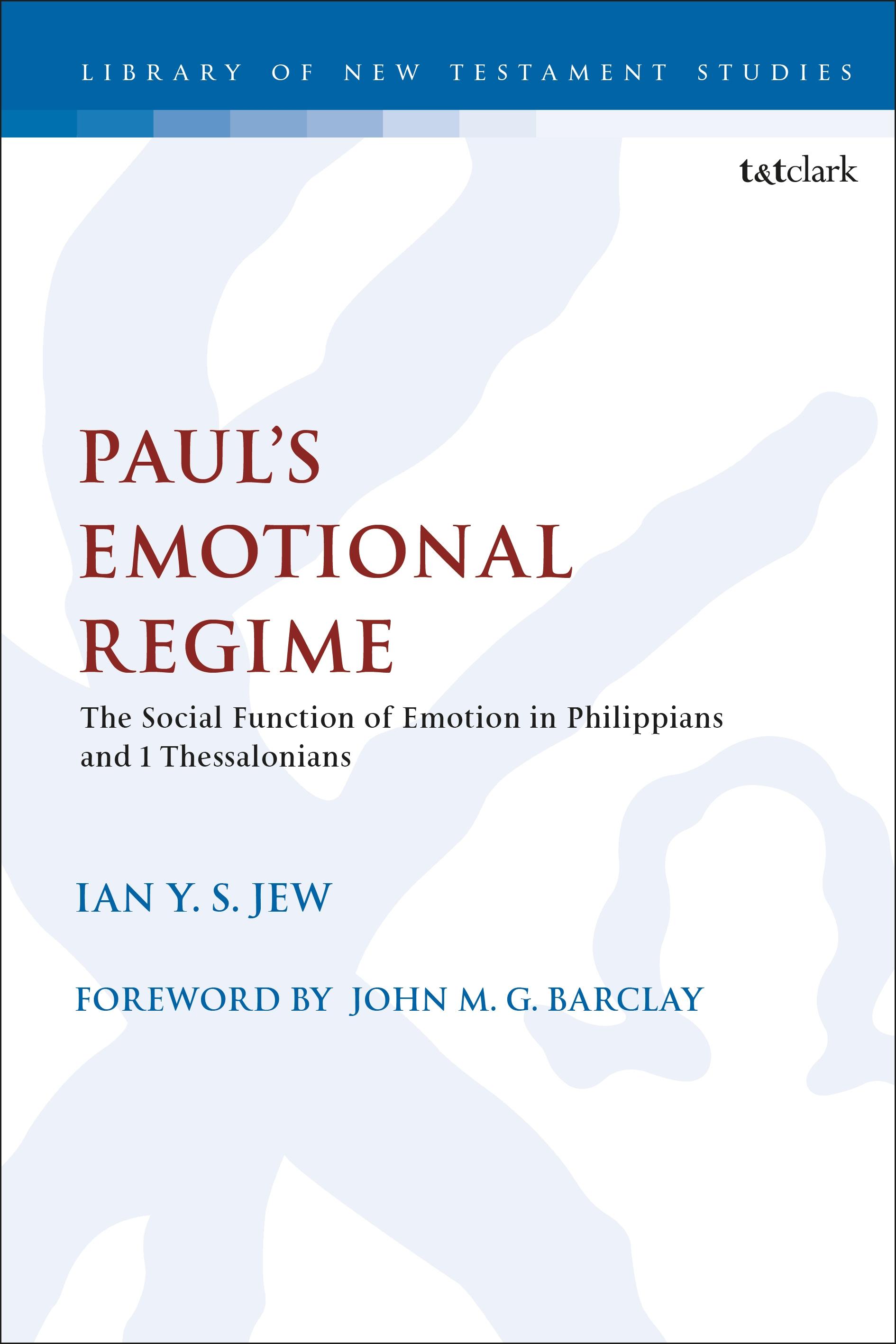
In his letters Paul speaks often of his emotions, and also promotes certain feelings while banishing others. This indicates that for Paul, emotion is vital. However, in New Testament studies, the study of emotions is still nascent; current research in the social sciences highlights its cognitive and social dimensions. Ian Y. S. Jew combines rigorous social-scientific analysis and exegetical enquiry to argue that emotions are intrinsic to the formation of the Pauline communities, as they encode belief structures and influence patterns of social experience.
By taking joy in Philippians and grief in 1 Thessalonians as representative emotions, and contrasting Paul's approach with that of his Stoic contemporaries, Jew demonstrates that authorized feelings have socially integrating and differentiating functions; by reinforcing the shared theological realities upon which emotional norms are based, group belonging is bolstered. Simultaneously, authorized emotions fortify the theological boundaries between Christians and others, which strengthens group solidarity in the Church by accentuating its members' insider status. Using this framework heuristically, Jew explores how the interplay of symbolic, ritual, and social elements within Paul's eschatological worldview reinforces emotional norms, and demonstrates that attention to emotion can only deepen our understanding of the social formation of the early believers.
By taking joy in Philippians and grief in 1 Thessalonians as representative emotions, and contrasting Paul's approach with that of his Stoic contemporaries, Jew demonstrates that authorized feelings have socially integrating and differentiating functions; by reinforcing the shared theological realities upon which emotional norms are based, group belonging is bolstered. Simultaneously, authorized emotions fortify the theological boundaries between Christians and others, which strengthens group solidarity in the Church by accentuating its members' insider status. Using this framework heuristically, Jew explores how the interplay of symbolic, ritual, and social elements within Paul's eschatological worldview reinforces emotional norms, and demonstrates that attention to emotion can only deepen our understanding of the social formation of the early believers.
Pagine: 224
Categoria: Religion & Teologi
e-ISBN: 9780567694157
Peso di spedizione: 1.2 kg
Spedito in: 1-2 giorni
Paga facilmente con carta, Klarna, Apple Pay o Google Pay. Non sei soddisfatto? Hai sempre 14 giorni per il rimborso. Leggi di più nei nostri termini. Per qualsiasi domanda, scrivici a hello@memmo.org.
Memmo rende lo studio più facile, ovunque tu sia nel mondo. Qui trovi i tuoi libri di testo e strumenti di studio intelligenti, tutto in un unico posto: riassunti, quiz, podcast e flashcard. E poi c'è Ted, il tuo compagno di studio che risponde a ogni tua domanda. Oltre 50.000 studenti studiano già qui: è stato creato per aiutarti a imparare più velocemente e a stressarti meno.