
CHOICE Outstanding Academic Title, 2022
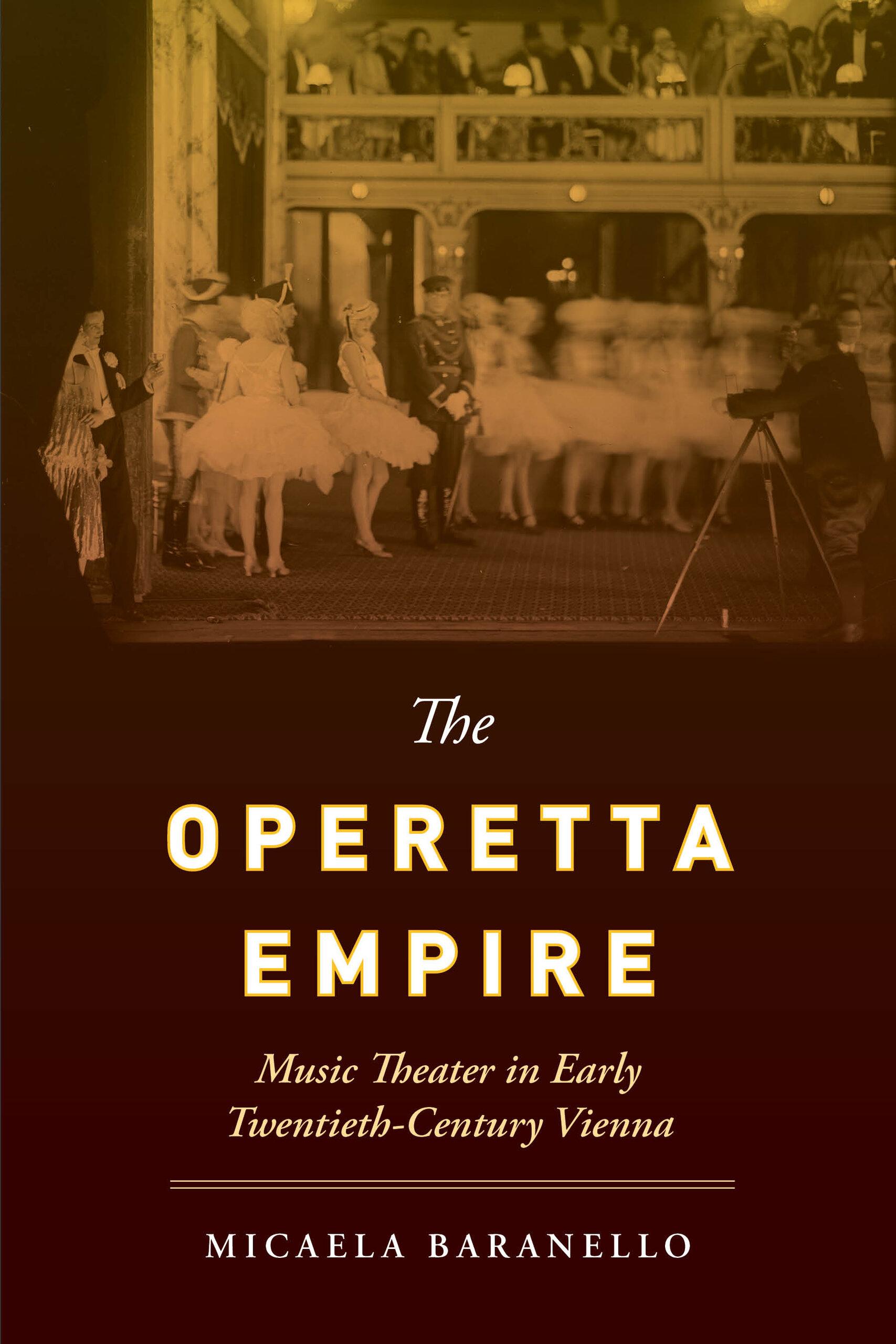
"When the world comes to an end," Viennese writer Karl Kraus lamented in 1908, "all the big city orchestras will still be playing The Merry Widow." Viennese operettas like Franz Lehár's The Merry Widow were preeminent cultural texts during the Austro-Hungarian Empire's final years. Alternately hopeful and nihilistic, operetta staged contemporary debates about gender, nationality, and labor. The Operetta Empire delves into this vibrant theatrical culture, whose creators simultaneously sought the respectability of high art and the popularity of low entertainment. Case studies examine works by Lehár, Emmerich Kálmán, Oscar Straus, and Leo Fall in light of current musicological conversations about hybridity and middlebrow culture. Demonstrating a thorough mastery of the complex early twentieth-century Viennese cultural scene, and a sympathetic and redemptive critique of a neglected popular genre, Micaela Baranello establishes operetta as an important element of Viennese cultural life—one whose transgressions helped define the musical hierarchies of its day.
"When the world comes to an end," Viennese writer Karl Kraus lamented in 1908, "all the big city orchestras will still be playing The Merry Widow." Viennese operettas like Franz Lehár's The Merry Widow were preeminent cultural texts during the Austro-Hungarian Empire's final years. Alternately hopeful and nihilistic, operetta staged contemporary debates about gender, nationality, and labor. The Operetta Empire delves into this vibrant theatrical culture, whose creators simultaneously sought the respectability of high art and the popularity of low entertainment. Case studies examine works by Lehár, Emmerich Kálmán, Oscar Straus, and Leo Fall in light of current musicological conversations about hybridity and middlebrow culture. Demonstrating a thorough mastery of the complex early twentieth-century Viennese cultural scene, and a sympathetic and redemptive critique of a neglected popular genre, Micaela Baranello establishes operetta as an important element of Viennese cultural life—one whose transgressions helped define the musical hierarchies of its day.
Pagine: 250
Categoria: Musikvetenskap
e-ISBN: 9780520976542
Peso di spedizione: 1.2 kg
Spedito in: 1-2 giorni
Paga facilmente con carta, Klarna, Apple Pay o Google Pay. Non sei soddisfatto? Hai sempre 14 giorni per il rimborso. Leggi di più nei nostri termini. Per qualsiasi domanda, scrivici a hello@memmo.org.
Memmo rende lo studio più facile, ovunque tu sia nel mondo. Qui trovi i tuoi libri di testo e strumenti di studio intelligenti, tutto in un unico posto: riassunti, quiz, podcast e flashcard. E poi c'è Ted, il tuo compagno di studio che risponde a ogni tua domanda. Oltre 50.000 studenti studiano già qui: è stato creato per aiutarti a imparare più velocemente e a stressarti meno.
Potrebbe interessarti anche
Acquista il libro0