
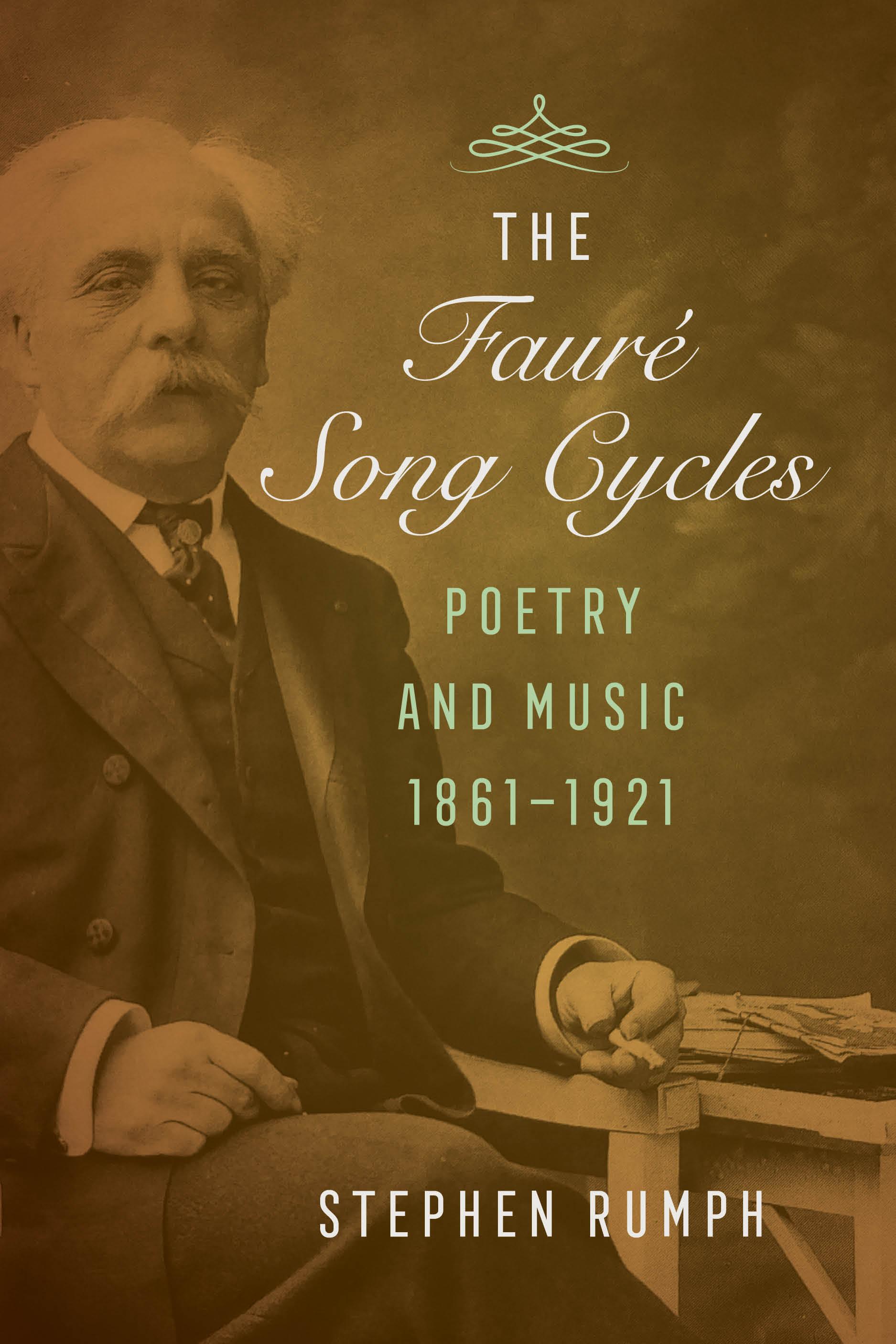
Gabriel Fauré’s mélodies offer an inexhaustible variety of style and expression that have made them the foundation of the French art song repertoire. During the second half of his long career, Fauré composed all but a handful of his songs within six carefully integrated cycles. Fauré moved systematically through his poetic contemporaries, exhausting Baudelaire’s Les fleurs du mal before immersing himself in the Parnassian poets. He would set nine poems by Armand Silvestre in swift succession (1878-84), seventeen by Paul Verlaine (1887-94), and eighteen by Charles Van Lerberghe (1906-14). As an artist deeply engaged with some of the most important cultural issues of the period, Fauré reimagined his musical idiom with each new poet and school, and his song cycles show the same sensitivity to the poetic material. Far more than Debussy, Ravel, or Poulenc, he crafted his song cycles as integrated works, reordering poems freely and using narratives, key schemes, and even leitmotifs to unify the individual songs. The Fauré Song Cycles explores the peculiar vision behind each synthesis of music and verse, revealing the astonishing imagination and insight of Fauré’s musical readings. This book offers not only close readings of Fauré’s musical works but an interdisciplinary study of how he responded to the changing schools and aesthetic currents of French poetry.
Paga facilmente con carta, Klarna, Apple Pay o Google Pay. Non sei soddisfatto? Hai sempre 14 giorni per il rimborso. Leggi di più nei nostri termini. Per qualsiasi domanda, scrivici a hello@memmo.org.
Memmo rende lo studio più facile, ovunque tu sia nel mondo. Qui trovi i tuoi libri di testo e strumenti di studio intelligenti, tutto in un unico posto: riassunti, quiz, podcast e flashcard. E poi c'è Ted, il tuo compagno di studio che risponde a ogni tua domanda. Oltre 50.000 studenti studiano già qui: è stato creato per aiutarti a imparare più velocemente e a stressarti meno.