
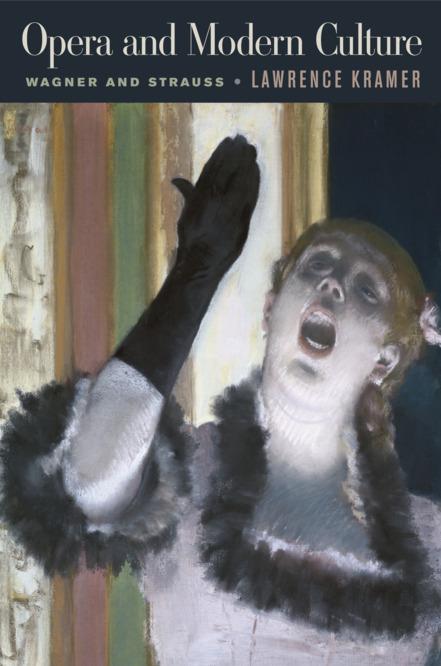
In this enlightening and entertaining book, one of the most original and sophisticated musicologists writing today turns his attention to music's most dramatic genre. Extending his ongoing project of clarifying music's various roles in Western society, Kramer brings to opera his distinctive and pioneering blend of historical concreteness and theoretical awareness.
Opera is legendary for going to extremes, a tendency that has earned it a reputation for unreality. Opera and Modern Culture shows the reverse to be true. Kramer argues that for the past two centuries the preoccupation of a group of famous operas with the limits of supremacy and debasement helped to define a normality that seems the very opposite of the operatic. Exemplified in a series of beloved examples, a certain idea of opera—a fiction of opera—has contributed in key ways to the modern era's characterizations of desire, identity, and social order. Opera and Modern Culture exposes this process at work in operas by Richard Wagner, who put modernity on the agenda in ways no one after him could ignore, and by the young Richard Strauss. The book continues the initiative of much recent writing in treating opera as a multimedia rather than a primarily musical form. From Lohengrin and The Ring of the Niebelung to Salome and Elektra, it traces the rich interplay of operatic visions and voices and their contexts in the birth pangs of modern life.
Opera is legendary for going to extremes, a tendency that has earned it a reputation for unreality. Opera and Modern Culture shows the reverse to be true. Kramer argues that for the past two centuries the preoccupation of a group of famous operas with the limits of supremacy and debasement helped to define a normality that seems the very opposite of the operatic. Exemplified in a series of beloved examples, a certain idea of opera—a fiction of opera—has contributed in key ways to the modern era's characterizations of desire, identity, and social order. Opera and Modern Culture exposes this process at work in operas by Richard Wagner, who put modernity on the agenda in ways no one after him could ignore, and by the young Richard Strauss. The book continues the initiative of much recent writing in treating opera as a multimedia rather than a primarily musical form. From Lohengrin and The Ring of the Niebelung to Salome and Elektra, it traces the rich interplay of operatic visions and voices and their contexts in the birth pangs of modern life.
Pagine: 258
Categoria: Musikvetenskap
e-ISBN: 9780520940840
Peso di spedizione: 1.2 kg
Spedito in: 1-2 giorni
Paga facilmente con carta, Klarna, Apple Pay o Google Pay. Non sei soddisfatto? Hai sempre 14 giorni per il rimborso. Leggi di più nei nostri termini. Per qualsiasi domanda, scrivici a hello@memmo.org.
Memmo rende lo studio più facile, ovunque tu sia nel mondo. Qui trovi i tuoi libri di testo e strumenti di studio intelligenti, tutto in un unico posto: riassunti, quiz, podcast e flashcard. E poi c'è Ted, il tuo compagno di studio che risponde a ogni tua domanda. Oltre 50.000 studenti studiano già qui: è stato creato per aiutarti a imparare più velocemente e a stressarti meno.
Potrebbe interessarti anche
Acquista il libro0