
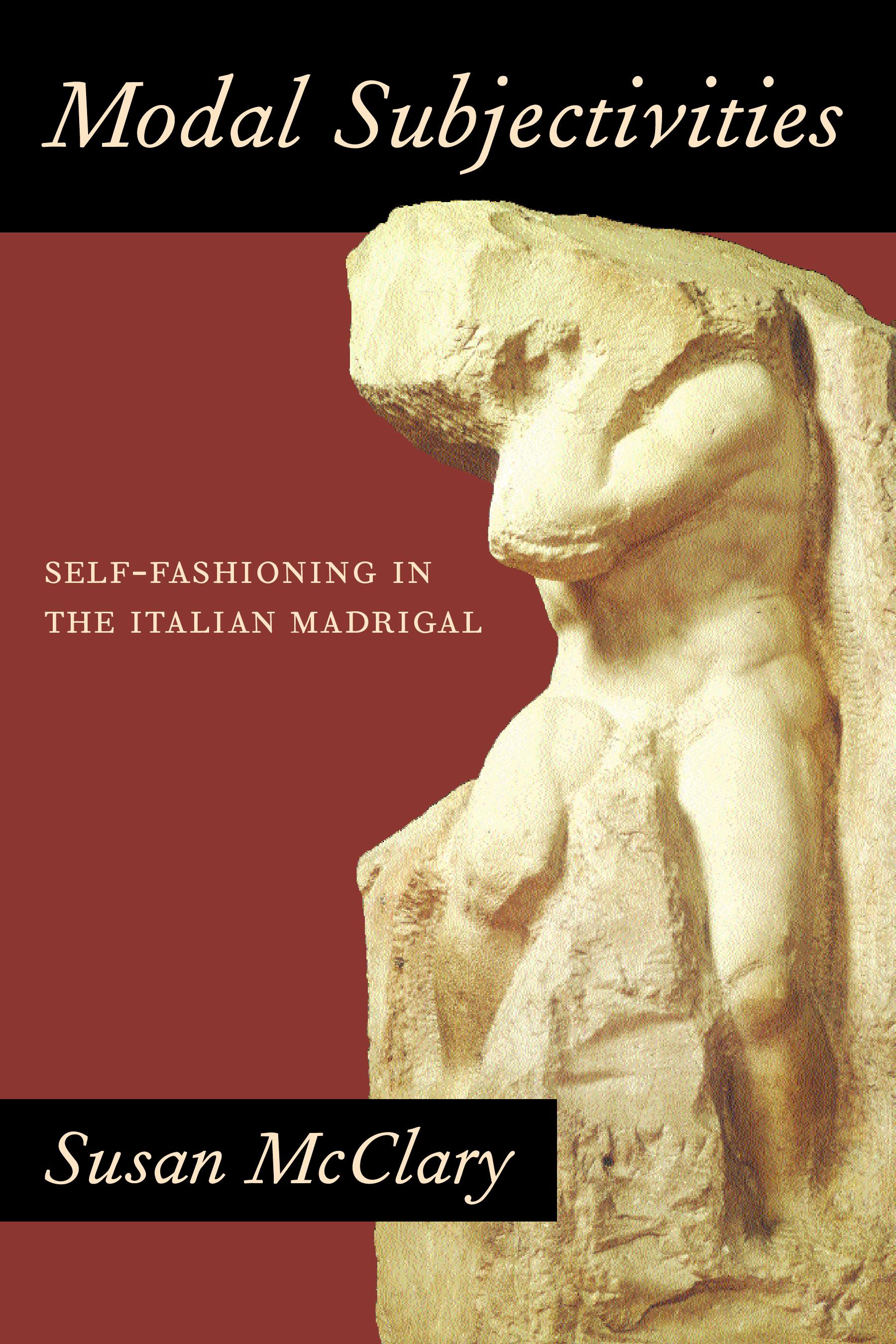
In this boldly innovative book, renowned musicologist Susan McClary presents an illuminating cultural interpretation of the Italian madrigal, one of the most influential repertories of the Renaissance. A genre that sought to produce simulations in sound of complex interiorities, the madrigal introduced into music a vast range of new signifying practices: musical representations of emotions, desire, gender stereotypes, reason, madness, tensions between mind and body, and much more. In doing so, it not only greatly expanded the expressive agendas of European music but also recorded certain assumptions of the time concerning selfhood, making it an invaluable resource for understanding the history of Western subjectivity.
Modal Subjectivities covers the span of the sixteenth-century polyphonic madrigal, from its early manifestations in Philippe Verdelot's settings of Machiavelli in the 1520s through the tortured chromatic experiments of Carlo Gesualdo. Although McClary takes the lyrics into account in shaping her readings, she focuses particularly on the details of the music itself—the principal site of the genre's self-fashionings. In order to work effectively with musical meanings in this pretonal repertory, she also develops an analytical method that allows her to unravel the sophisticated allegorical structures characteristic of the madrigal. This pathbreaking book demonstrates how we might glean insights into a culture on the basis of its nonverbal artistic enterprises.
Modal Subjectivities covers the span of the sixteenth-century polyphonic madrigal, from its early manifestations in Philippe Verdelot's settings of Machiavelli in the 1520s through the tortured chromatic experiments of Carlo Gesualdo. Although McClary takes the lyrics into account in shaping her readings, she focuses particularly on the details of the music itself—the principal site of the genre's self-fashionings. In order to work effectively with musical meanings in this pretonal repertory, she also develops an analytical method that allows her to unravel the sophisticated allegorical structures characteristic of the madrigal. This pathbreaking book demonstrates how we might glean insights into a culture on the basis of its nonverbal artistic enterprises.
Pagine: 386
Categoria: Musikvetenskap
e-ISBN: 9780520929159
Peso di spedizione: 1.2 kg
Spedito in: 1-2 giorni
Paga facilmente con carta, Klarna, Apple Pay o Google Pay. Non sei soddisfatto? Hai sempre 14 giorni per il rimborso. Leggi di più nei nostri termini. Per qualsiasi domanda, scrivici a hello@memmo.org.
Memmo rende lo studio più facile, ovunque tu sia nel mondo. Qui trovi i tuoi libri di testo e strumenti di studio intelligenti, tutto in un unico posto: riassunti, quiz, podcast e flashcard. E poi c'è Ted, il tuo compagno di studio che risponde a ogni tua domanda. Oltre 50.000 studenti studiano già qui: è stato creato per aiutarti a imparare più velocemente e a stressarti meno.
Potrebbe interessarti anche
Acquista il libro0