
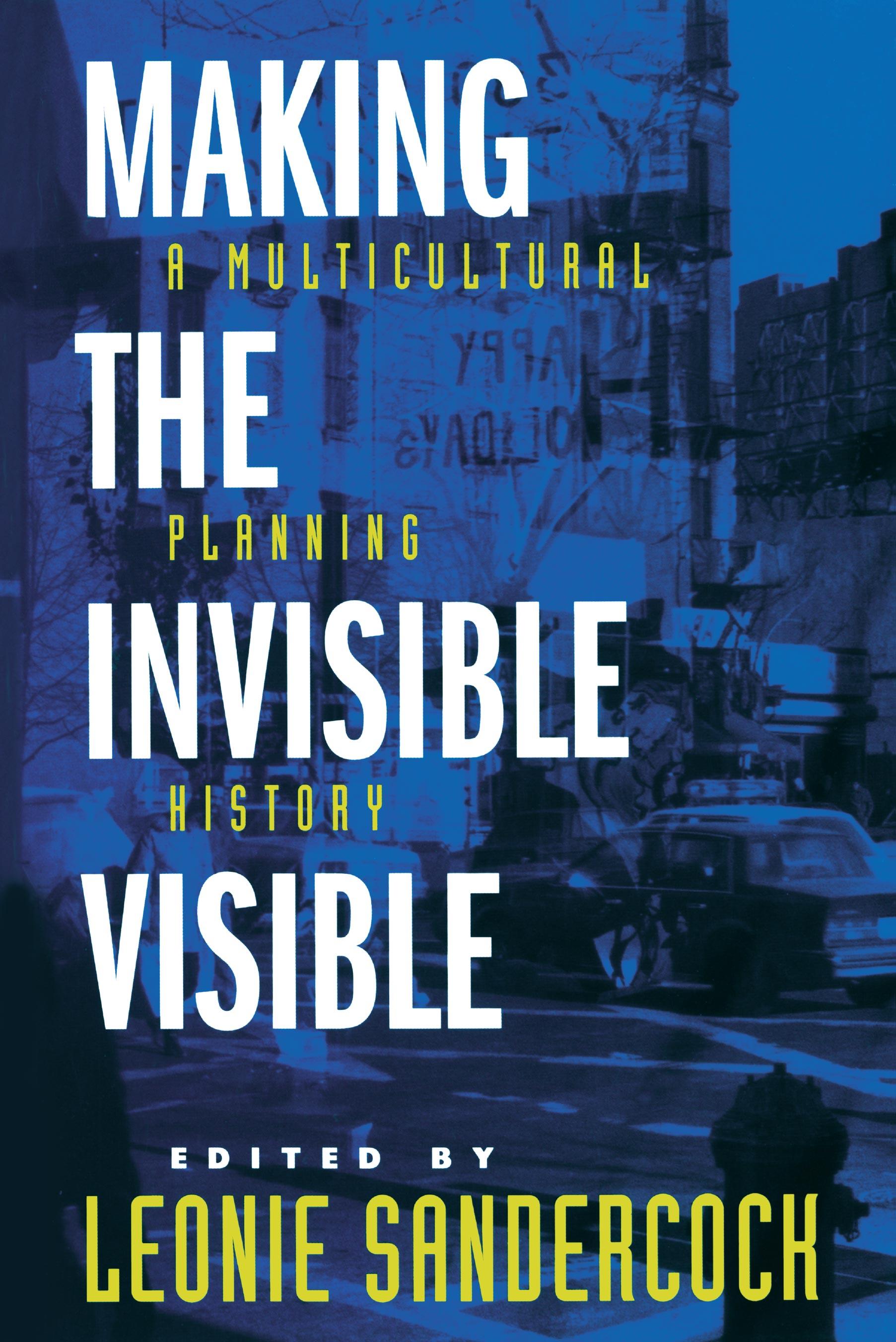
The history of planning is much more, according to these authors, than the recorded progress of planning as a discipline and a profession. These essays counter the mainstream narrative of rational, scientific development with alternative histories that reveal hitherto invisible planning practices and agendas. While the official story of planning celebrates the state and its traditions of city building and regional development, these stories focus on previously unacknowledged actors and the noir side of planning.
Through a variety of critical lenses—feminist, postmodern, and postcolonial—the essays examine a broad range of histories relevant to the preservation and planning professions. Some contributors uncover indigenous planning traditions that have been erased from the record: African American and Native American traditions, for example. Other contributors explore new themes: themes of gendered spaces and racist practices, of planning as an ordering tool, a kind of spatial police, of "bodies, cities, and social order" (influenced by Foucault, Lefebvre, and others), and of resistance.
This scrutiny of the class, race, gender, ethnic, or ideological biases of ideas and practices inherent in the notion of planning as a modernist social technology clearly points to the inadequacy of modernist planning histories. Making the Invisible Visible redefines planning as the regulation of the physicality, sociality, and spatiality of the city. Its histories provide the foundation of a new, alternative planning paradigm for the multicultural cities of the future.
The history of planning is much more, according to these authors, than the recorded progress of planning as a discipline and a profession. These essays counter the mainstream narrative of rational, scientific development with alternative histories that re
Through a variety of critical lenses—feminist, postmodern, and postcolonial—the essays examine a broad range of histories relevant to the preservation and planning professions. Some contributors uncover indigenous planning traditions that have been erased from the record: African American and Native American traditions, for example. Other contributors explore new themes: themes of gendered spaces and racist practices, of planning as an ordering tool, a kind of spatial police, of "bodies, cities, and social order" (influenced by Foucault, Lefebvre, and others), and of resistance.
This scrutiny of the class, race, gender, ethnic, or ideological biases of ideas and practices inherent in the notion of planning as a modernist social technology clearly points to the inadequacy of modernist planning histories. Making the Invisible Visible redefines planning as the regulation of the physicality, sociality, and spatiality of the city. Its histories provide the foundation of a new, alternative planning paradigm for the multicultural cities of the future.
The history of planning is much more, according to these authors, than the recorded progress of planning as a discipline and a profession. These essays counter the mainstream narrative of rational, scientific development with alternative histories that re
Paga facilmente con carta, Klarna, Apple Pay o Google Pay. Non sei soddisfatto? Hai sempre 14 giorni per il rimborso. Leggi di più nei nostri termini. Per qualsiasi domanda, scrivici a hello@memmo.org.
Memmo rende lo studio più facile, ovunque tu sia nel mondo. Qui trovi i tuoi libri di testo e strumenti di studio intelligenti, tutto in un unico posto: riassunti, quiz, podcast e flashcard. E poi c'è Ted, il tuo compagno di studio che risponde a ogni tua domanda. Oltre 50.000 studenti studiano già qui: è stato creato per aiutarti a imparare più velocemente e a stressarti meno.
Potrebbe interessarti anche
Acquista il libro0