
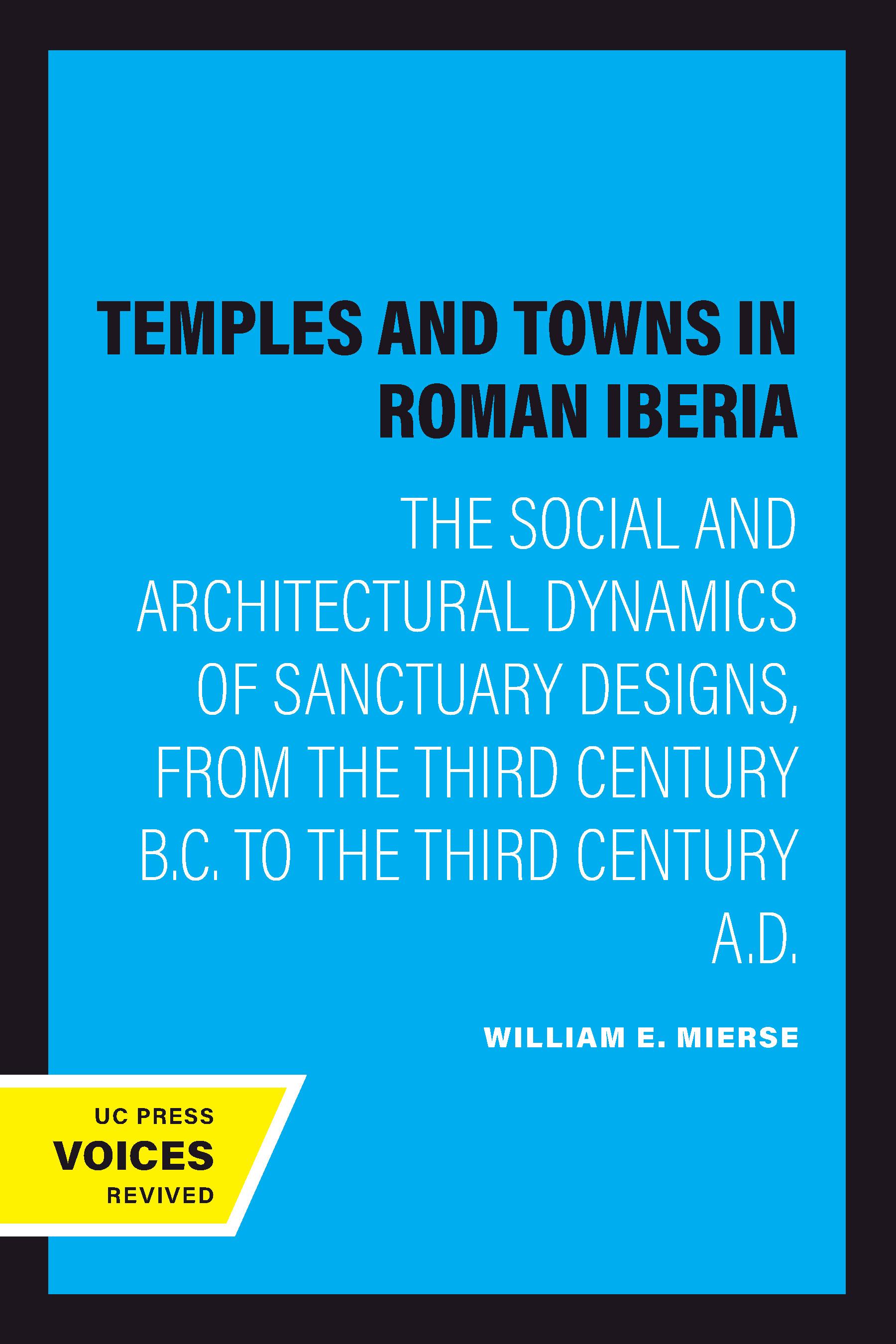
This is the first comparative study of Roman architecture on the Iberian peninsula, covering six centuries from the arrival of the Romans in the third century B.C. until the decline of urban life on the peninsula in the third century A.D. During this period, the peninsula became an influential cultural and political region in the Roman world. Iberia supplied writers, politicians, and emperors, a fact acknowledged by Romanists for centuries, though study of the peninsula itself has too often been brushed aside as insignificant and uninteresting. In this book William E. Mierse challenges such a view.
By examining in depth the changing forms of temples and their placement within the urban fabric, Mierse shows that architecture on the peninsula displays great variation and unexpected connections. It was never a slavish imitation of an imported model but always a novel experiment. Sometimes the architectural forms are both new and unexpected; in some cases specific prototypes can be seen, but the Iberian form has been significantly altered to suit local needs. What at first may seem a repetition of forms upon closer investigation turns out to be theme and variation. Mierse brings to his quest an impressive learning, including knowledge of several modern and ancient languages and the archaeology of the Roman East, which allows him a unique perspective on the interaction between events and architecture.
This is the first comparative study of Roman architecture on the Iberian peninsula, covering six centuries from the arrival of the Romans in the third century B.C. until the decline of urban life on the peninsula in the third century A.D. During this peri
By examining in depth the changing forms of temples and their placement within the urban fabric, Mierse shows that architecture on the peninsula displays great variation and unexpected connections. It was never a slavish imitation of an imported model but always a novel experiment. Sometimes the architectural forms are both new and unexpected; in some cases specific prototypes can be seen, but the Iberian form has been significantly altered to suit local needs. What at first may seem a repetition of forms upon closer investigation turns out to be theme and variation. Mierse brings to his quest an impressive learning, including knowledge of several modern and ancient languages and the archaeology of the Roman East, which allows him a unique perspective on the interaction between events and architecture.
This is the first comparative study of Roman architecture on the Iberian peninsula, covering six centuries from the arrival of the Romans in the third century B.C. until the decline of urban life on the peninsula in the third century A.D. During this peri
Pagine: 369
Categoria: Arkitektur & Stadsplanering
e-ISBN: 9780520917330
Peso di spedizione: 1.2 kg
Spedito in: 1-2 giorni
Paga facilmente con carta, Klarna, Apple Pay o Google Pay. Non sei soddisfatto? Hai sempre 14 giorni per il rimborso. Leggi di più nei nostri termini. Per qualsiasi domanda, scrivici a hello@memmo.org.
Memmo rende lo studio più facile, ovunque tu sia nel mondo. Qui trovi i tuoi libri di testo e strumenti di studio intelligenti, tutto in un unico posto: riassunti, quiz, podcast e flashcard. E poi c'è Ted, il tuo compagno di studio che risponde a ogni tua domanda. Oltre 50.000 studenti studiano già qui: è stato creato per aiutarti a imparare più velocemente e a stressarti meno.
Potrebbe interessarti anche
Acquista il libro0