
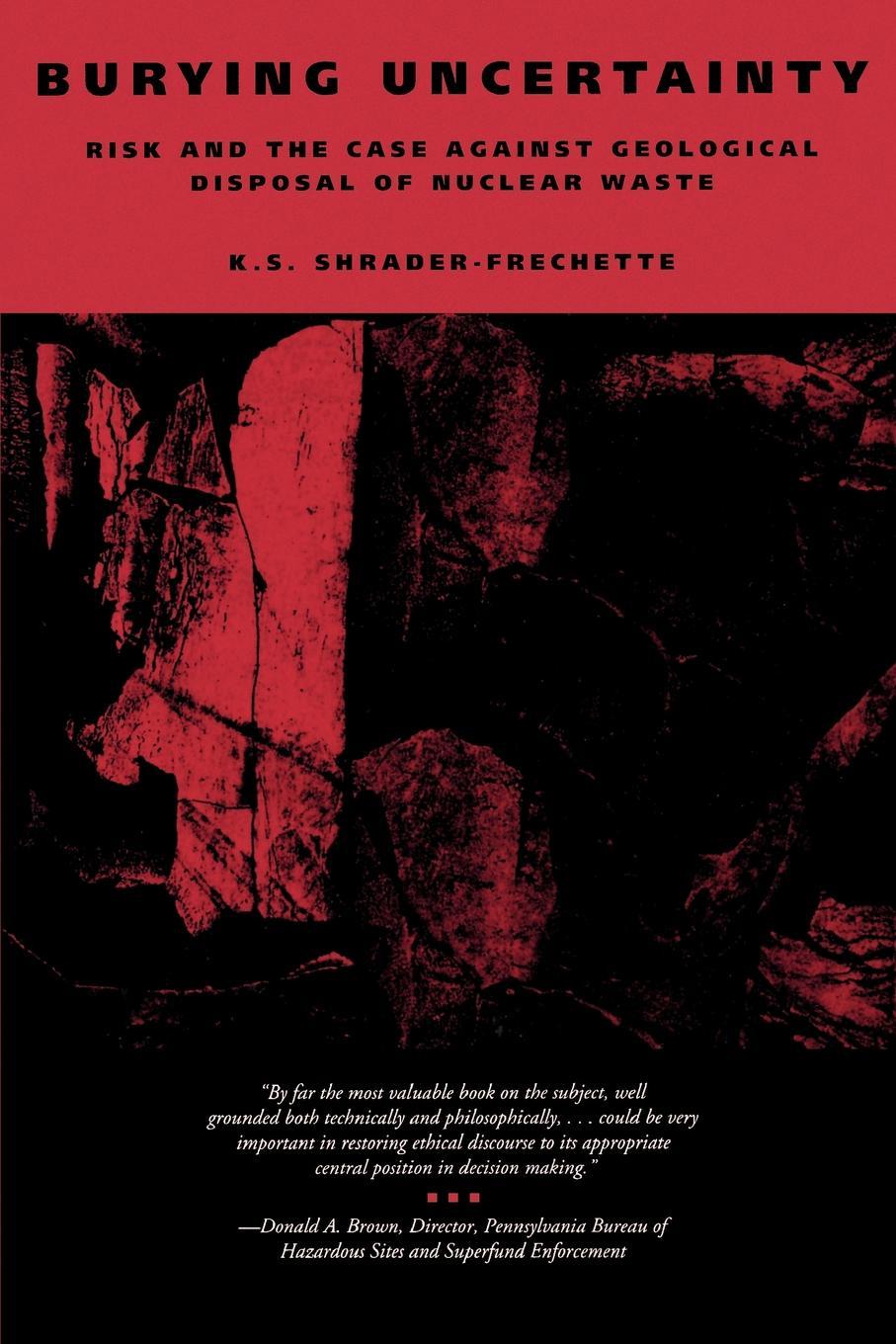
Shrader-Frechette looks at current U.S. government policy regarding the nation's high-level radioactive waste both scientifically and ethically.
What should be done with our nation's high-level radioactive waste, which will remain hazardous for thousands of years? This is one of the most pressing problems faced by the nuclear power industry, and current U.S. government policy is to bury "radwastes" in specially designed deep repositories.
K. S. Shrader-Frechette argues that this policy is profoundly misguided on both scientific and ethical grounds. Scientifically—because we cannot trust the precision of 10,000-year predictions that promise containment of the waste. Ethically—because geological disposal ignores the rights of present and future generations to equal treatment, due process, and free informed consent.
Shrader-Frechette focuses her argument on the world's first proposed high-level radioactive waste facility at Yucca Mountain, Nevada. Analyzing a mass of technical literature, she demonstrates the weaknesses in the professional risk-assessors' arguments that claim the site is sufficiently safe for such a plan. We should postpone the question of geological disposal for at least a century and use monitored, retrievable, above-ground storage of the waste until then. Her message regarding radwaste is clear: what you can't see can hurt you.
What should be done with our nation's high-level radioactive waste, which will remain hazardous for thousands of years? This is one of the most pressing problems faced by the nuclear power industry, and current U.S. government policy is to bury "radwastes" in specially designed deep repositories.
K. S. Shrader-Frechette argues that this policy is profoundly misguided on both scientific and ethical grounds. Scientifically—because we cannot trust the precision of 10,000-year predictions that promise containment of the waste. Ethically—because geological disposal ignores the rights of present and future generations to equal treatment, due process, and free informed consent.
Shrader-Frechette focuses her argument on the world's first proposed high-level radioactive waste facility at Yucca Mountain, Nevada. Analyzing a mass of technical literature, she demonstrates the weaknesses in the professional risk-assessors' arguments that claim the site is sufficiently safe for such a plan. We should postpone the question of geological disposal for at least a century and use monitored, retrievable, above-ground storage of the waste until then. Her message regarding radwaste is clear: what you can't see can hurt you.
Pagine: 368
Categoria: Vetenskapsteori och forskningsmetod
e-ISBN: 9780520913967
Peso di spedizione: 1.2 kg
Spedito in: 1-2 giorni
Paga facilmente con carta, Klarna, Apple Pay o Google Pay. Non sei soddisfatto? Hai sempre 14 giorni per il rimborso. Leggi di più nei nostri termini. Per qualsiasi domanda, scrivici a hello@memmo.org.
Memmo rende lo studio più facile, ovunque tu sia nel mondo. Qui trovi i tuoi libri di testo e strumenti di studio intelligenti, tutto in un unico posto: riassunti, quiz, podcast e flashcard. E poi c'è Ted, il tuo compagno di studio che risponde a ogni tua domanda. Oltre 50.000 studenti studiano già qui: è stato creato per aiutarti a imparare più velocemente e a stressarti meno.
Potrebbe interessarti anche
Acquista il libro0