
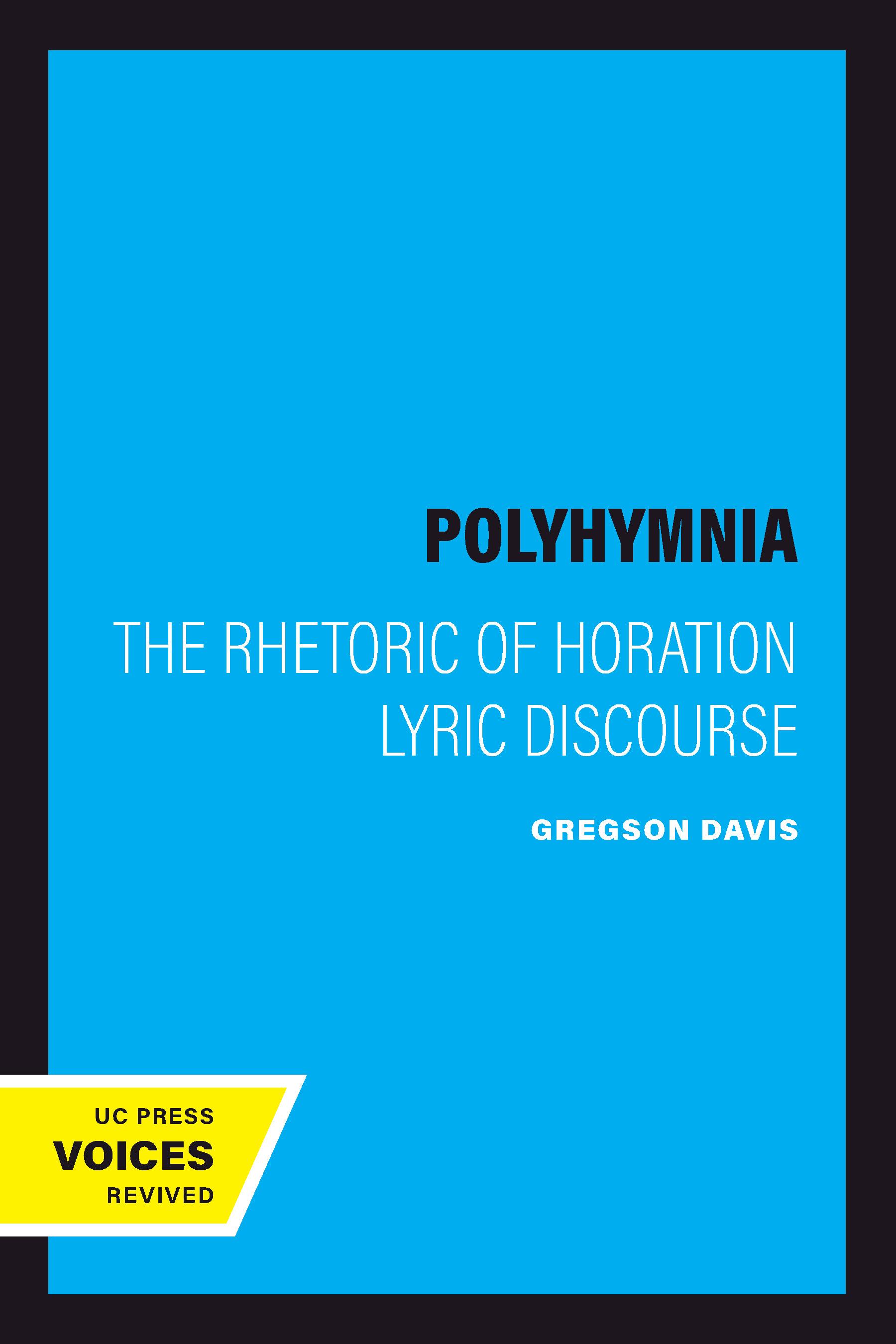
Horace's Odes have a surface translucency that belies their rhetorical sophistication. Gregson Davis brings together recent trends in the study of Augustan poetry and critical theory and deftly applies them to individual poems. Exploring four rhetorical strategies—what he calls modes of assimilation, authentication, consolation, and praise and dispraise—Davis produces enlightening, new interpretations of this classic work.
Polyhymnia, named after one of the Muses invoked in Horace's opening poem, revises the common image of Horace as a complacent, uncomplicated, and basically superficial singer. Focusing on the artistic persona—the lyric "self" that is constituted in the text—Davis explores how the lyric speaker constructs subtle "arguments" whose building-blocks are topoi, recurrent motifs, and generic conventions. By examining the substructure of lyric argument in groupings of poems sharing similar strategies, the author discloses the major principles that inform Horatian lyric composition.
Horace's Odes have a surface translucency that belies their rhetorical sophistication. Gregson Davis brings together recent trends in the study of Augustan poetry and critical theory and deftly applies them to individual poems. Exploring four rheto
Polyhymnia, named after one of the Muses invoked in Horace's opening poem, revises the common image of Horace as a complacent, uncomplicated, and basically superficial singer. Focusing on the artistic persona—the lyric "self" that is constituted in the text—Davis explores how the lyric speaker constructs subtle "arguments" whose building-blocks are topoi, recurrent motifs, and generic conventions. By examining the substructure of lyric argument in groupings of poems sharing similar strategies, the author discloses the major principles that inform Horatian lyric composition.
Horace's Odes have a surface translucency that belies their rhetorical sophistication. Gregson Davis brings together recent trends in the study of Augustan poetry and critical theory and deftly applies them to individual poems. Exploring four rheto
Paga facilmente con carta, Klarna, Apple Pay o Google Pay. Non sei soddisfatto? Hai sempre 14 giorni per il rimborso. Leggi di più nei nostri termini. Per qualsiasi domanda, scrivici a hello@memmo.org.
Memmo rende lo studio più facile, ovunque tu sia nel mondo. Qui trovi i tuoi libri di testo e strumenti di studio intelligenti, tutto in un unico posto: riassunti, quiz, podcast e flashcard. E poi c'è Ted, il tuo compagno di studio che risponde a ogni tua domanda. Oltre 50.000 studenti studiano già qui: è stato creato per aiutarti a imparare più velocemente e a stressarti meno.
Potrebbe interessarti anche
Acquista il libro0