
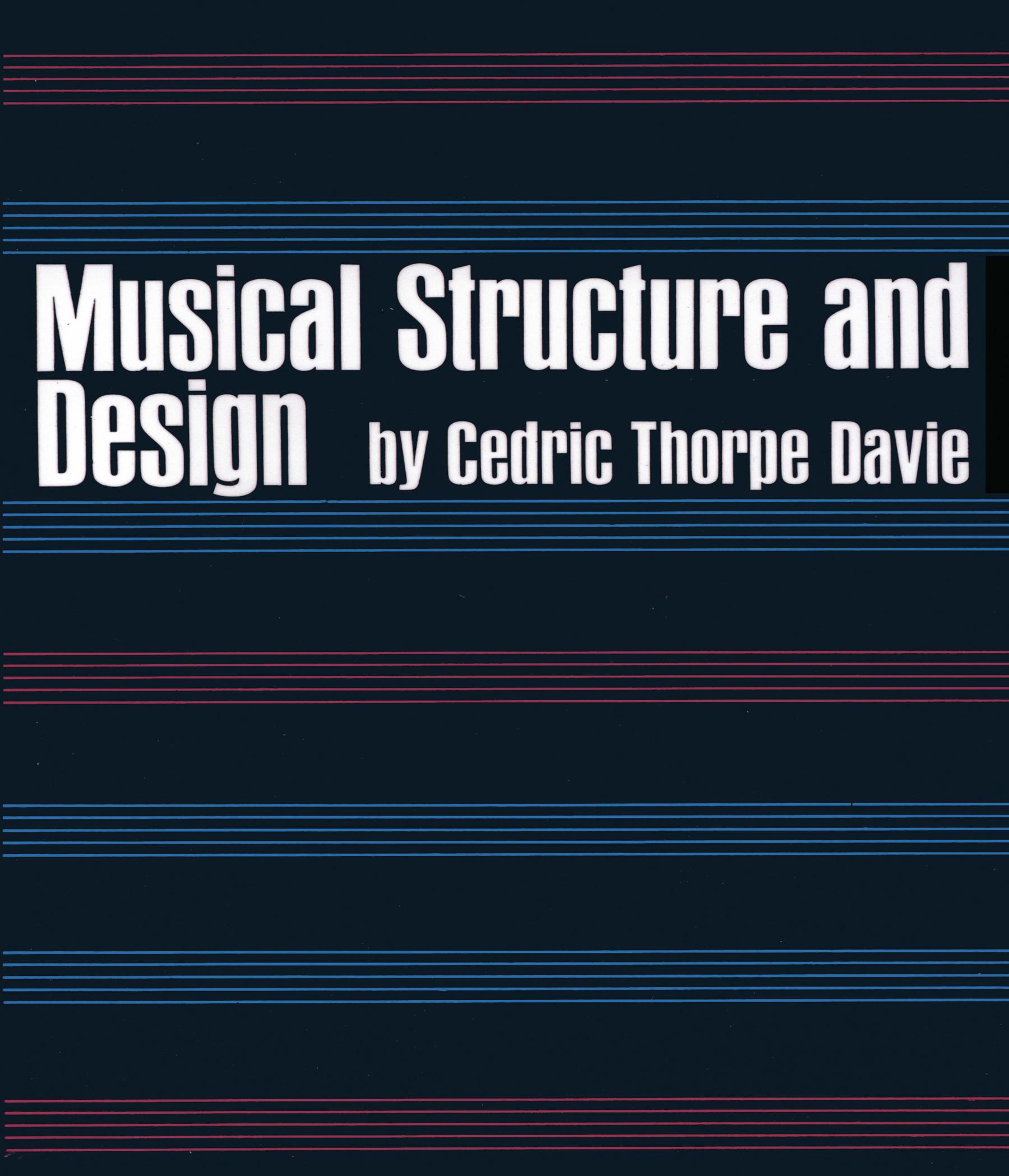
Cedric Thorpe Davie is himself a noted composer, and musical forms are as familiar to him as armatures are to the sculptor. As a result, he is able not only to describe them clearly, but also to evaluate their qualities and to point out their truly characteristic fundamentals. It is his discussions of such core questions as: What is the true basis of sonata form? And What are the qualities of a successful form that make for convincing music? that cause his book to be the unusually interesting and lively study that it is.
The text defines and describes the forms commonly used by Western composers in the period between 1550 and 1900. These are the binary and ternary forms, including the de capo aria, minuet-and-trio, and rondo; the sonata form; the forms in the concerto; variation forms — including ground bass, passacaglia, and chaconne; and the contrapuntal forms, notably the fugue and canon. Each form is illustrated with a detailed analysis of a specific piece or movement, usually from the work of Bach, Haydn, Mozart, or Beethoven, but often from Purcell, Brahms, Dvorak, or other composers. The student is also referred to a list of compositions in the same form for further study.
Experienced musicians, both professional and amateur, and students will find the author's thoughtful, well-written discussions of the controversial aspects of formal analysis extremely perceptive and stimulating. Beginning music lovers, even those with little or no training in music, will come away from a thorough reading of the book with a good knowledge of each important musical form, and with a greatly increased insight into the way music is organized.
Paga facilmente con carta, Klarna, Apple Pay o Google Pay. Non sei soddisfatto? Hai sempre 14 giorni per il rimborso. Leggi di più nei nostri termini. Per qualsiasi domanda, scrivici a hello@memmo.org.
Memmo rende lo studio più facile, ovunque tu sia nel mondo. Qui trovi i tuoi libri di testo e strumenti di studio intelligenti, tutto in un unico posto: riassunti, quiz, podcast e flashcard. E poi c'è Ted, il tuo compagno di studio che risponde a ogni tua domanda. Oltre 50.000 studenti studiano già qui: è stato creato per aiutarti a imparare più velocemente e a stressarti meno.