
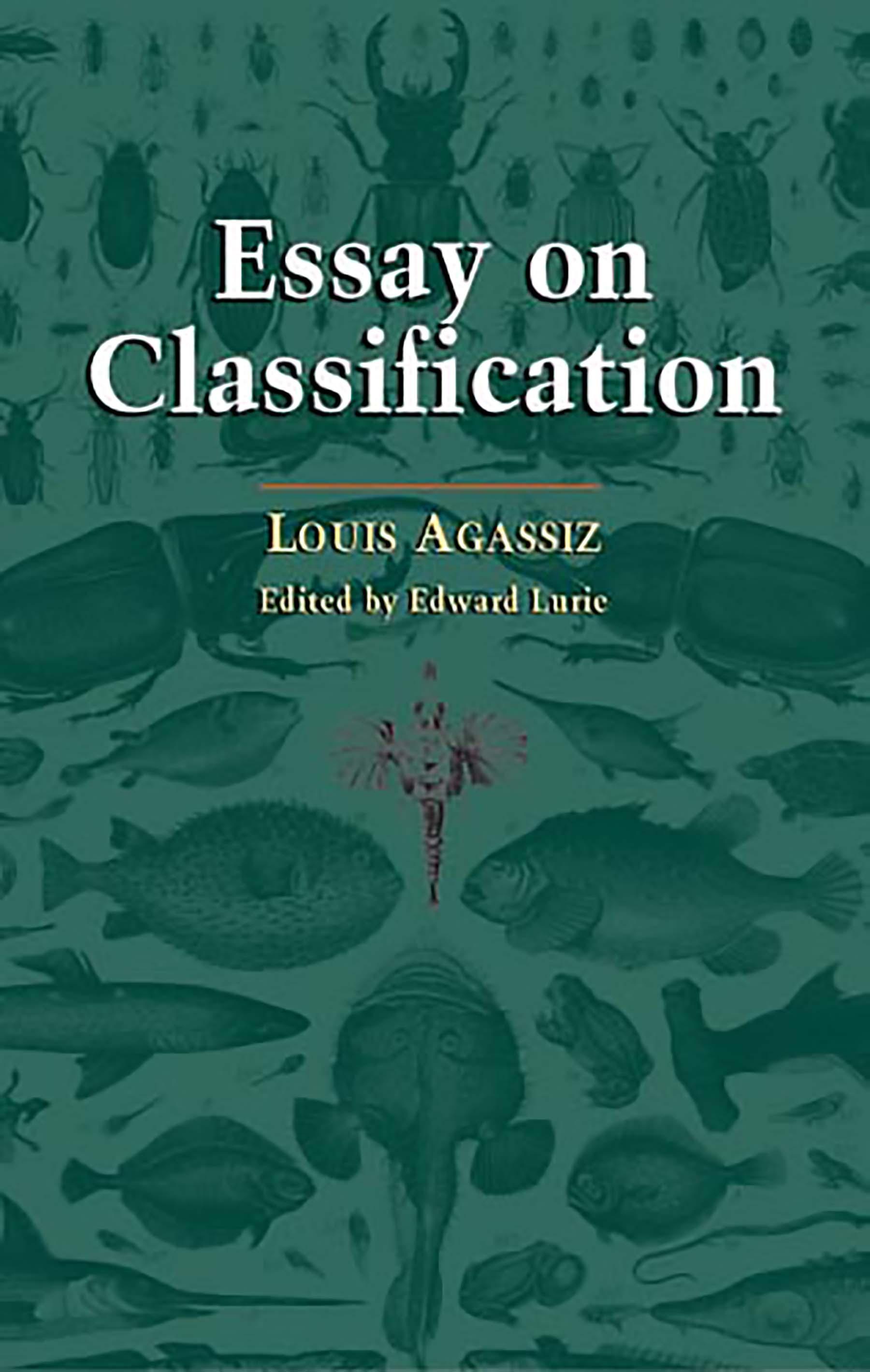
A major influence on the development of American scientific culture, Swiss-born Louis Agassiz (1807–73) was one of the great scientists of his day. A student of anatomist Georges Cuvier, Agassiz adapted his teacher's pioneering techniques of comparative anatomy to paleontology, and he rose to prominence as a distinguished systematist, paleontologist, and educator. Agassiz introduced science to ordinary citizens to an unprecedented degree; people around the world read his books, sent him specimens, and consulted his opinion.
Agassiz was also a staunch opponent of the theory of evolution, and he was among the last of the reputable scientists who continued to reject the concept after the publication of The Origin of the Species. All of nature bore testimony to a divine plan, Agassiz believed, and he could not reconcile himself to a theory that did not invoke God's design. Ironically, his 1851 Essay on Classification provided Darwin and other evolutionists with evidence from the fossil record to support the theory of natural selection.
A treasure of historically valuable insights that contributed to the development of evolutionary biology, this volume introduced the landmark contention that paleontology, embryology, ecology, and biogeography are inextricably linked in classifications that reveal the true relationships between organisms. Its emphasis on advanced and original work gave major impetus to the study of science directly from nature, and it remains a classic of American scientific literature.
Agassiz was also a staunch opponent of the theory of evolution, and he was among the last of the reputable scientists who continued to reject the concept after the publication of The Origin of the Species. All of nature bore testimony to a divine plan, Agassiz believed, and he could not reconcile himself to a theory that did not invoke God's design. Ironically, his 1851 Essay on Classification provided Darwin and other evolutionists with evidence from the fossil record to support the theory of natural selection.
A treasure of historically valuable insights that contributed to the development of evolutionary biology, this volume introduced the landmark contention that paleontology, embryology, ecology, and biogeography are inextricably linked in classifications that reveal the true relationships between organisms. Its emphasis on advanced and original work gave major impetus to the study of science directly from nature, and it remains a classic of American scientific literature.
Pagine: 304
Categoria: Vetenskapsteori och forskningsmetod
e-ISBN: 9780486151359
Peso di spedizione: 1.2 kg
Spedito in: 1-2 giorni
Paga facilmente con carta, Klarna, Apple Pay o Google Pay. Non sei soddisfatto? Hai sempre 14 giorni per il rimborso. Leggi di più nei nostri termini. Per qualsiasi domanda, scrivici a hello@memmo.org.
Memmo rende lo studio più facile, ovunque tu sia nel mondo. Qui trovi i tuoi libri di testo e strumenti di studio intelligenti, tutto in un unico posto: riassunti, quiz, podcast e flashcard. E poi c'è Ted, il tuo compagno di studio che risponde a ogni tua domanda. Oltre 50.000 studenti studiano già qui: è stato creato per aiutarti a imparare più velocemente e a stressarti meno.
Potrebbe interessarti anche
Acquista il libro0