
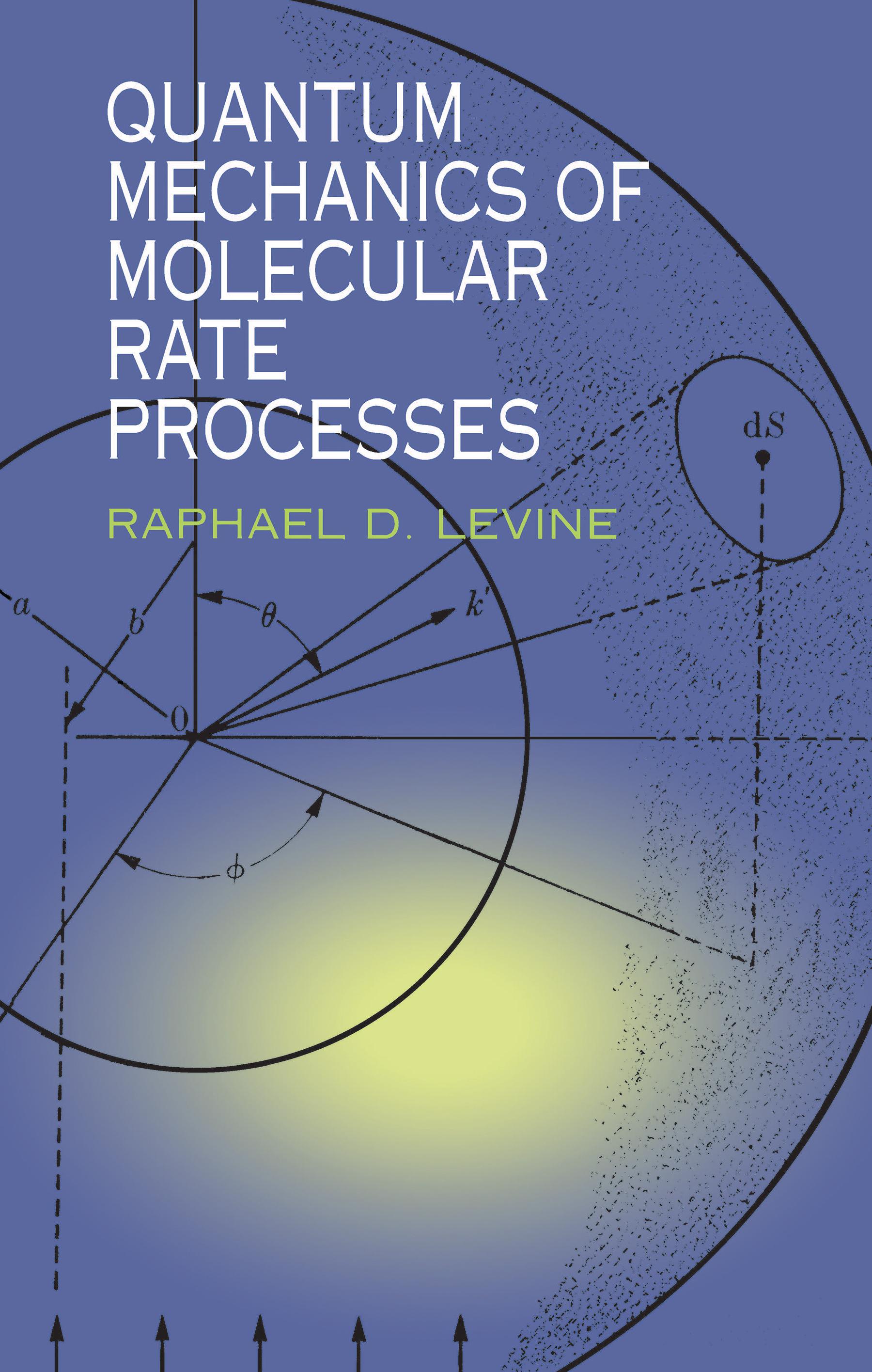
A valuable survey of the quantum-mechanical theory of collisions and rate processes, this text by a noted authority in the field offers numerous well-defined examples of the theory’s role in solving molecular problems. Graduate-level students are sure to benefit from these well-organized and clear-cut presentations of the theory and its applications.
This three-part volume begins with a review of the Dirac-von Neumann formulation of quantum mechanics. The second part expresses quantal collision theory in terms of the Lippmann-Schwinger equation to explore collisions of molecules with internal structure, the generalized Ehrenfest theorem, the theory of reactive collisions, and role of symmetry. Applications and further extensions of the theory receive a detailed treatment in the final part, with reviews of the partitioning technique, equivalent potentials and quasi-bound states, and the theory of direct reactions. Additional topics include the optical model, statistical approximation unimolecular breakdown, and theory and applications of the time correlation method. Each part opens with a brief introduction; a number of supplementary appendixes offer additional helpful discussions.
Assuming an undergraduate-level grasp of quantum mechanics, this practical volume will prove a valuable resource for chemistry students and others interested in the basic theory of quantum-mechanical rate processes and the increasingly sophisticated experimental results derived from it.
This three-part volume begins with a review of the Dirac-von Neumann formulation of quantum mechanics. The second part expresses quantal collision theory in terms of the Lippmann-Schwinger equation to explore collisions of molecules with internal structure, the generalized Ehrenfest theorem, the theory of reactive collisions, and role of symmetry. Applications and further extensions of the theory receive a detailed treatment in the final part, with reviews of the partitioning technique, equivalent potentials and quasi-bound states, and the theory of direct reactions. Additional topics include the optical model, statistical approximation unimolecular breakdown, and theory and applications of the time correlation method. Each part opens with a brief introduction; a number of supplementary appendixes offer additional helpful discussions.
Assuming an undergraduate-level grasp of quantum mechanics, this practical volume will prove a valuable resource for chemistry students and others interested in the basic theory of quantum-mechanical rate processes and the increasingly sophisticated experimental results derived from it.
Paga facilmente con carta, Klarna, Apple Pay o Google Pay. Non sei soddisfatto? Hai sempre 14 giorni per il rimborso. Leggi di più nei nostri termini. Per qualsiasi domanda, scrivici a hello@memmo.org.
Memmo rende lo studio più facile, ovunque tu sia nel mondo. Qui trovi i tuoi libri di testo e strumenti di studio intelligenti, tutto in un unico posto: riassunti, quiz, podcast e flashcard. E poi c'è Ted, il tuo compagno di studio che risponde a ogni tua domanda. Oltre 50.000 studenti studiano già qui: è stato creato per aiutarti a imparare più velocemente e a stressarti meno.
Potrebbe interessarti anche
Acquista il libro0