
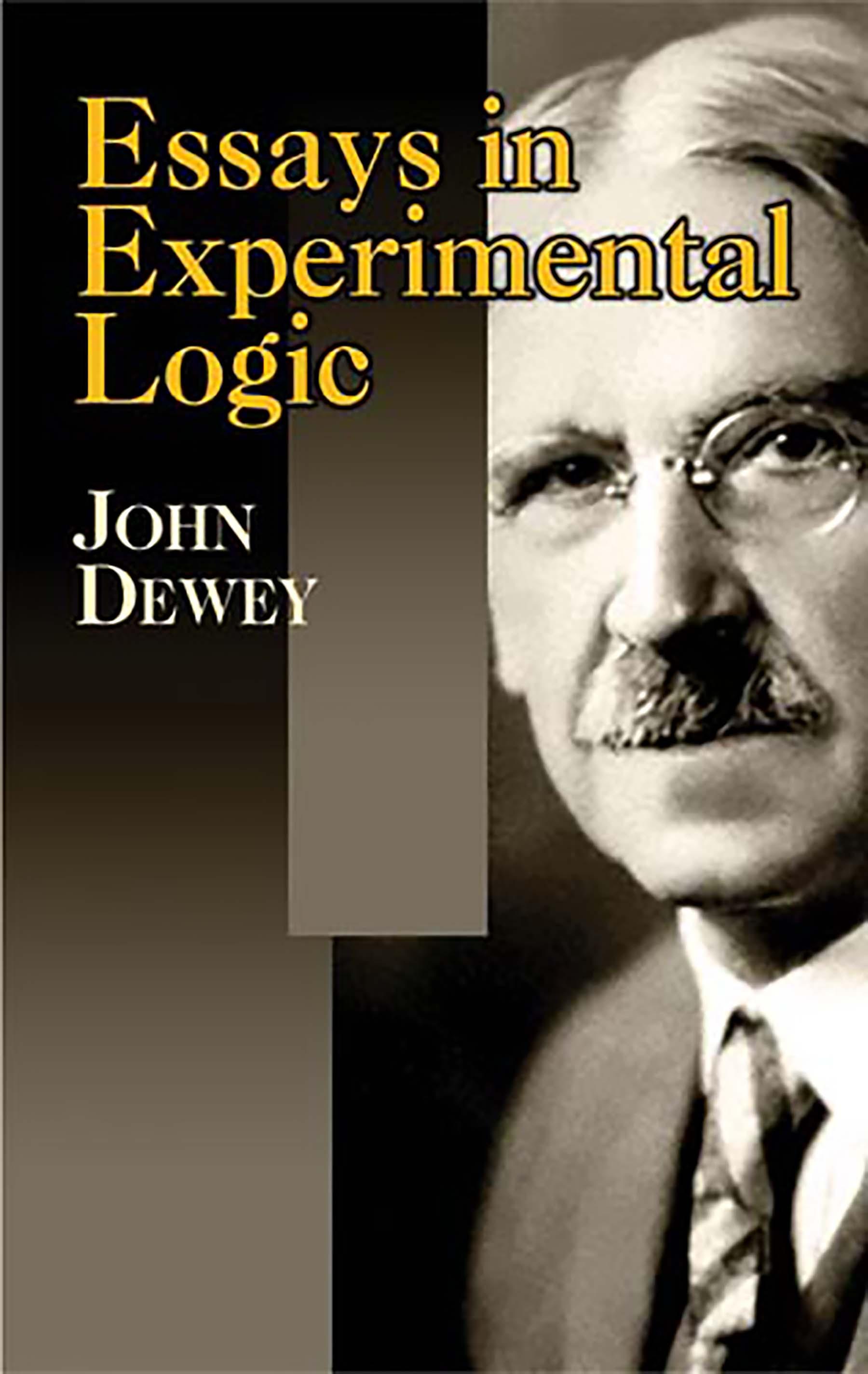
The scope of John Dewey's writings — ranging from aesthetics and education to legal and political theory — and his role in the development of twentieth-century philosophy have helped make him a continuing influence on contemporary thought. One of his most significant contributions to the theory of knowledge lay in his application of the principles of instrumentalism to traditional approaches to logical theory. Essays in Experimental Logic contains 14 of Dewey's most profound papers on many different aspects of knowledge, reality, and epistemology.
These papers on experimental logic are based on the theory that possession of knowledge implies a judgment, resulting from an inquiry or investigation. The presence of this "inquiry stage" suggests an intermediate and mediating phase between the external world and knowledge, an area conditioned by other factors. Expanding upon this foundation, these papers consider the relationship of thought and its subject matter; the antecedents and stimuli of thought, data, and meanings; the objects of thought; control of ideas by facts; and similar topics.
Three papers describe the various kinds of philosophical realism. The first closely examines Bertrand Russell's dictum concerning "our knowledge of the external world as a field for scientific method"; the other two discuss pragmatism, differentiating Dewey's position from those of James and Peirce. These essays present their author's most easily followed account of his own philosophy. The section entitled "Stage of Logical Thought" analyzes the role of scientific method in philosophy, and the final essay presents a striking theory of a logic of values.
These papers on experimental logic are based on the theory that possession of knowledge implies a judgment, resulting from an inquiry or investigation. The presence of this "inquiry stage" suggests an intermediate and mediating phase between the external world and knowledge, an area conditioned by other factors. Expanding upon this foundation, these papers consider the relationship of thought and its subject matter; the antecedents and stimuli of thought, data, and meanings; the objects of thought; control of ideas by facts; and similar topics.
Three papers describe the various kinds of philosophical realism. The first closely examines Bertrand Russell's dictum concerning "our knowledge of the external world as a field for scientific method"; the other two discuss pragmatism, differentiating Dewey's position from those of James and Peirce. These essays present their author's most easily followed account of his own philosophy. The section entitled "Stage of Logical Thought" analyzes the role of scientific method in philosophy, and the final essay presents a striking theory of a logic of values.
Pagine: 288
Categoria: Vetenskapsteori och forskningsmetod
e-ISBN: 9780486145747
Peso di spedizione: 1.2 kg
Spedito in: 1-2 giorni
Paga facilmente con carta, Klarna, Apple Pay o Google Pay. Non sei soddisfatto? Hai sempre 14 giorni per il rimborso. Leggi di più nei nostri termini. Per qualsiasi domanda, scrivici a hello@memmo.org.
Memmo rende lo studio più facile, ovunque tu sia nel mondo. Qui trovi i tuoi libri di testo e strumenti di studio intelligenti, tutto in un unico posto: riassunti, quiz, podcast e flashcard. E poi c'è Ted, il tuo compagno di studio che risponde a ogni tua domanda. Oltre 50.000 studenti studiano già qui: è stato creato per aiutarti a imparare più velocemente e a stressarti meno.
Potrebbe interessarti anche
Acquista il libro0