
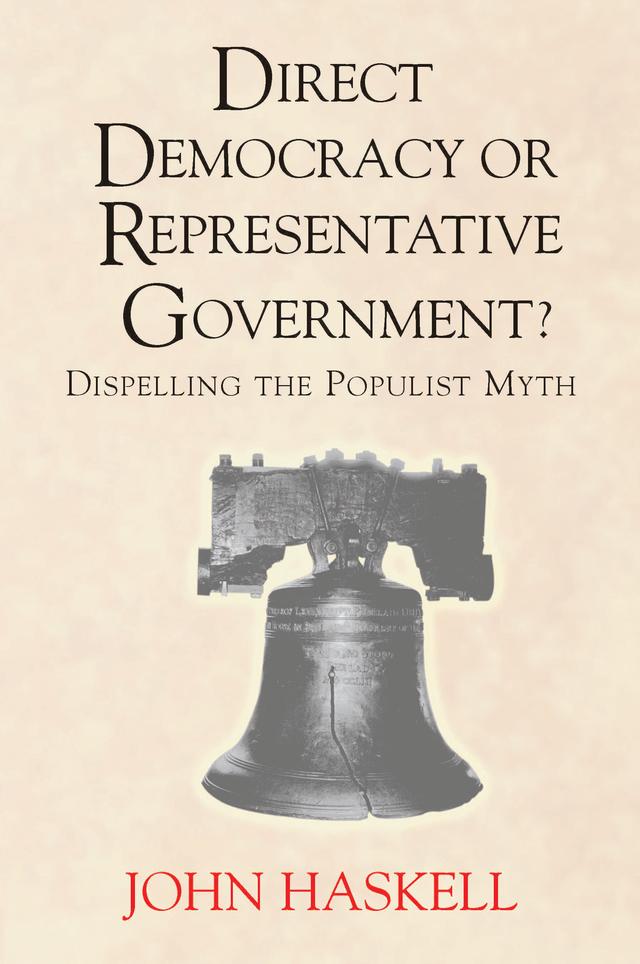
In Direct Democracy or Representative Government? John Haskell develops a devastating critique of direct democracy by exposing the central flaw in populist thinking. Contrary to the beliefs of populist advocates of direct democracy, the popular will cannot be interpreted from the results of the plebiscite. John Haskell presents a defense of representative institutions that brings to bear, in an understandable way, the findings of public choice scholars. Haskell covers the clash of ideas between populists and constitutionalists throughout American history. He follows the development of direct democracy during the twentieth century, especially the dramatically increased use of initiatives and referenda in the last decade. As Americans become increasingly frustrated with the workings of the institutions of government at the state and national levels, and as populist ideas gain greater currency, new forms of direct and participatory democracy making use of the latest computer technology appeal to more people. Haskell speculates as to the likely future direction of direct democracy in the U.S. He describes in clear language the fundamental problem with the premise of populist thinking and explains why direct democracy presents a threat to minority rights and only promises irresponsible and unaccountable governance.
Paga facilmente con carta, Klarna, Apple Pay o Google Pay. Non sei soddisfatto? Hai sempre 14 giorni per il rimborso. Leggi di più nei nostri termini. Per qualsiasi domanda, scrivici a hello@memmo.org.
Memmo rende lo studio più facile, ovunque tu sia nel mondo. Qui trovi i tuoi libri di testo e strumenti di studio intelligenti, tutto in un unico posto: riassunti, quiz, podcast e flashcard. E poi c'è Ted, il tuo compagno di studio che risponde a ogni tua domanda. Oltre 50.000 studenti studiano già qui: è stato creato per aiutarti a imparare più velocemente e a stressarti meno.
Potrebbe interessarti anche
Acquista il libro0