
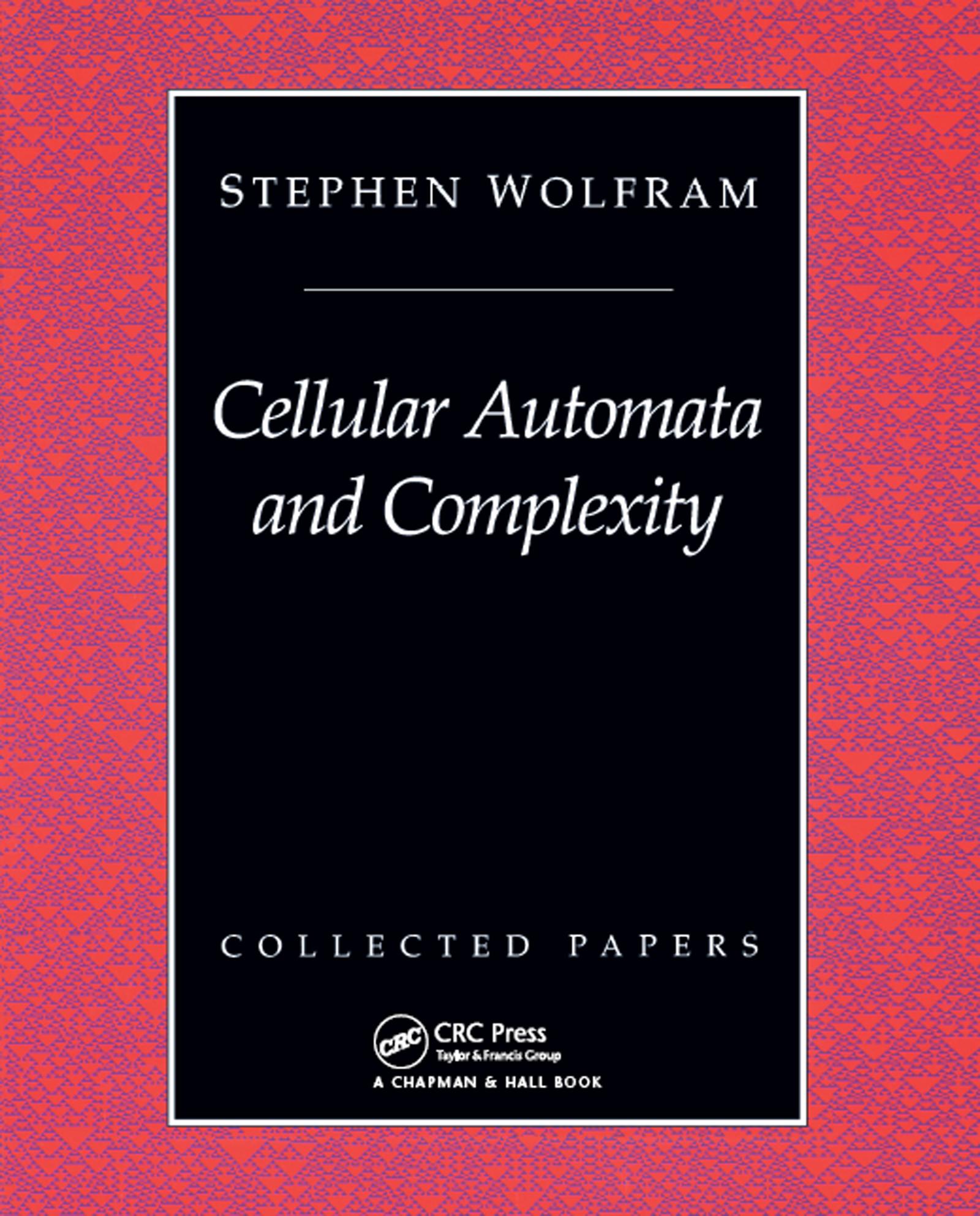
Are mathematical equations the best way to model nature? For many years it had been assumed that they were. But in the early 1980s, Stephen Wolfram made the radical proposal that one should instead build models that are based directly on simple computer programs. Wolfram made a detailed study of a class of such models known as cellular automata, and discovered a remarkable fact: that even when the underlying rules are very simple, the behaviour they produce can be highly complex, and can mimic many features of what we see in nature. And based on this result, Wolfram began a program of research to develop what he called A Science of Complexity."The results of Wolfram's work found many applications, from the so-called Wolfram Classification central to fields such as artificial life, to new ideas about cryptography and fluid dynamics. This book is a collection of Wolfram's original papers on cellular automata and complexity. Some of these papers are widely known in the scientific community others have never been published before. Together, the papers provide a highly readable account of what has become a major new field of science, with important implications for physics, biology, economics, computer science and many other areas.
Paga facilmente con carta, Klarna, Apple Pay o Google Pay. Non sei soddisfatto? Hai sempre 14 giorni per il rimborso. Leggi di più nei nostri termini. Per qualsiasi domanda, scrivici a hello@memmo.org.
Memmo rende lo studio più facile, ovunque tu sia nel mondo. Qui trovi i tuoi libri di testo e strumenti di studio intelligenti, tutto in un unico posto: riassunti, quiz, podcast e flashcard. E poi c'è Ted, il tuo compagno di studio che risponde a ogni tua domanda. Oltre 50.000 studenti studiano già qui: è stato creato per aiutarti a imparare più velocemente e a stressarti meno.
Potrebbe interessarti anche
Acquista il libro0