
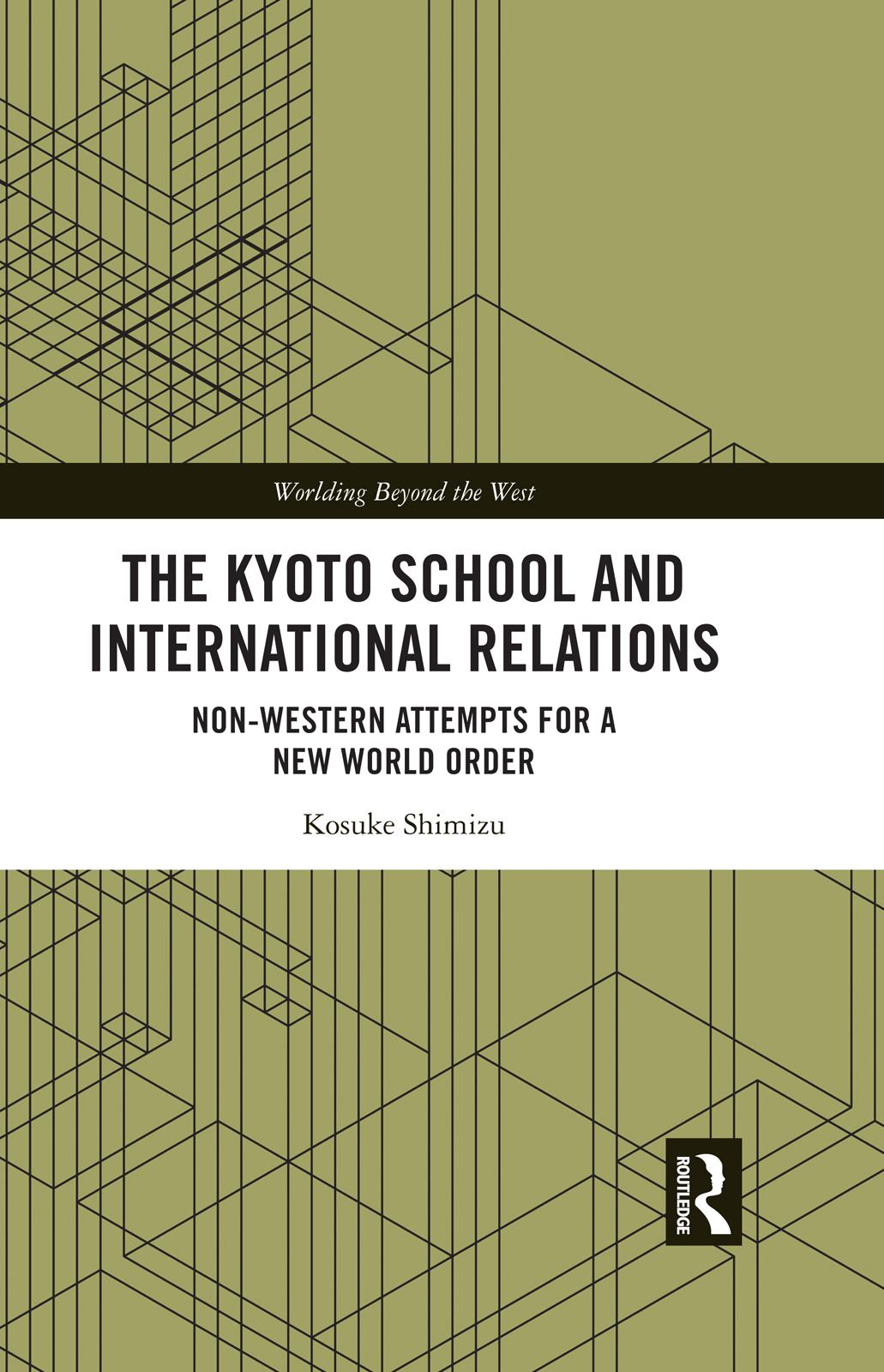
The Kyoto School and International Relations explores the Kyoto School’s challenge to transcend the ‘Western’ domination over the ‘rest’ of the world, and the issues this raises for contemporary ‘non-Western’ and ‘Global IR’ literature.
Was the support of Kyoto School thinkers inevitable due to the despotism of military government, thus nothing to do with their philosophy, or a logical extension of their philosophical engagement? The book answers this question by investigating individual Kyoto School philosophers in detail. The author argues that any attempts to transcend the ‘West’ are destined to be drawn into power politics as far as they uncritically adopt and use the prevailing ontological concept of linear progressive time and dominant meta-narrative of Westphalia. Thus, to fully understand this problem, there is the need to be cautious of the power of language of Westphalia and the concept of time in IR.
Aimed at students and scholars of IR theory, Japanese politics and East Asian IR in general, this book provides some introductory explanations of these academic subjects, developing a theory based on the concepts of time and language of Kyoto School philosophy.
Paga facilmente con carta, Klarna, Apple Pay o Google Pay. Non sei soddisfatto? Hai sempre 14 giorni per il rimborso. Leggi di più nei nostri termini. Per qualsiasi domanda, scrivici a hello@memmo.org.
Memmo rende lo studio più facile, ovunque tu sia nel mondo. Qui trovi i tuoi libri di testo e strumenti di studio intelligenti, tutto in un unico posto: riassunti, quiz, podcast e flashcard. E poi c'è Ted, il tuo compagno di studio che risponde a ogni tua domanda. Oltre 50.000 studenti studiano già qui: è stato creato per aiutarti a imparare più velocemente e a stressarti meno.