
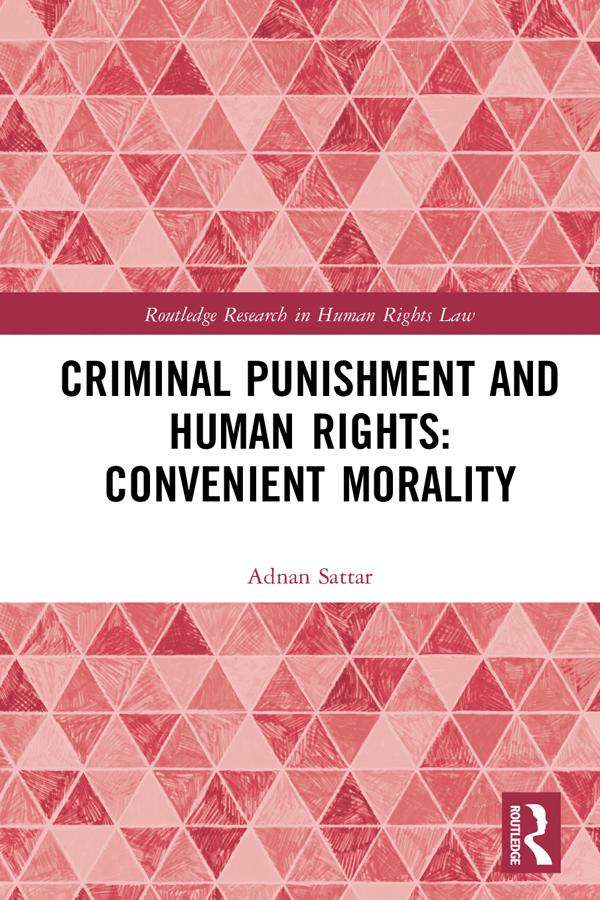
This book examines the relationship between international human rights discourse and the justifi cations for criminal punishment. Using interdisciplinary discourse analysis, it exposes certain paradoxes that underpin the ‘International Bill of Human Rights’, academic commentaries on human rights law, and the global human rights monitoring regime in relation to the aims of punishment in domestic penal systems. It argues that human rights discourse, owing to its theoretical kinship with Kantian philosophy, embodies a paradoxical commitment to human dignity on the one hand, and retributive punishment on the other. Further, it sustains the split between criminal justice and social justice, which results in a sociologically ill-informed understanding of punishment. Human rights discourse plays a paradoxical role vis-à-vis the punitive power of the state as it seeks to counter criminalisation in some areas and backs the introduction of new criminal offences – and longer prison sentences – in others. The underlying priorities, it is argued, have been shaped by a number of historical circumstances. Drawing on archival material, the study demonstrates that the international penal discourse produced during the late nineteenth and early twentieth century laid greater emphasis on offender rehabilitation and was more attentive to the social context of crime than is the case with the modern human rights discourse.
Paga facilmente con carta, Klarna, Apple Pay o Google Pay. Non sei soddisfatto? Hai sempre 14 giorni per il rimborso. Leggi di più nei nostri termini. Per qualsiasi domanda, scrivici a hello@memmo.org.
Memmo rende lo studio più facile, ovunque tu sia nel mondo. Qui trovi i tuoi libri di testo e strumenti di studio intelligenti, tutto in un unico posto: riassunti, quiz, podcast e flashcard. E poi c'è Ted, il tuo compagno di studio che risponde a ogni tua domanda. Oltre 50.000 studenti studiano già qui: è stato creato per aiutarti a imparare più velocemente e a stressarti meno.