
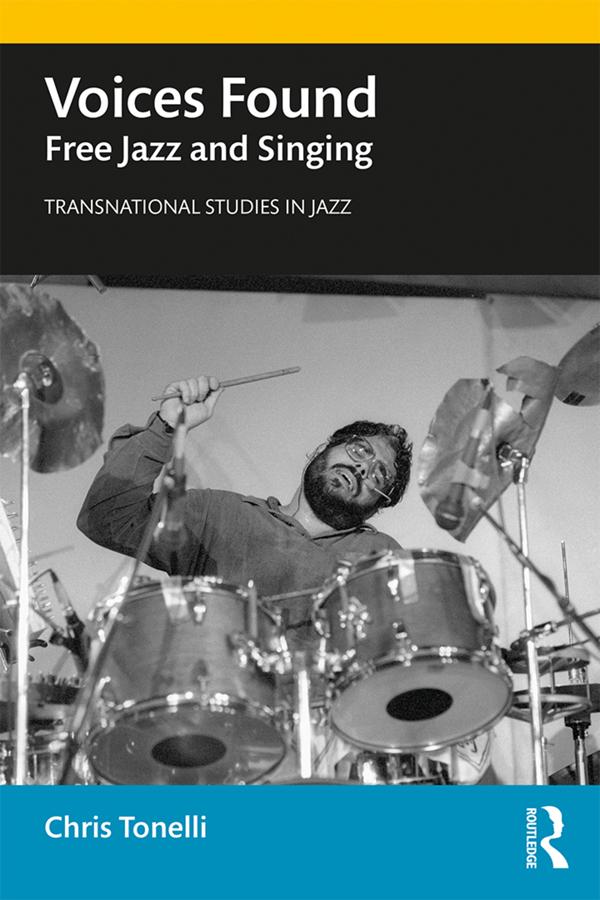
Voices Found: Free Jazz and Singing contributes to a wave of voice studies scholarship with the first book-length study of free jazz voice. It pieces together a history of free jazz voice that spans from sound poetry and scat in the 1950s to the more recent wave of free jazz choirs. The author traces the developments and offers a theory, derived from interviews with many of the most important singers in the history of free jazz voice, of how listeners have experienced and evaluated the often unconventional vocal sounds these vocalists employed. This theory explains that even audiences willing to enjoy harsh sounds from saxophones or guitars often resist when voices make sounds that audiences understand as not-human.
Experimental poetry and scat were combined and transformed in free jazz spaces in the 1960s and 1970s by vocalists like Yoko Ono (in solo work and her work with Ornette Coleman and John Stevens), Jeanne Lee (in her solo work and her work with Archie Shepp and Gunter Hampel), Leon Thomas (in his solo work as well as his work with Pharoah Sanders and Carlos Santana), and Phil Minton and Maggie Nicols (who devoted much of their energy to creating unaccompanied free jazz vocal music). By studying free jazz voice we can learn important lessons about what we expect from the voice and what happens when those expectations are violated. This book doesn't only trace histories of free jazz voice, it makes an attempt to understand why this story hasn't been told before, with an impressive breadth of scope in terms of the artists covered, drawing on research from the US, Canada, Wales, Scotland, France, The Netherlands, and Japan.
Paga facilmente con carta, Klarna, Apple Pay o Google Pay. Non sei soddisfatto? Hai sempre 14 giorni per il rimborso. Leggi di più nei nostri termini. Per qualsiasi domanda, scrivici a hello@memmo.org.
Memmo rende lo studio più facile, ovunque tu sia nel mondo. Qui trovi i tuoi libri di testo e strumenti di studio intelligenti, tutto in un unico posto: riassunti, quiz, podcast e flashcard. E poi c'è Ted, il tuo compagno di studio che risponde a ogni tua domanda. Oltre 50.000 studenti studiano già qui: è stato creato per aiutarti a imparare più velocemente e a stressarti meno.