
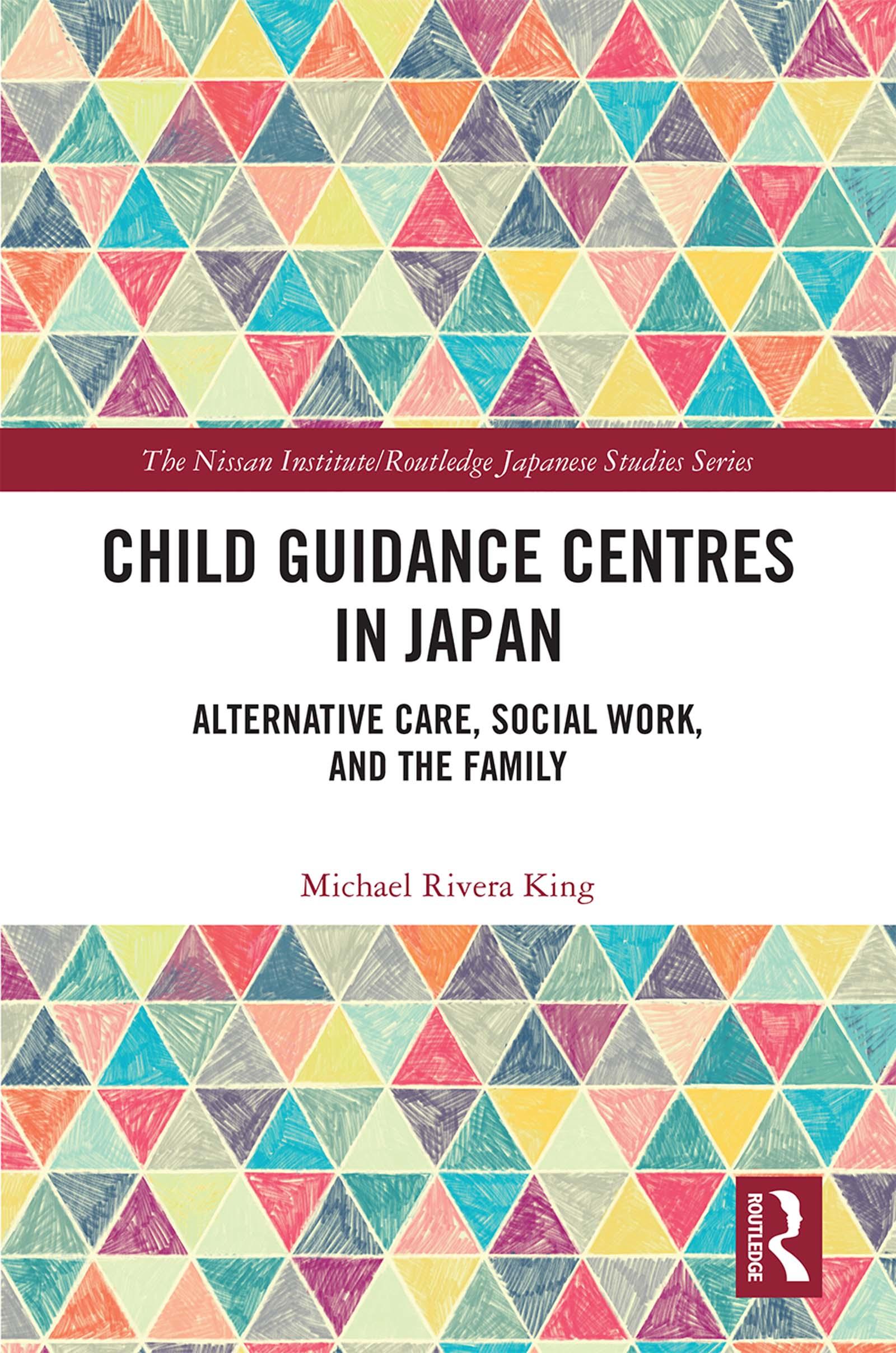
In contemporary Japan, 85% of children in alternative care remain housed in large welfare institutions, as opposed to family-based foster care. This publication examines how Japan has been isolated from global discourse on alternative care, urging a shift in social work and alternative care policies.
As the first ethnographic account from inside child guidance centres, it makes a key contribution towards understanding the closed world of Japan’s social services; including the decision-making processes by which a child is removed from the family and placed into care. In addition, regional variation in policy implementation for alternative care is outlined, with reference to detailed case studies and a discussion around organisational cultures of the child guidance centres. Where foster care is constructed as anything other than professional, it is often seen as a threat to the child’s family-bond with their natal parent and therefore not used. Child Guidance Centres in Japan destabilises this construction of the family-bond as singular and discrete, highlighting new practices in alternative care.
Child Guidance Centres in Japan: Alternative Care and the Family will be a vital resource for students, scholars of social work and Japanese studies, as well as practitioners and lobbyists involved in alternative care.
Paga facilmente con carta, Klarna, Apple Pay o Google Pay. Non sei soddisfatto? Hai sempre 14 giorni per il rimborso. Leggi di più nei nostri termini. Per qualsiasi domanda, scrivici a hello@memmo.org.
Memmo rende lo studio più facile, ovunque tu sia nel mondo. Qui trovi i tuoi libri di testo e strumenti di studio intelligenti, tutto in un unico posto: riassunti, quiz, podcast e flashcard. E poi c'è Ted, il tuo compagno di studio che risponde a ogni tua domanda. Oltre 50.000 studenti studiano già qui: è stato creato per aiutarti a imparare più velocemente e a stressarti meno.