
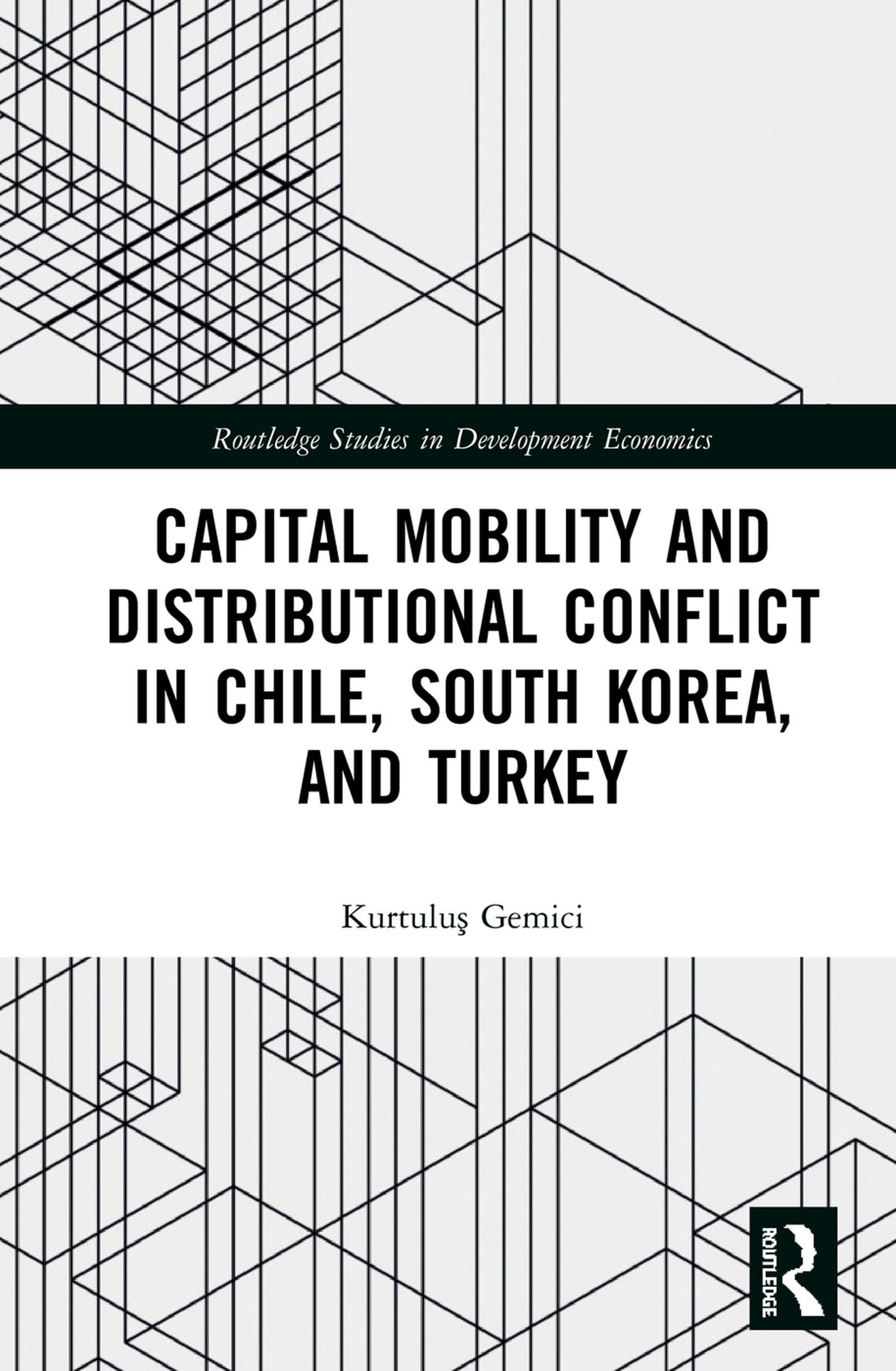
Why did many emerging countries pursue risky financial opening policies in a reckless manner, even after the painful example of the Latin American debt crisis? Unlike trade liberalization, which has mostly been beneficial in emerging countries, the removal of capital controls has led to boom-bust patterns in many countries. It is not simply driven by class or sectoral interests, nor is it just a result of ideational changes in policy-making circles, or international pressure. Gemici argues that to fully understand the motivation for these policies, we need to take into account distributional struggles prior to their enactment.
In this book, Gemici shows that conflictual distributional relations significantly increase the likelihood of capital account liberalization. Through in-depth comparative case studies, he also demonstrates that countries which liberalize in the most comprehensive manner tend to be the countries characterized by a high degree of distributional conflict. The case studies – Argentina, Chile, South Korea , and Turkey – have been chosen to maximise variation in distributional relations and to escape regional clustering, showing quite different trajectories of capital account liberalization.
This will be of great interest to readers in sociology, international political economy and heterodox economics, as well as specialists in the countries examined.
Paga facilmente con carta, Klarna, Apple Pay o Google Pay. Non sei soddisfatto? Hai sempre 14 giorni per il rimborso. Leggi di più nei nostri termini. Per qualsiasi domanda, scrivici a hello@memmo.org.
Memmo rende lo studio più facile, ovunque tu sia nel mondo. Qui trovi i tuoi libri di testo e strumenti di studio intelligenti, tutto in un unico posto: riassunti, quiz, podcast e flashcard. E poi c'è Ted, il tuo compagno di studio che risponde a ogni tua domanda. Oltre 50.000 studenti studiano già qui: è stato creato per aiutarti a imparare più velocemente e a stressarti meno.