
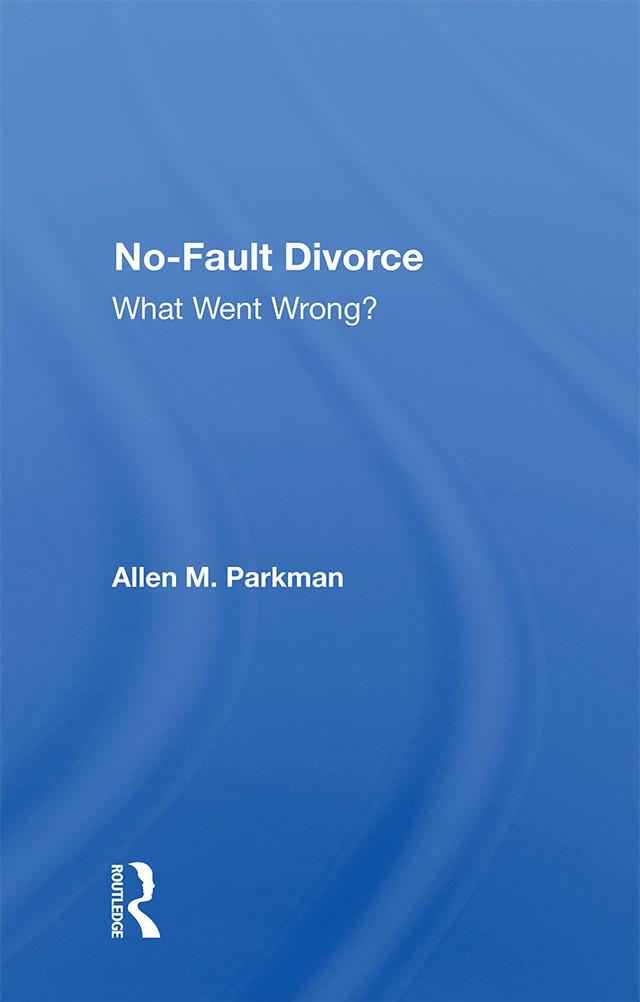
Since 1970, all the states adopted no-fault divorce statutes, which have had the unexpected effect of producing dire financial conditions for many divorced women and their children. In this important study, economist and lawyer Allen Parkman shows how no-fault divorce has systematically operated against the interests of these women and children. With rare economic and legal insight, Parkman argues that by changing the grounds for divorce without changing the laws that define and allocate property at divorce, the legal system created substantial injustices. The key mistake, he suggests, was in accepting a definition of property that did not include the income-earning capacity--human capital--of the individuals involved. Using human capital theory, Parkman criticizes current divorce law and presents a framework for reform that would reduce the injustices introduced by no-fault divorce. He concludes that a thorough reform, however, may require the changing of the grounds for divorce to mutual consent. This book is essential reading for scholars, professionals, and, indeed, for anyone interested in the health and future of the family and the well-being of women in contemporary U.S. society.
Paga facilmente con carta, Klarna, Apple Pay o Google Pay. Non sei soddisfatto? Hai sempre 14 giorni per il rimborso. Leggi di più nei nostri termini. Per qualsiasi domanda, scrivici a hello@memmo.org.
Memmo rende lo studio più facile, ovunque tu sia nel mondo. Qui trovi i tuoi libri di testo e strumenti di studio intelligenti, tutto in un unico posto: riassunti, quiz, podcast e flashcard. E poi c'è Ted, il tuo compagno di studio che risponde a ogni tua domanda. Oltre 50.000 studenti studiano già qui: è stato creato per aiutarti a imparare più velocemente e a stressarti meno.
Potrebbe interessarti anche
Acquista il libro0