
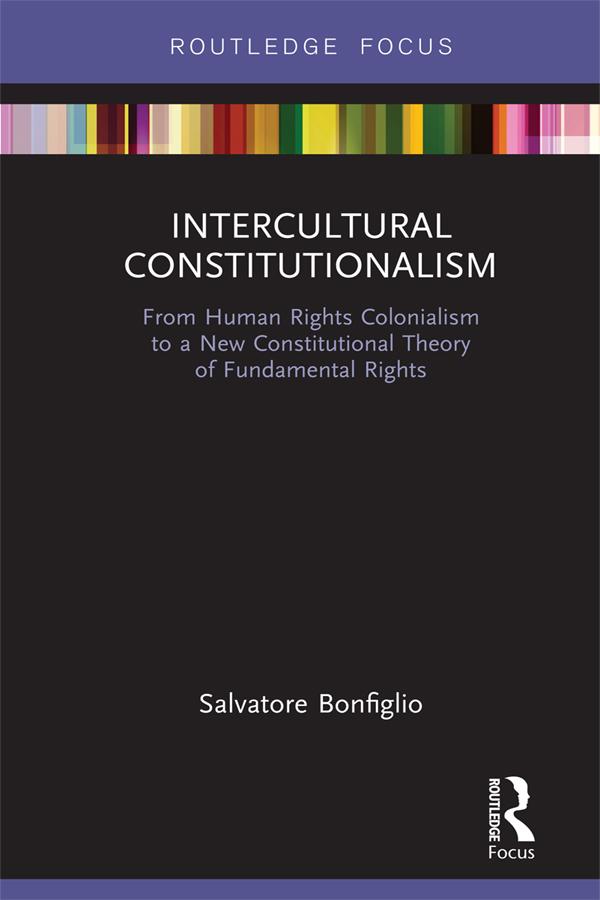
This book argues that the effective protection of fundamental rights in a contemporary, multicultural society requires not only tolerance and respect for others, but also an ethics of reciprocity and a pursuit of dialogue between different cultures of human rights. Nowadays, all cultures tend to claim an equitable arrangement that can be articulated in the terms of fundamental rights and in the multicultural organization of the State. Starting from the premise that every culture is and always was intercultural, this book elaborates a new, and more fundamentally, pluralist view of the relationship between rights and cultural identity. No culture is pure; from the perspective of an irreducible cultural contamination, this book argues, it is possible to formulate constitutional idea of diversity that is properly intercultural. This concept of intercultural constitutionalism is not, then, based on abstract principles, but nor is it bound to any particular cultural norm. Rather, intercultural constitutionalism allows the interpretation of rights, rules and legal principles, which are established in different contexts.
Paga facilmente con carta, Klarna, Apple Pay o Google Pay. Non sei soddisfatto? Hai sempre 14 giorni per il rimborso. Leggi di più nei nostri termini. Per qualsiasi domanda, scrivici a hello@memmo.org.
Memmo rende lo studio più facile, ovunque tu sia nel mondo. Qui trovi i tuoi libri di testo e strumenti di studio intelligenti, tutto in un unico posto: riassunti, quiz, podcast e flashcard. E poi c'è Ted, il tuo compagno di studio che risponde a ogni tua domanda. Oltre 50.000 studenti studiano già qui: è stato creato per aiutarti a imparare più velocemente e a stressarti meno.