
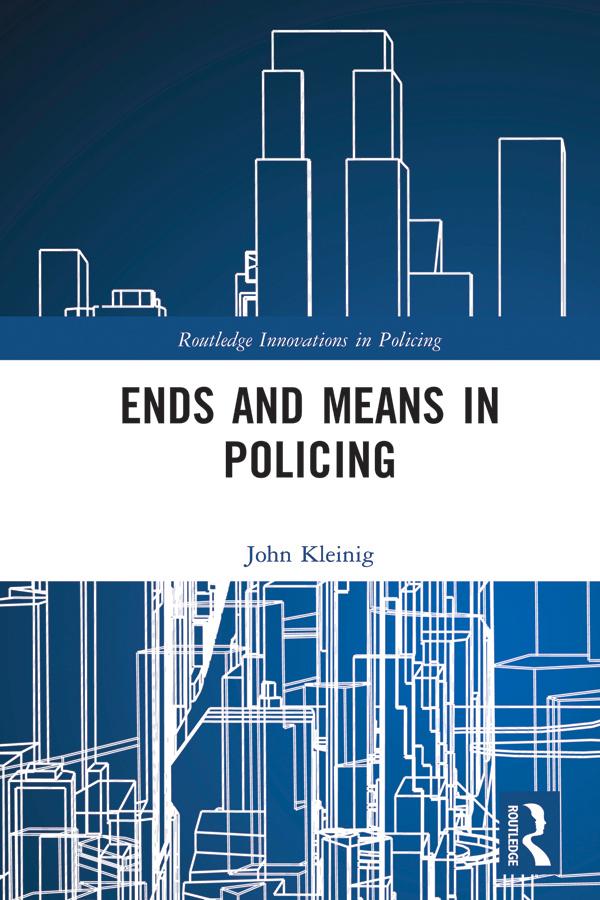
Policing is a highly pragmatic occupation. It is designed to achieve the important social ends of peacekeeping and public safety, and is empowered to do so using means that are ordinarily seen as problematic; that is, the use of force, deception, and invasions of privacy, along with considerable discretion. It is often suggested that the ends of policing justify the use of otherwise problematic means, but do they?
This book explores this question from a philosophical perspective. The relationship between ends and means has a long and contested history both in moral/practical reasoning and public policy. Looking at this history through the lens of policing, criminal justice philosopher John Kleinig explores the dialectic of ends and means (whether the ends justify the means, or whether the ends never justify the means) and offers a new, sharpened perspective on police ethics.
After tracing the various ways in which ends and means may be construed, the book surveys a series of increasingly concrete issues, focusing especially on those that arise in policing contexts. The competing moral demands made by ends and means culminate in considerations of noble cause corruption, dirty hands theory, lesser degradations (such as tear gas, tasers, chokeholds, and so on), and finally, those means deemed impermissible by the majority in Western culture, such as torture.
Paga facilmente con carta, Klarna, Apple Pay o Google Pay. Non sei soddisfatto? Hai sempre 14 giorni per il rimborso. Leggi di più nei nostri termini. Per qualsiasi domanda, scrivici a hello@memmo.org.
Memmo rende lo studio più facile, ovunque tu sia nel mondo. Qui trovi i tuoi libri di testo e strumenti di studio intelligenti, tutto in un unico posto: riassunti, quiz, podcast e flashcard. E poi c'è Ted, il tuo compagno di studio che risponde a ogni tua domanda. Oltre 50.000 studenti studiano già qui: è stato creato per aiutarti a imparare più velocemente e a stressarti meno.