
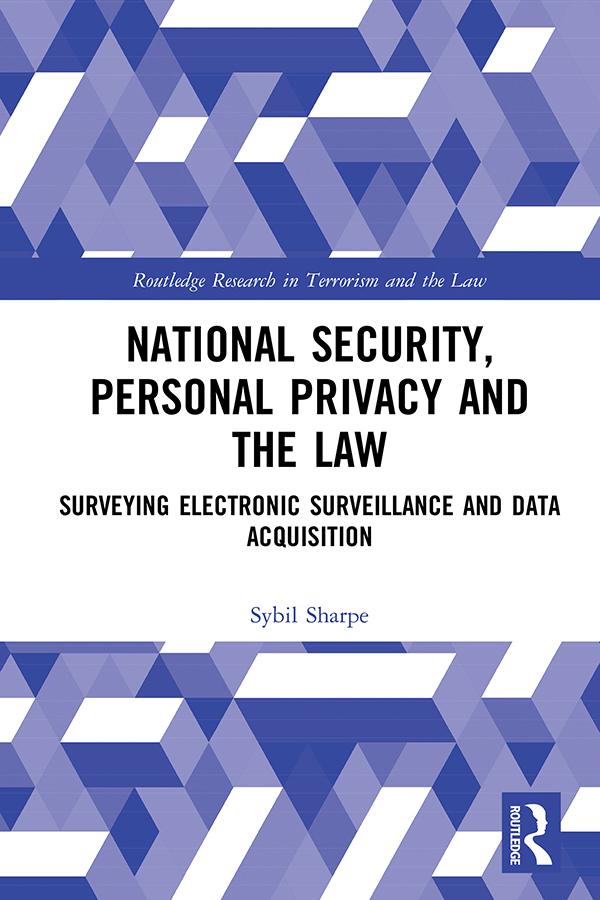
There have been significant changes in public attitudes towards surveillance in the last few years as a consequence of the Snowden disclosures and the Cambridge Analytica scandal. This book re-evaluates competing arguments between national security and personal privacy. The increased assimilation between the investigatory powers of the intelligence services and the police and revelations of unauthorised surveillance have resulted in increased demands for transparency in information gathering and for greater control of personal data. Recent legal reforms have attempted to limit the risks to freedom of association and expression associated with electronic surveillance. This book looks at the background to recent reforms and explains how courts and the legislature are attempting to effect a balance between security and personal liberty within a social contract. It asks what drives public concern when other aspects seem to be less contentious. In view of our apparent willingness to post on social media and engage in online commerce, it considers if we are truly consenting to a loss of privacy and how this reconciles with concerns about state surveillance.
Paga facilmente con carta, Klarna, Apple Pay o Google Pay. Non sei soddisfatto? Hai sempre 14 giorni per il rimborso. Leggi di più nei nostri termini. Per qualsiasi domanda, scrivici a hello@memmo.org.
Memmo rende lo studio più facile, ovunque tu sia nel mondo. Qui trovi i tuoi libri di testo e strumenti di studio intelligenti, tutto in un unico posto: riassunti, quiz, podcast e flashcard. E poi c'è Ted, il tuo compagno di studio che risponde a ogni tua domanda. Oltre 50.000 studenti studiano già qui: è stato creato per aiutarti a imparare più velocemente e a stressarti meno.