
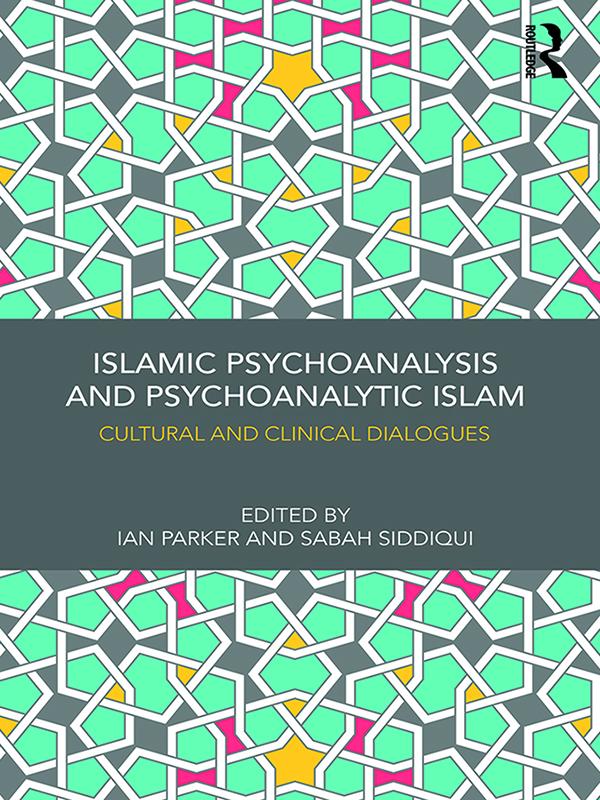
This pioneering volume brings together scholars and clinicians working at the intersection of Islam and psychoanalysis to explore both the connections that link these two traditions, as well as the tensions that exist between them.
Uniting authors from a diverse range of traditions and perspectives, including Freudian, Jungian, Lacanian, Object-Relations, and Group-Analytic, the book creates a dialogue through which several key questions can be addressed. How can Islam be rendered amenable to psychoanalytic interpretation? What might an ‘Islamic psychoanalysis’ look like that accompanies and questions the forms of psychoanalysis that developed in the West? And what might a ‘psychoanalytic Islam’ look like that speaks for, and perhaps even transforms, the forms of truth that Islam produces?
In an era of increasing Islamophobia in the West, this important book identifies areas where clinical practice can be informed by a deeper understanding of contemporary Islam, as well as what it means to be a Muslim today. It will appeal to trainees and practitioners of psychoanalysis and psychotherapy, as well as scholars interested in religion and Islamic studies.
Paga facilmente con carta, Klarna, Apple Pay o Google Pay. Non sei soddisfatto? Hai sempre 14 giorni per il rimborso. Leggi di più nei nostri termini. Per qualsiasi domanda, scrivici a hello@memmo.org.
Memmo rende lo studio più facile, ovunque tu sia nel mondo. Qui trovi i tuoi libri di testo e strumenti di studio intelligenti, tutto in un unico posto: riassunti, quiz, podcast e flashcard. E poi c'è Ted, il tuo compagno di studio che risponde a ogni tua domanda. Oltre 50.000 studenti studiano già qui: è stato creato per aiutarti a imparare più velocemente e a stressarti meno.