
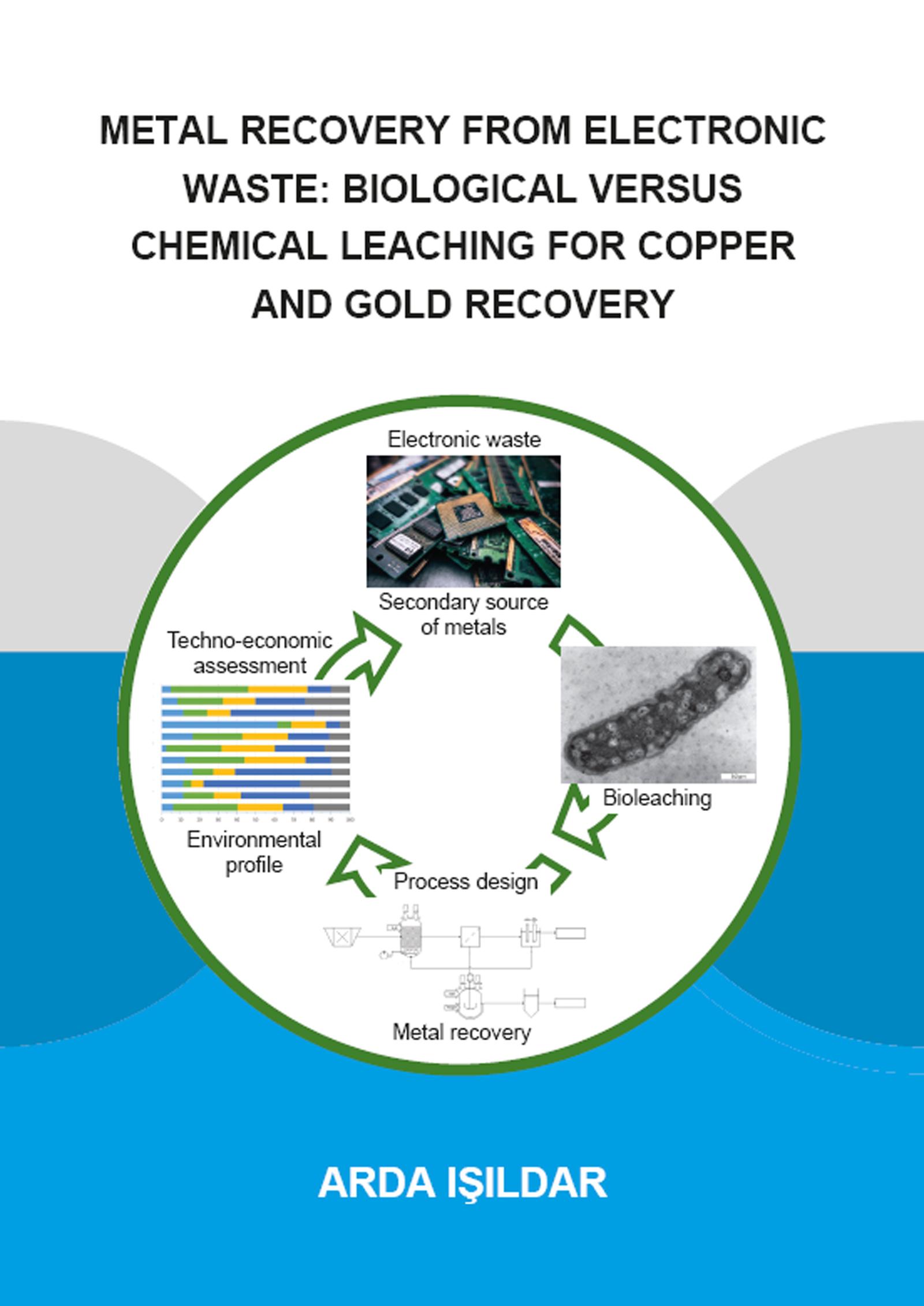
Waste electrical and electronic equipment (WEEE) generation is a global problem. Despite the growing awareness and deterring legislation, most of the WEEE is disposed improperly, i.e. landfilled or otherwise shipped overseas, and treated in sub-standard conditions. Informal recycling of WEEE has catastrophic effects on humans and the environment. WEEE contains considerable quantities of valuable metals such as base metals, precious metals and rare earth elements (REE). Metal recovery from WEEE is conventionally carried out by pyrometallurgical and hydrometallurgical methods.
In this PhD research, novel metal recovery technologies from WEEE are investigated. Using acidophilic and cyanide-generating bacteria, copper and gold were removed from crushed electronic waste with removal efficiencies of 98.4 and 44.0%, respectively. The leached metals in solution were recovered using sulfidic precipitation and electrowinning separation techniques. Finally, a techno-economic assessment of the technology was studied. This research addresses the knowledge gap on two metal extraction approaches, namely chemical and biological, from a secondary source of metals. The essential parameters of the selective metal recovery processes, scale-up potential, techno-economic and sustainability assessment have been studied.
Paga facilmente con carta, Klarna, Apple Pay o Google Pay. Non sei soddisfatto? Hai sempre 14 giorni per il rimborso. Leggi di più nei nostri termini. Per qualsiasi domanda, scrivici a hello@memmo.org.
Memmo rende lo studio più facile, ovunque tu sia nel mondo. Qui trovi i tuoi libri di testo e strumenti di studio intelligenti, tutto in un unico posto: riassunti, quiz, podcast e flashcard. E poi c'è Ted, il tuo compagno di studio che risponde a ogni tua domanda. Oltre 50.000 studenti studiano già qui: è stato creato per aiutarti a imparare più velocemente e a stressarti meno.