
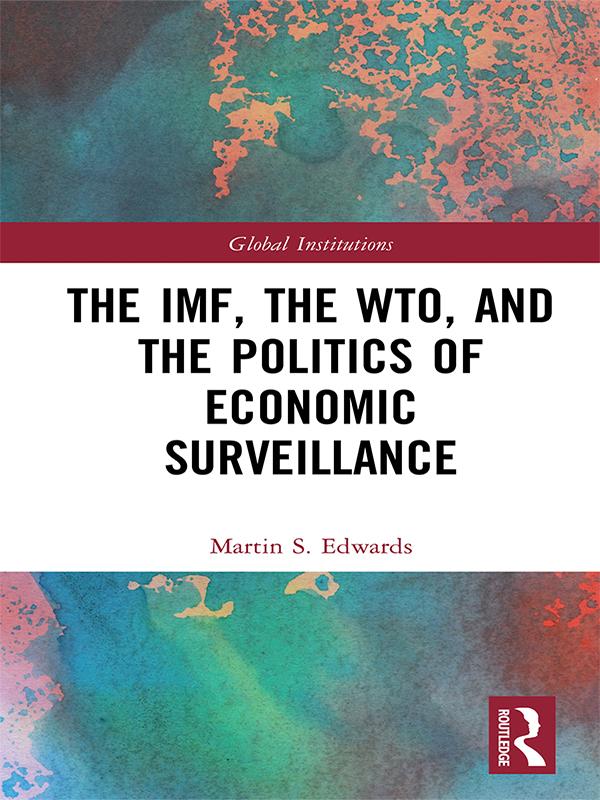
Both the International Monetary Fund (IMF) and the World Trade Organization (WTO) practice periodic surveillance of members to ensure that countries are adopting appropriate economic policies. Despite the importance of these procedures, they remain understudied by scholars. The global economic crisis has tested both organizations and brought surveillance to the forefront of policy debates. Understanding how surveillance works, then, contributes to both theoretical and policy concerns.
The world is paying increasing attention to issues of transparency and accountability, questioning whether these organizations are in part responsible for the global economic crisis, as well as assessing their responsiveness to the crisis. This comparative analysis of surveillance at the IMF and WTO fills a significant gap in the existing literature, drawing together a large range of empirical data and offering an extended critical analysis of this key issue.
Examining how and in what contexts surveillance is influential and how variations in institutional design shape the effectiveness of surveillance, Edwards moves on to offer recommendations of how surveillance can be designed differently to make it more effective in the future. This work will be of great interest to students and scholars of international organizations, international political economy and global governance.
Paga facilmente con carta, Klarna, Apple Pay o Google Pay. Non sei soddisfatto? Hai sempre 14 giorni per il rimborso. Leggi di più nei nostri termini. Per qualsiasi domanda, scrivici a hello@memmo.org.
Memmo rende lo studio più facile, ovunque tu sia nel mondo. Qui trovi i tuoi libri di testo e strumenti di studio intelligenti, tutto in un unico posto: riassunti, quiz, podcast e flashcard. E poi c'è Ted, il tuo compagno di studio che risponde a ogni tua domanda. Oltre 50.000 studenti studiano già qui: è stato creato per aiutarti a imparare più velocemente e a stressarti meno.