
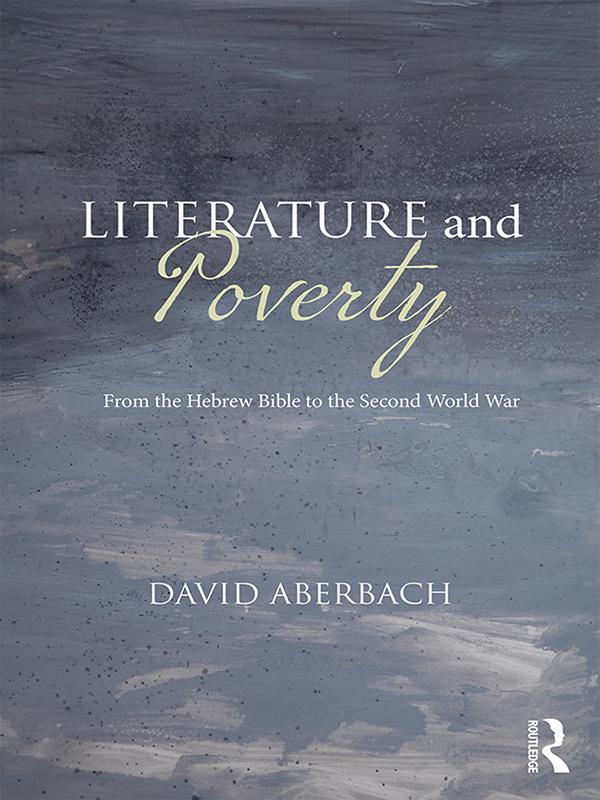
Literature and Poverty offers an engaging overview of changes in literary perceptions of poverty and the poor. Part I of the book, from the Hebrew Bible to the French Revolution, provides essential background information. It introduces the Scriptural ideal of the ‘holy poor’ and the process by which biblical love of the poor came to be contested and undermined in European legislation and public opinion as capitalism grew and the state took over from the Church; Part II, from the French Revolution to World War II, shows how post-1789 problems of industrialization, population growth, war, and urbanization came to dominate much European literature, as poverty and the poor became central concerns of major writers such as Dickens, Dostoyevsky, and Hugo.
David Aberbach uses literature – from the Bible, through Shakespeare, Wordsworth, Zola, Pushkin, and Orwell – to show how poverty changed from being an endemic and unavoidable fact of life, to a challenge for equality that might be attainable through a moral and rational society. As a literary and social history of poverty, this book argues for the vital importance of literature and the arts in understanding current problems in International Development.
Paga facilmente con carta, Klarna, Apple Pay o Google Pay. Non sei soddisfatto? Hai sempre 14 giorni per il rimborso. Leggi di più nei nostri termini. Per qualsiasi domanda, scrivici a hello@memmo.org.
Memmo rende lo studio più facile, ovunque tu sia nel mondo. Qui trovi i tuoi libri di testo e strumenti di studio intelligenti, tutto in un unico posto: riassunti, quiz, podcast e flashcard. E poi c'è Ted, il tuo compagno di studio che risponde a ogni tua domanda. Oltre 50.000 studenti studiano già qui: è stato creato per aiutarti a imparare più velocemente e a stressarti meno.