
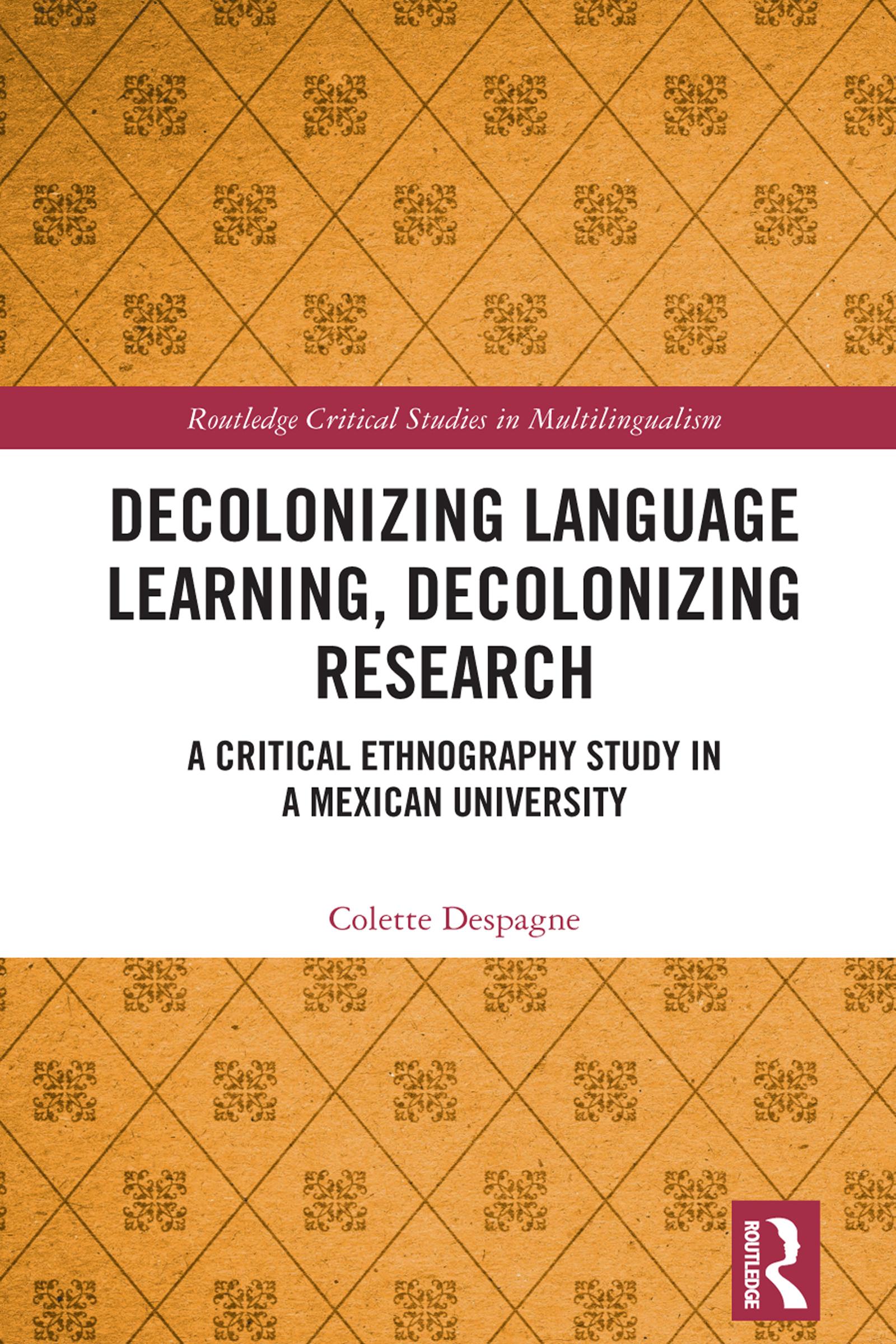
This volume explores the socio-political dynamics, historical forces, and unequal power relationships which mediate language ideologies in Mexican higher education settings, shedding light on the processes by which minority students learn new languages in postcolonial contexts. Drawing on data from a critical ethnographic case study of a Mexican university over several years, the book turns a critical lens on language learning autonomy and the use of the Common European Framework of Reference for Languages (CEFR) in postcolonial higher education settings, and advocates for an approach to the language learning and teaching process which takes into account minority language learners’ cultural heritage and localized knowledge. Despagne also showcases this approach in the unique research methodology which underpins the data, integrating participatory methods such as Interpretative Focus Groups in an attempt to decolonize research by engaging and involving participants in the analysis of data. Highlighting the importance of critical approaches in encouraging the equitable treatment of diverse cultures and languages and the development of agency in minority language learners, this book will be key reading for researchers in sociolinguistics, educational linguistics, applied linguistics, ethnography of communication, and linguistic anthropology.
Paga facilmente con carta, Klarna, Apple Pay o Google Pay. Non sei soddisfatto? Hai sempre 14 giorni per il rimborso. Leggi di più nei nostri termini. Per qualsiasi domanda, scrivici a hello@memmo.org.
Memmo rende lo studio più facile, ovunque tu sia nel mondo. Qui trovi i tuoi libri di testo e strumenti di studio intelligenti, tutto in un unico posto: riassunti, quiz, podcast e flashcard. E poi c'è Ted, il tuo compagno di studio che risponde a ogni tua domanda. Oltre 50.000 studenti studiano già qui: è stato creato per aiutarti a imparare più velocemente e a stressarti meno.