
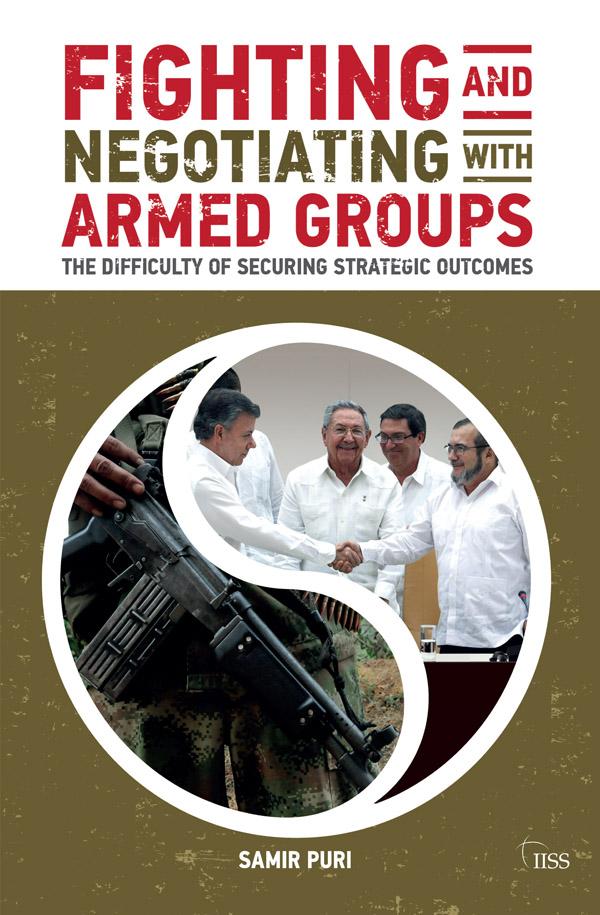
What constitutes an effective and realistic strategy for dealing with non-state armed groups? This question has bedevilled states the world over. From Colombia and FARC, Turkey and the PKK, the Taliban in Afghanistan and Pakistan, and the persistent insurgency in Iraq – the governments concerned struggle to either fight or negotiate their way to an end.
Fighting armed groups is an uncertain business, and so is negotiating. Doing both alternately, concurrently or selectively, is highly demanding. This book develops a framework to help analysts and policymakers understand the challenges of using a combination of coercion and diplomacy in dealing with armed groups. It considers which complexities have proved most inhibiting, and which have been worked around. What are the obvious traps that states fall into? What appear to be the smarter moves?
Thinking in terms or ‘military’ or ‘political’ solutions is unhelpful – to be genuinely strategic, a response must concern itself with managing the mix. Ten examples from around the world are worked through to examine this theme. The net is cast wide purposefully, so that the lessons for strategy can be made explicit, rather than lost amid a bloody contemporary history of wars involving armed groups.
Paga facilmente con carta, Klarna, Apple Pay o Google Pay. Non sei soddisfatto? Hai sempre 14 giorni per il rimborso. Leggi di più nei nostri termini. Per qualsiasi domanda, scrivici a hello@memmo.org.
Memmo rende lo studio più facile, ovunque tu sia nel mondo. Qui trovi i tuoi libri di testo e strumenti di studio intelligenti, tutto in un unico posto: riassunti, quiz, podcast e flashcard. E poi c'è Ted, il tuo compagno di studio che risponde a ogni tua domanda. Oltre 50.000 studenti studiano già qui: è stato creato per aiutarti a imparare più velocemente e a stressarti meno.