
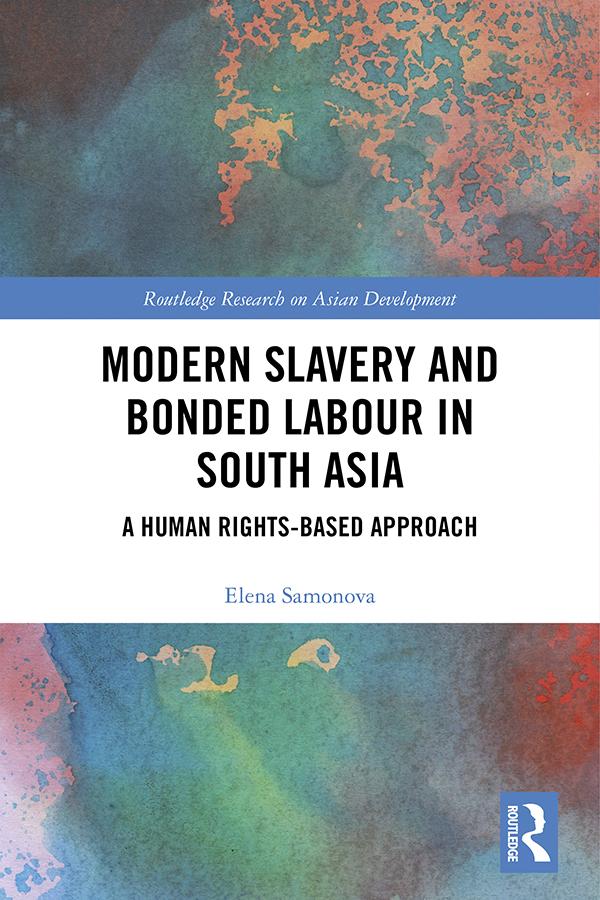
This book investigates one of the most pervasive forms of modern slavery: bonded labour, whereby labour is linked with a credit agreement, leaving a debtor bound to repay their debt through long-term servitude. Drawing on cases from Nepal and India, the author adopts a human rights-based approach, interpreting slavery as a violation of human rights, and focusing on the empowerment of slaves as rights holders. Ultimately the book aims to explore the links between rights, power inequality and oppression, and to uncover ways to achieve the full liberation of bonded labourers.
Identifying the factors and forces that contribute to and reinforce the situation of bonded labour in South Asia, the book demonstrates how systems of bonded labour are connected to long-term processes of colonisation, dispossession, migration, nationalisation of natural resources, and the introduction of private land ownership. Despite the fact that the United Nations has reported debt bondage as the most prevalent form of forced labour worldwide, there it is still little known about the real practical impacts of this approach to the lives of marginalised people.
Based on extensive ethnographic research, this book will be a useful guide to students and scholars of modern slavery, international development, and South Asian studies.
Paga facilmente con carta, Klarna, Apple Pay o Google Pay. Non sei soddisfatto? Hai sempre 14 giorni per il rimborso. Leggi di più nei nostri termini. Per qualsiasi domanda, scrivici a hello@memmo.org.
Memmo rende lo studio più facile, ovunque tu sia nel mondo. Qui trovi i tuoi libri di testo e strumenti di studio intelligenti, tutto in un unico posto: riassunti, quiz, podcast e flashcard. E poi c'è Ted, il tuo compagno di studio che risponde a ogni tua domanda. Oltre 50.000 studenti studiano già qui: è stato creato per aiutarti a imparare più velocemente e a stressarti meno.