
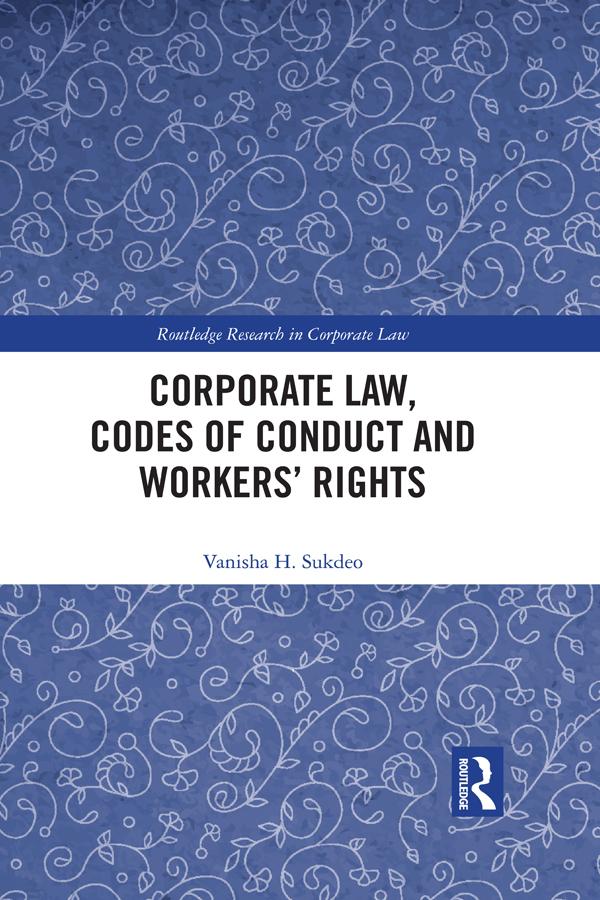
This book critically explores how increased regulation and governance of corporations can be used to help improve the rights of workers amidst an era of union decline.
The book posits that soft law techniques such as codes of conduct are more effective in protecting workers than "hard law" i.e. domestic regulation. It starts by analysing the transnational regulation of corporations and codes of conduct, and then puts forward a model code of conduct that can be used by corporations to help increase the protection of workers. Through this model's use of a monitoring scheme, shareholders, activists, and NGOs put pressure on the corporation to reform itself and enact a code which has obligations flowing both ways between the corporation and its employees. The book then looks at the expansions of fiduciary duties and changes to corporate governance, including Benefit Corporations and how they can be used to increase the rights of workers. It then discusses changes to standard union contracts before concluding with an assessment of the best way forward for workers’ rights.
By providing a new contribution to the current dialogue on corporate social responsibility and codes of conduct, this book will be a valuable resource for academics working on labour, employment, and business law as well as corporate lawyers.
Paga facilmente con carta, Klarna, Apple Pay o Google Pay. Non sei soddisfatto? Hai sempre 14 giorni per il rimborso. Leggi di più nei nostri termini. Per qualsiasi domanda, scrivici a hello@memmo.org.
Memmo rende lo studio più facile, ovunque tu sia nel mondo. Qui trovi i tuoi libri di testo e strumenti di studio intelligenti, tutto in un unico posto: riassunti, quiz, podcast e flashcard. E poi c'è Ted, il tuo compagno di studio che risponde a ogni tua domanda. Oltre 50.000 studenti studiano già qui: è stato creato per aiutarti a imparare più velocemente e a stressarti meno.