
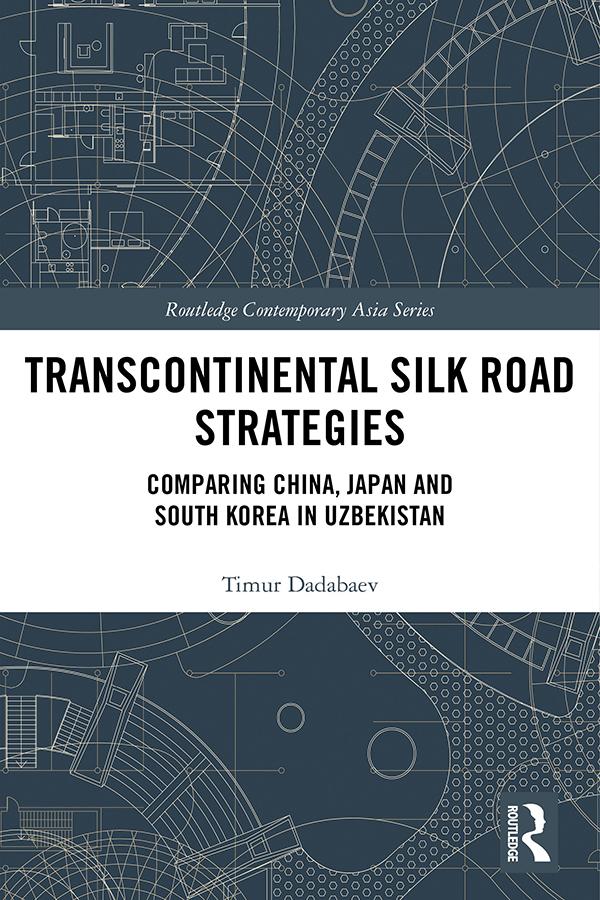
This book analyzes initiatives and concepts initiated by China, Japan and South Korea (the Republic of Korea) toward Central Asia to ascertain their impact on regionalism and regional cooperation in Central Asia.
Using the case study of Uzbekistan, the book focuses on the formation of the discourse of engagement with the region of Central Asia through the notion of the Silk Road narrative. The author puts forward the prospects for engagement and cooperation in the region by analyzing initiatives such as the Eurasian/Silk Road Diplomacy of Japan of 1997, the Shanghai Process by China, the Korean corporate offensive, and other so-called Silk Road initiatives such as One Belt One Road (OBOR) or the Belt and Road Initiative (BRI). The book argues that material factors and interests of these states are not the only motivations for engagement with Central Asia. The author suggests that cultural environment and identity act as additional behavioral incentives for the states’ cooperation as these factors create a space for actors in global politics. The book deconstructs Chinese narratives and foreign policy toward smaller states and presents a more balanced account of Central Asian international relations by taking into account Japanese and South Korean approaches to Central Asia.
This book encourages wider theoretical discussions of Central Asian–specific forms of cooperation and relationships. It provides a timely analysis of Central Asian international relations and is a helpful reference for researchers and students in the fields of international relations, security studies, Asian politics, global politics, Central Asian Studies and Silk Road studies.
Paga facilmente con carta, Klarna, Apple Pay o Google Pay. Non sei soddisfatto? Hai sempre 14 giorni per il rimborso. Leggi di più nei nostri termini. Per qualsiasi domanda, scrivici a hello@memmo.org.
Memmo rende lo studio più facile, ovunque tu sia nel mondo. Qui trovi i tuoi libri di testo e strumenti di studio intelligenti, tutto in un unico posto: riassunti, quiz, podcast e flashcard. E poi c'è Ted, il tuo compagno di studio che risponde a ogni tua domanda. Oltre 50.000 studenti studiano già qui: è stato creato per aiutarti a imparare più velocemente e a stressarti meno.