
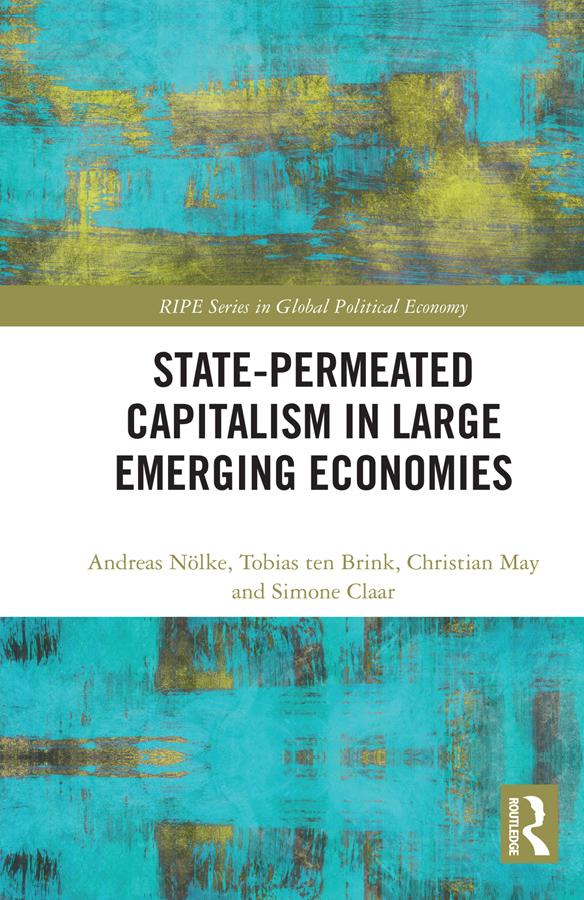
This book systematically analyzes the economic dynamics of large emerging economies from an extended Comparative Capitalisms perspective. Coining the phrase ‘state-permeated capitalism’, the authors shift the focus of research from economic policy alone, towards the real world of corporate and state behaviour.
On the basis of four empirical case studies (Brazil, India, China, South Africa), the main drivers for robust economic growth in these countries from the 2000s until the 2010s are revealed. These are found, in particular, in mutual institutional compatibilities of ‘state-permeated capitalism’, in their large domestic markets, and beneficial global economic constellations. Differences in their institutional arrangements are explored to explain why China and India have been more economically successful than Brazil and South Africa. The authors highlight substantial challenges for the stability of state-permeated capitalism and assess the potential future growth, sustainability and likely pitfalls for these large emerging economies.
Opening further avenues for empirical and theoretical research, this book raises questions for the future of the global economic order and should appeal to academics, graduate students and advanced undergraduates in politics, economics, economic sociology and development studies. It should also prove a worthwhile and provocative read for development practitioners and policy-makers.
Paga facilmente con carta, Klarna, Apple Pay o Google Pay. Non sei soddisfatto? Hai sempre 14 giorni per il rimborso. Leggi di più nei nostri termini. Per qualsiasi domanda, scrivici a hello@memmo.org.
Memmo rende lo studio più facile, ovunque tu sia nel mondo. Qui trovi i tuoi libri di testo e strumenti di studio intelligenti, tutto in un unico posto: riassunti, quiz, podcast e flashcard. E poi c'è Ted, il tuo compagno di studio che risponde a ogni tua domanda. Oltre 50.000 studenti studiano già qui: è stato creato per aiutarti a imparare più velocemente e a stressarti meno.