
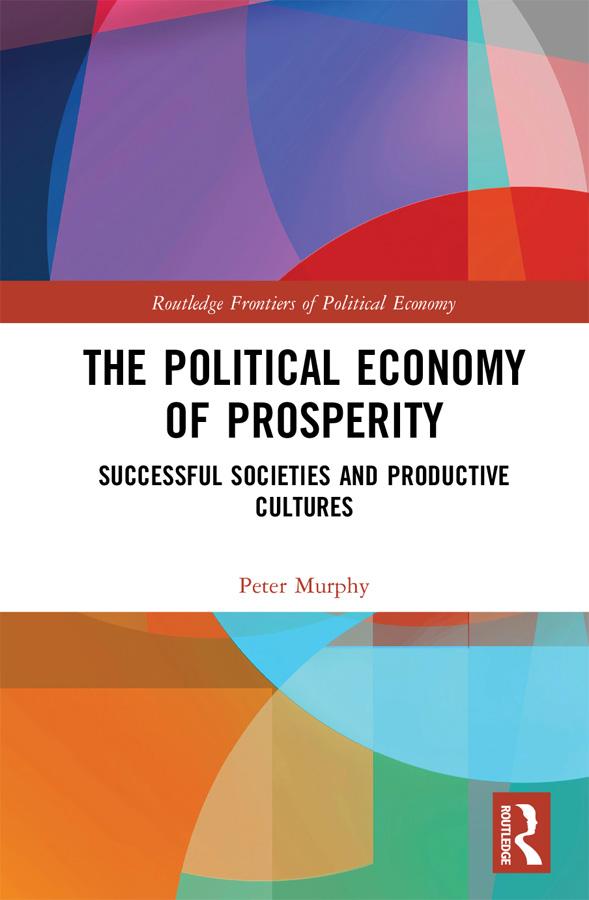
Why do some nations and cities attain high levels of economic and social prosperity? What makes them so successful? The kinds of factors habitually cited in answer to these questions explain why nations improve their economic and social performance but not why a small group of nations (or cities) perform much better than the rest. Economists stress efficient markets, effective industries and functional factors like transport, health, education, and infrastructure. Political scientists emphasize honest and democratic government. This book argues that three further factors are key: paradoxes, patterns, and portals.
To an unusual degree, the world’s most prosperous economies and societies think and act paradoxically. At their core are enigmatic, puzzle-like belief systems that elicit cooperation via abstract patterns rather than personal connections. They are often accompanied by high levels of autodidactic self-directed learning and intense creation in the arts and sciences. These factors, when combined, facilitate large-scale interactions between strangers and, in so doing, they energize markets, industries, cities, and publics. Pattern-based political economies are especially prominent in the portal cities, regions, and nations that are concentrated along the world’s maritime circumference in North America, East Asia, North-Western Europe, and Australasia. It is only by integrating additional cognitive, cultural, creative, and geographic elements that we can truly understand the successes of prosperous economies.
This book represents a significant contribution to the literature on political economy, economic growth, and prosperity.
Paga facilmente con carta, Klarna, Apple Pay o Google Pay. Non sei soddisfatto? Hai sempre 14 giorni per il rimborso. Leggi di più nei nostri termini. Per qualsiasi domanda, scrivici a hello@memmo.org.
Memmo rende lo studio più facile, ovunque tu sia nel mondo. Qui trovi i tuoi libri di testo e strumenti di studio intelligenti, tutto in un unico posto: riassunti, quiz, podcast e flashcard. E poi c'è Ted, il tuo compagno di studio che risponde a ogni tua domanda. Oltre 50.000 studenti studiano già qui: è stato creato per aiutarti a imparare più velocemente e a stressarti meno.