
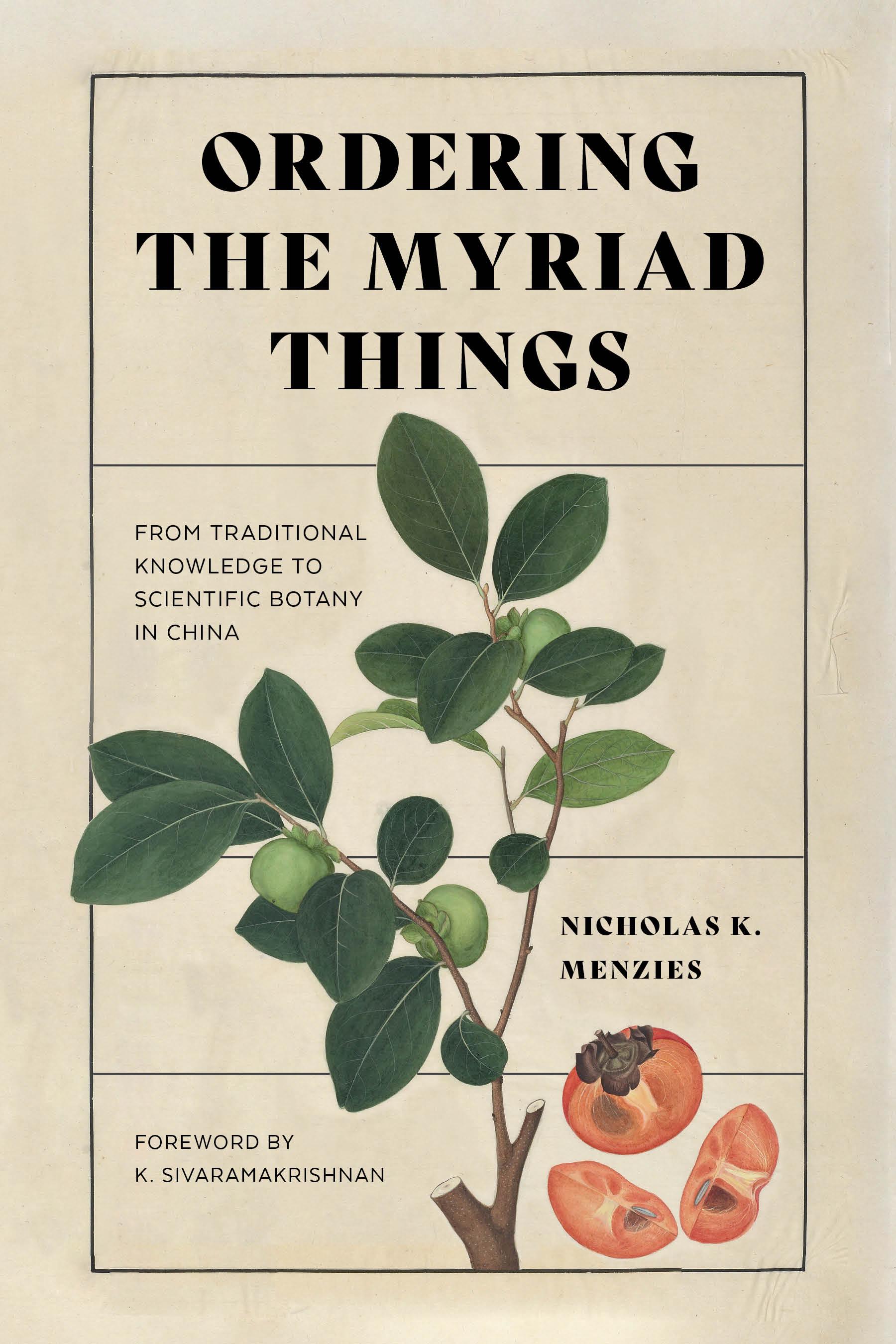
China’s vast and ancient body of documented knowledge about plants includes horticultural manuals and monographs, comprehensive encyclopedias, geographies, and specialized anthologies of verse and prose written by keen observers of nature. Until the late nineteenth century, however, standard practice did not include deploying a set of diagnostic tools using a common terminology and methodology to identify and describe new and unknown species or properties.
Ordering the Myriad Things relates how traditional knowledge of plants in China gave way to scientific botany between the mid-nineteenth and mid-twentieth centuries, when plants came to be understood in a hierarchy of taxonomic relationships to other plants and within a broader ecological context. This shift not only expanded the universe of plants beyond the familiar to encompass unknown species and geographies but fueled a new knowledge of China itself. Nicholas K. Menzies highlights the importance of botanical illustration as a tool for recording nature—contrasting how images of plants were used in the past to the conventions of scientific drawing and investigating the transition of “traditional” systems of organization, classification, observation, and description to “modern” ones.
Paga facilmente con carta, Klarna, Apple Pay o Google Pay. Non sei soddisfatto? Hai sempre 14 giorni per il rimborso. Leggi di più nei nostri termini. Per qualsiasi domanda, scrivici a hello@memmo.org.
Memmo rende lo studio più facile, ovunque tu sia nel mondo. Qui trovi i tuoi libri di testo e strumenti di studio intelligenti, tutto in un unico posto: riassunti, quiz, podcast e flashcard. E poi c'è Ted, il tuo compagno di studio che risponde a ogni tua domanda. Oltre 50.000 studenti studiano già qui: è stato creato per aiutarti a imparare più velocemente e a stressarti meno.