
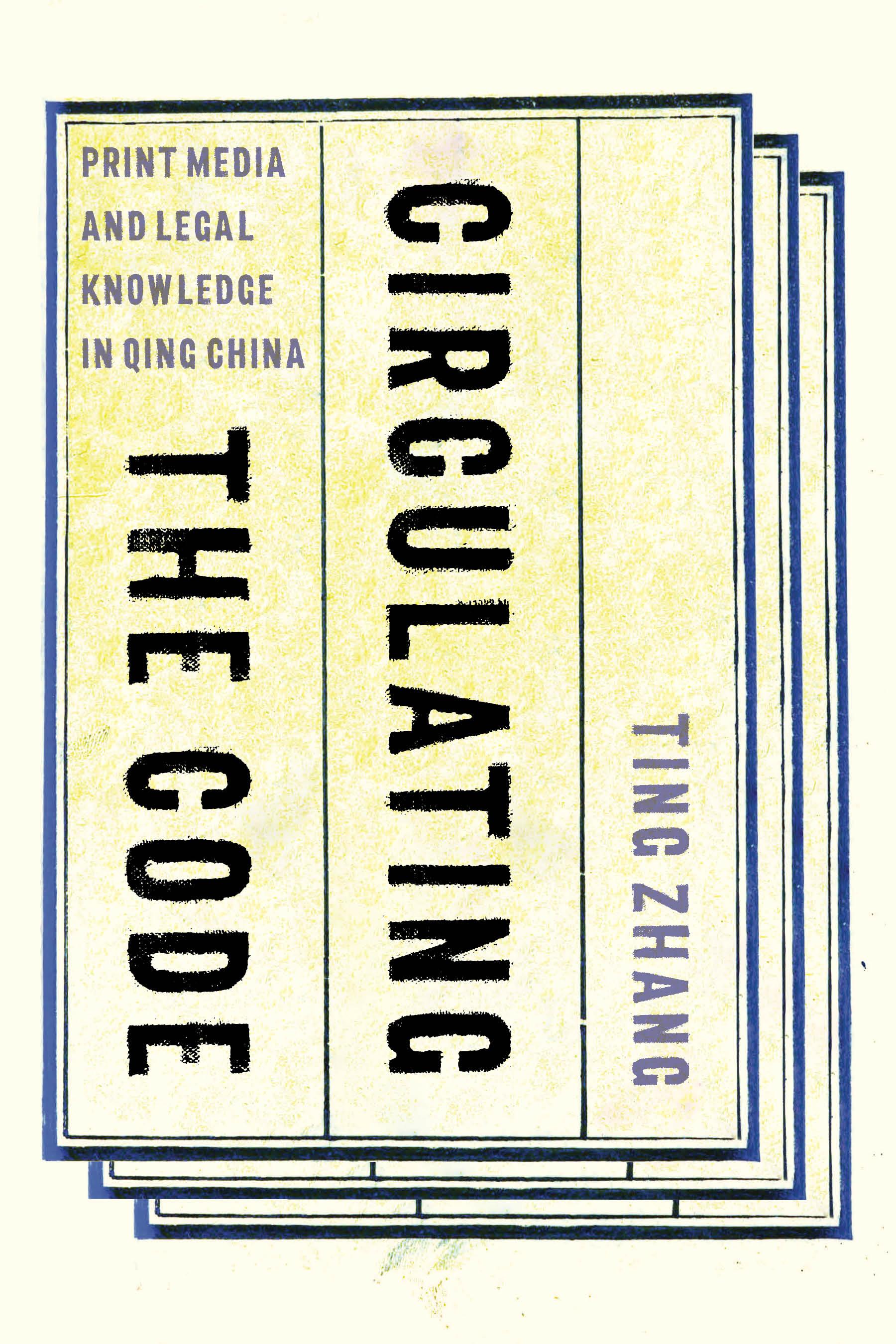
Contrary to longtime assumptions about the insular nature of imperial China’s legal system, Circulating the Code demonstrates that in the Qing dynasty (1644–1911) most legal books were commercially published and available to anyone who could afford to buy them. Publishers not only extended circulation of the dynastic code and other legal texts but also enhanced the judicial authority of case precedents and unofficial legal commentaries by making them more broadly available in convenient formats. As a result, the laws no longer represented privileged knowledge monopolized by the imperial state and elites. Trade in commercial legal imprints contributed to the formation of a new legal culture that included the free flow of accurate information, the rise of nonofficial legal experts, a large law-savvy population, and a high litigation rate.
Comparing different official and commercial editions of the Qing Code, popular handbooks for amateur legal practitioners, and manuals for community legal lectures, Ting Zhang demonstrates how the dissemination of legal information transformed Chinese law, judicial authority, and popular legal consciousness.
Paga facilmente con carta, Klarna, Apple Pay o Google Pay. Non sei soddisfatto? Hai sempre 14 giorni per il rimborso. Leggi di più nei nostri termini. Per qualsiasi domanda, scrivici a hello@memmo.org.
Memmo rende lo studio più facile, ovunque tu sia nel mondo. Qui trovi i tuoi libri di testo e strumenti di studio intelligenti, tutto in un unico posto: riassunti, quiz, podcast e flashcard. E poi c'è Ted, il tuo compagno di studio che risponde a ogni tua domanda. Oltre 50.000 studenti studiano già qui: è stato creato per aiutarti a imparare più velocemente e a stressarti meno.