
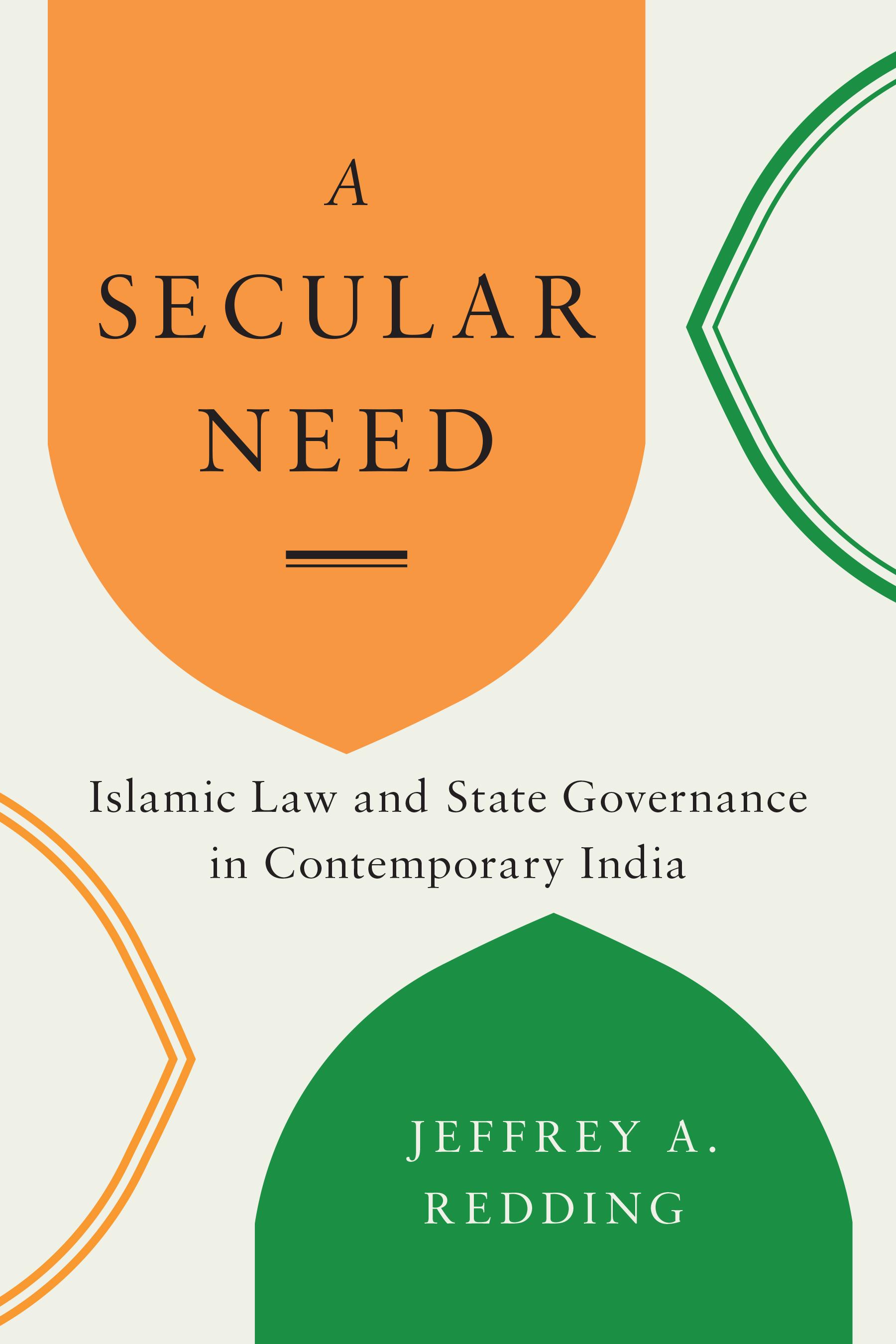
Whether from the perspective of Islamic law’s advocates, secularism’s partisans, or communities caught in their crossfire, many people see the relationship between Islamic law and secularism as antagonistic and increasingly discordant. In the United States there are calls for “sharia bans” in the courts, in western Europe legal limitations have been imposed on mosques and the wearing of headscarves, and in the Arab Middle East conflicts between secularist old guards and Islamist revolutionaries persist—suggesting that previously unsteady coexistences are transforming into outright hostilities.
Jeffrey Redding’s exploration of India’s non-state system of Muslim dispute resolution—known as the dar-ul-qaza system and commonly referred to as “Muslim courts” or “shariat courts”—challenges conventional narratives about the inevitable opposition between Islamic law and secular forms of governance, demonstrating that Indian secular law and governance cannot work without the significant assistance of non-state Islamic legal actors.
Paga facilmente con carta, Klarna, Apple Pay o Google Pay. Non sei soddisfatto? Hai sempre 14 giorni per il rimborso. Leggi di più nei nostri termini. Per qualsiasi domanda, scrivici a hello@memmo.org.
Memmo rende lo studio più facile, ovunque tu sia nel mondo. Qui trovi i tuoi libri di testo e strumenti di studio intelligenti, tutto in un unico posto: riassunti, quiz, podcast e flashcard. E poi c'è Ted, il tuo compagno di studio che risponde a ogni tua domanda. Oltre 50.000 studenti studiano già qui: è stato creato per aiutarti a imparare più velocemente e a stressarti meno.