
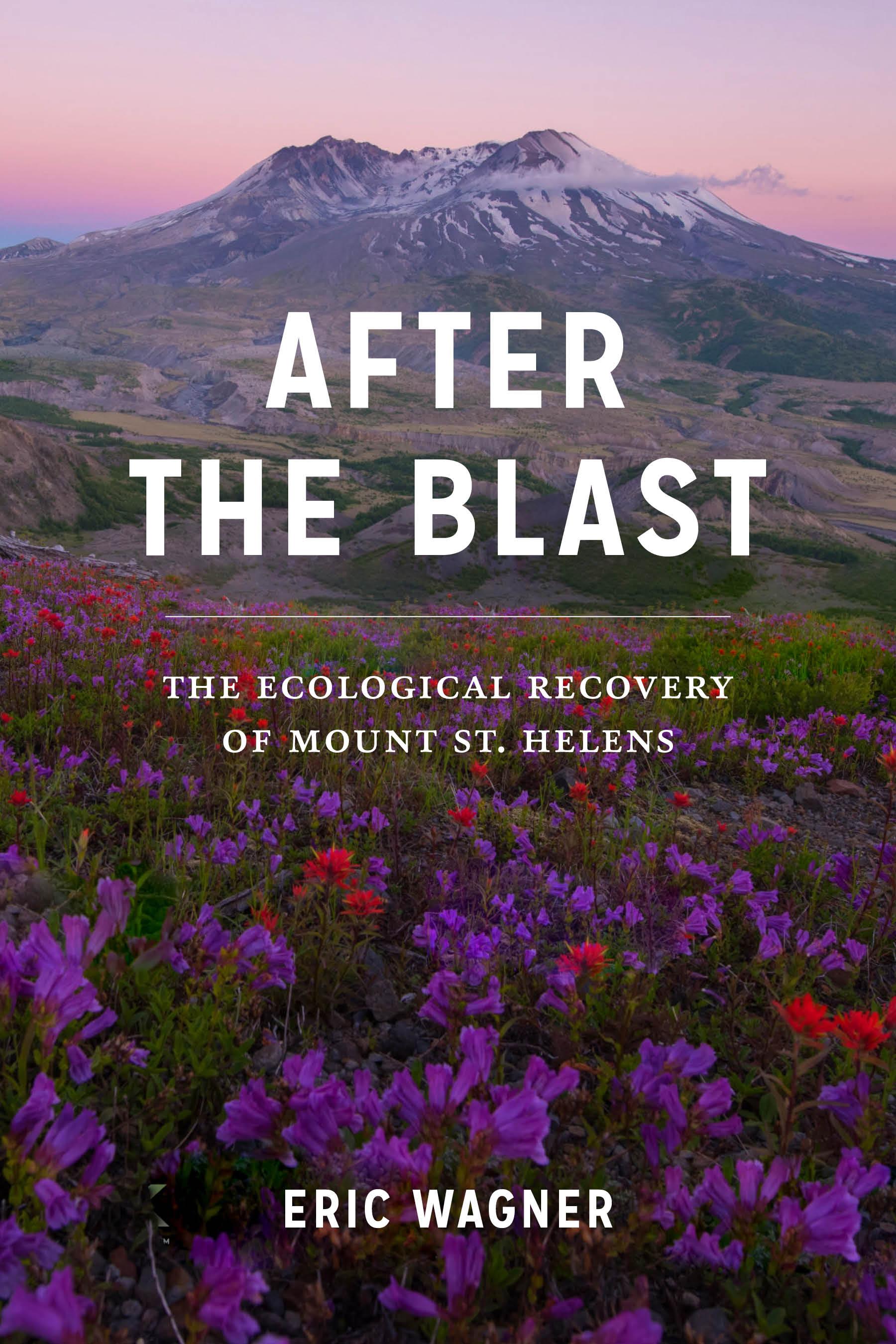
On May 18, 1980, people all over the world watched with awe and horror as Mount St. Helens erupted. Fifty-seven people were killed and hundreds of square miles of what had been lush forests and wild rivers were to all appearances destroyed.
Ecologists thought they would have to wait years, or even decades, for life to return to the mountain, but when forest scientist Jerry Franklin helicoptered into the blast area a couple of weeks after the eruption, he found small plants bursting through the ash and animals skittering over the ground. Stunned, he realized he and his colleagues had been thinking of the volcano in completely the wrong way. Rather than being a dead zone, the mountain was very much alive.
Mount St. Helens has been surprising ecologists ever since, and in After the Blast Eric Wagner takes readers on a fascinating journey through the blast area and beyond. From fireweed to elk, the plants and animals Franklin saw would not just change how ecologists approached the eruption and its landscape, but also prompt them to think in new ways about how life responds in the face of seemingly total devastation.
Paga facilmente con carta, Klarna, Apple Pay o Google Pay. Non sei soddisfatto? Hai sempre 14 giorni per il rimborso. Leggi di più nei nostri termini. Per qualsiasi domanda, scrivici a hello@memmo.org.
Memmo rende lo studio più facile, ovunque tu sia nel mondo. Qui trovi i tuoi libri di testo e strumenti di studio intelligenti, tutto in un unico posto: riassunti, quiz, podcast e flashcard. E poi c'è Ted, il tuo compagno di studio che risponde a ogni tua domanda. Oltre 50.000 studenti studiano già qui: è stato creato per aiutarti a imparare più velocemente e a stressarti meno.