
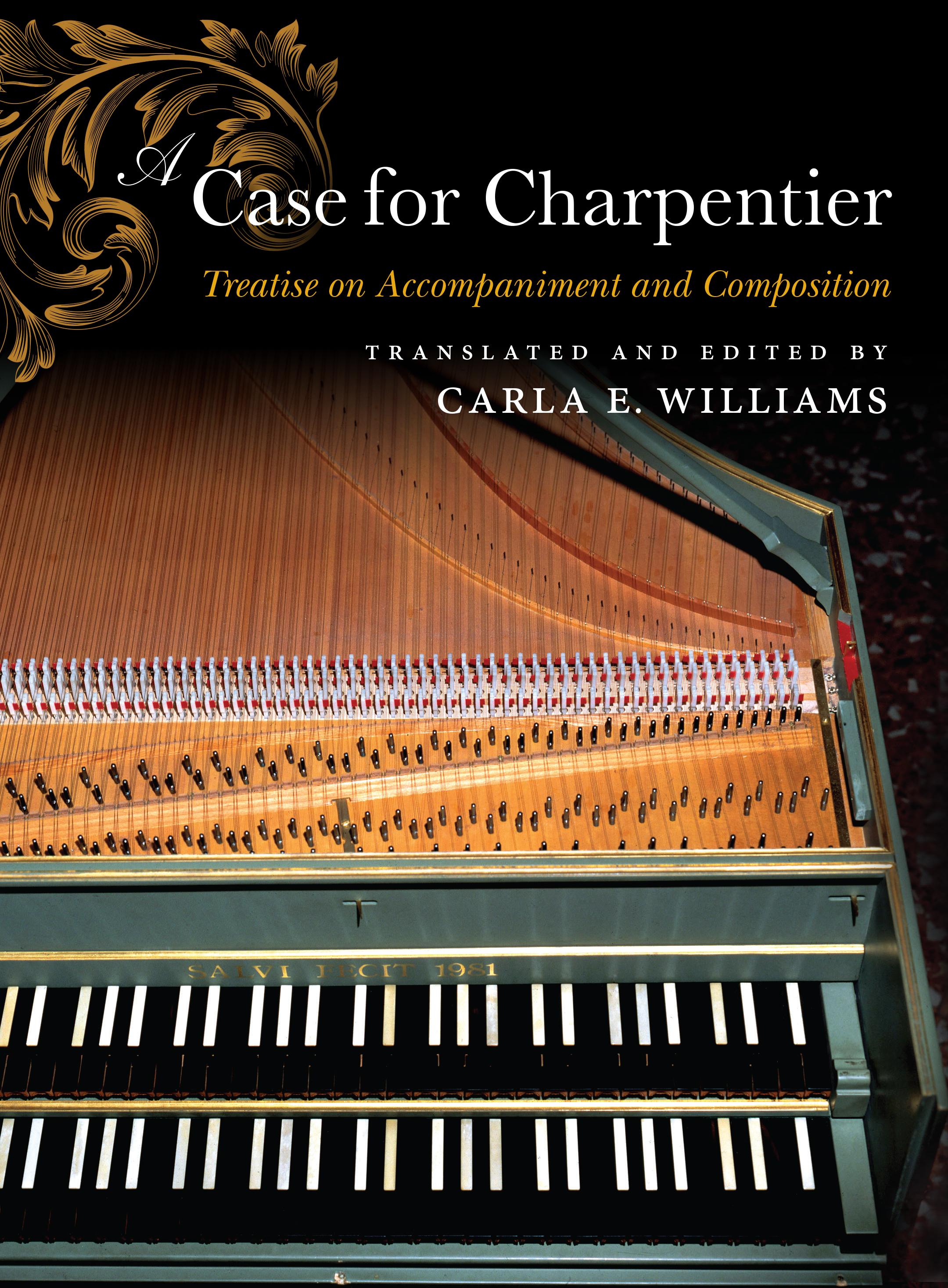
Who originally authored the anonymous, undated French manuscript Traité d'accompagnement et de composition?
Carla E. Williams tackles this mystery while providing the first English translation of this rare manuscript, which resides in the collections of the Lilly Library at Indiana University Bloomington. A Case for Charpentier presents a side-by-side transcription and translation of the treatise along with an introduction that offers historical context. In the manuscript itself, late 17th-century and early 18th-century writers discuss principal musical elements of composition including major and minor modes, the fundamental chords of both modes, dissonances and consonances, meter, tempo, and continuo realization, as well as basse continue. While these writers have not been formally identified, Williams argues that the handwriting of one is that of composer Marc-Antoine Charpentier. By providing a full physical description of the manuscript, along with comparisons of Charpentier's other writings and his handwriting, Williams sheds new light on both the treatise and Charpentier's theoretical writings.
With this translation, Williams not only shares invaluable insights into the pedagogical approaches for composition and continuo realization in late 17th-century France but also finally makes Traité d'accompagnement et de composition available to a broader audience.
Paga facilmente con carta, Klarna, Apple Pay o Google Pay. Non sei soddisfatto? Hai sempre 14 giorni per il rimborso. Leggi di più nei nostri termini. Per qualsiasi domanda, scrivici a hello@memmo.org.
Memmo rende lo studio più facile, ovunque tu sia nel mondo. Qui trovi i tuoi libri di testo e strumenti di studio intelligenti, tutto in un unico posto: riassunti, quiz, podcast e flashcard. E poi c'è Ted, il tuo compagno di studio che risponde a ogni tua domanda. Oltre 50.000 studenti studiano già qui: è stato creato per aiutarti a imparare più velocemente e a stressarti meno.