
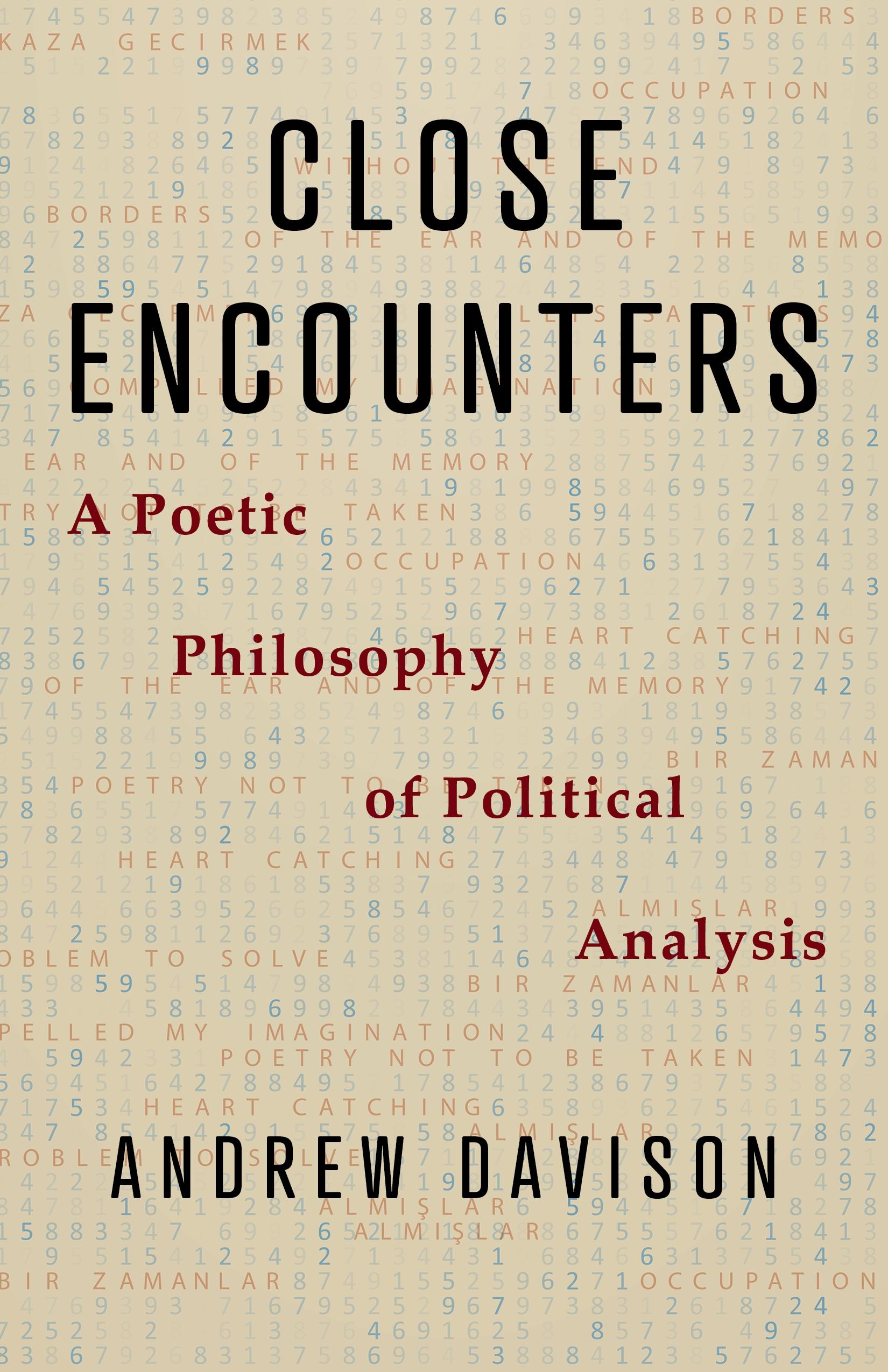
What would it look like to approach data with the care and attentiveness that we bring to a poem? Andrew Davison proposes a new philosophy of data modeled on the affective and ethical qualities of the encounter between a reader and a literary text and demonstrates its significance for understanding urgent social and political issues.
In a cross-disciplinary engagement with philosophical, literary, and political-theoretical accounts of poetic experience, Close Encounters challenges the philosophical underpinnings of dominant approaches to data analysis. Instead, Davison argues, social scientists should treat their data with the same close attention and ethical responsibility that are accorded to literary texts. In this view, quantitative and qualitative data are not only collected, coded, or constructed—they are entrusted to the care of their recipient. Such attunement yields original insight into silenced, erased, and neglected subaltern dimensions of the data. Davison demonstrates how this methodology provides fresh perspective on pressing topics such as immigration, border politics, torture, war, Trumpism, violent political speech, medical care, criminal justice, algorithmic governance, and the COVID-19 pandemic. Bringing together a strikingly original theorization of data with a rich array of examples, Close Encounters shows why the skills and methods of literary inquiry are essential to ethically sensitive data analysis.
Paga facilmente con carta, Klarna, Apple Pay o Google Pay. Non sei soddisfatto? Hai sempre 14 giorni per il rimborso. Leggi di più nei nostri termini. Per qualsiasi domanda, scrivici a hello@memmo.org.
Memmo rende lo studio più facile, ovunque tu sia nel mondo. Qui trovi i tuoi libri di testo e strumenti di studio intelligenti, tutto in un unico posto: riassunti, quiz, podcast e flashcard. E poi c'è Ted, il tuo compagno di studio che risponde a ogni tua domanda. Oltre 50.000 studenti studiano già qui: è stato creato per aiutarti a imparare più velocemente e a stressarti meno.