
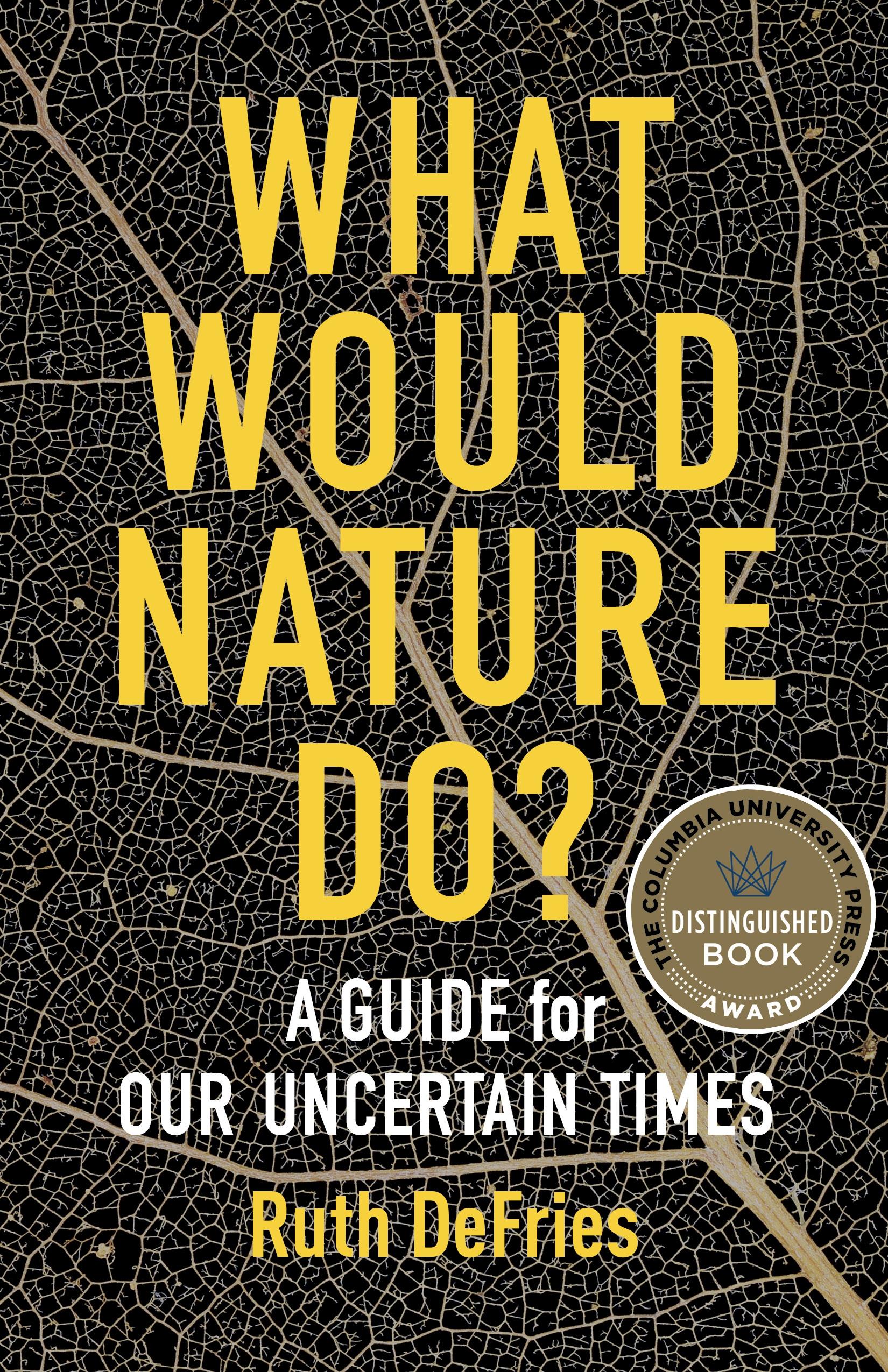
Not long ago, the future seemed predictable. Now, certainty about the course of civilization has given way to fear and doubt. Raging fires, ravaging storms, political upheavals, financial collapse, and deadly pandemics lie ahead—or are already here. The world feels less comprehensible and more dangerous, and no one, from individuals to businesses and governments, knows how to navigate the path forward.
Ruth DeFries argues that a surprising set of time-tested strategies from the natural world can help humanity weather these crises. Through trial and error over the eons, life has evolved astonishing and counterintuitive tricks in order to survive. DeFries details how a handful of fundamental strategies—investments in diversity, redundancy over efficiency, self-correcting feedbacks, and decisions based on bottom-up knowledge—enable life to persist through unpredictable, sudden shocks. Lessons for supply chains from a leaf’s intricate network of veins and stock market-saving “circuit breakers” patterned on planetary cycles reveal the power of these approaches for modern life. With humility and willingness to apply nature’s experience to our human-constructed world, DeFries demonstrates, we can withstand uncertain and perilous times. Exploring the lessons that life on Earth can teach us about coping with complexity, What Would Nature Do? offers timely options for civilization to reorganize for a safe and prosperous future.
Paga facilmente con carta, Klarna, Apple Pay o Google Pay. Non sei soddisfatto? Hai sempre 14 giorni per il rimborso. Leggi di più nei nostri termini. Per qualsiasi domanda, scrivici a hello@memmo.org.
Memmo rende lo studio più facile, ovunque tu sia nel mondo. Qui trovi i tuoi libri di testo e strumenti di studio intelligenti, tutto in un unico posto: riassunti, quiz, podcast e flashcard. E poi c'è Ted, il tuo compagno di studio che risponde a ogni tua domanda. Oltre 50.000 studenti studiano già qui: è stato creato per aiutarti a imparare più velocemente e a stressarti meno.