
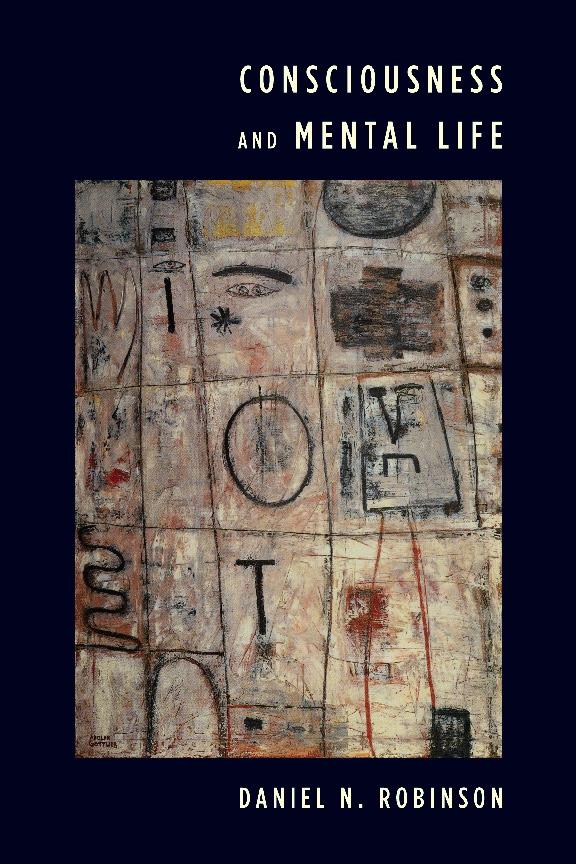
In recent decades, issues that reside at the center of philosophical and psychological inquiry have been absorbed into a scientific framework variously identified as "brain science," "cognitive science," and "cognitive neuroscience." Scholars have heralded this development as revolutionary, but a revolution implies an existing method has been overturned in favor of something new. What long-held theories have been abandoned or significantly modified in light of cognitive neuroscience?
Consciousness and Mental Life questions our present approach to the study of consciousness and the way modern discoveries either mirror or contradict understandings reached in the centuries leading up to our own. Daniel N. Robinson does not wage an attack on the emerging discipline of cognitive science. Rather, he provides the necessary historical context to properly evaluate the relationship between issues of consciousness and neuroscience and their evolution over time.
Robinson begins with Aristotle and the ancient Greeks and continues through to René Descartes, David Hume, William James, Daniel Dennett, John Searle, Richard Rorty, Hilary Putnam, and Derek Parfit. Approaching the issue from both a philosophical and a psychological perspective, Robinson identifies what makes the study of consciousness so problematic and asks whether cognitive neuroscience can truly reveal the origins of mental events, emotions, and preference, or if these occurrences are better understood by studying the whole person, not just the brain. Well-reasoned and thoroughly argued, Consciousness and Mental Life corrects many claims made about the success of brain science and provides a valuable historical context for the study of human consciousness.
Paga facilmente con carta, Klarna, Apple Pay o Google Pay. Non sei soddisfatto? Hai sempre 14 giorni per il rimborso. Leggi di più nei nostri termini. Per qualsiasi domanda, scrivici a hello@memmo.org.
Memmo rende lo studio più facile, ovunque tu sia nel mondo. Qui trovi i tuoi libri di testo e strumenti di studio intelligenti, tutto in un unico posto: riassunti, quiz, podcast e flashcard. E poi c'è Ted, il tuo compagno di studio che risponde a ogni tua domanda. Oltre 50.000 studenti studiano già qui: è stato creato per aiutarti a imparare più velocemente e a stressarti meno.