
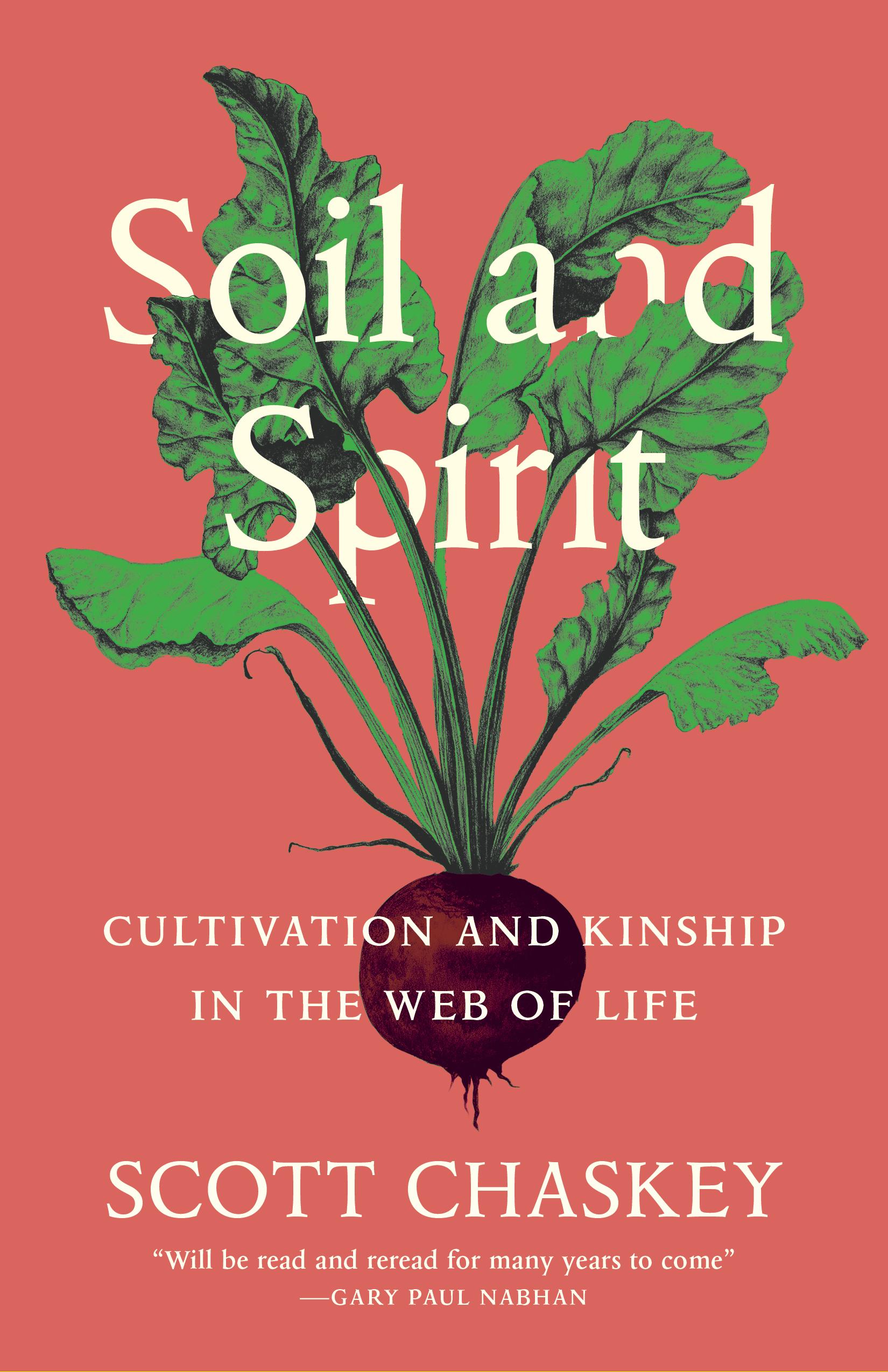
PROLOGUE: A GOLDEN FLEDGED GROWTH
In the forest of Arden Shakespeare’s Orlando hang pages of odes on trees, a poetic variation on the signals that trees exchange underground through fungal hyphae and mychorrizal social networks. His intention is romantic, and though we cannot be certain, that of the woodland plants less so, if equally ardent. We do know that we share with plants the same need and impulse to communicate, and recently we have been reawakened to our evolutionary friendship with other species, and to what Mary Evelyn Tucker calls “the ever-expanding dynamic circles of connectivity.”
Stories are born when people come together in relationship, and stories connect us with other species that share our soils, our air, and water. The challenges that confront us daily in the 21st century—familial, social, economic, political, environmental—can be overwhelming. And as we encounter what is reported as the greatest challenge humanity has collectively faced, climate disruption (the term Ralph Nader prefers, as do I), it is timely to revisit an ancient theme, an inter-species theme—our kinship with nature. In his wise and playful book, Mesquite, my friend, ethnobotanist and Franciscan Brother, Gary Paul Nabhan, introduces the Mexican rancher Ivan Aguirre: “Part of our role here on this planet is to generate riqueza. How would you best say it in English? Richness? Abundance? Diversity? We are put here to observe the natural world and to learn from its structure and vigor.”
Traditionally, in multiple cultures, academies of learning have been sited within a natural structure: a forest grove or arbor. In Ireland’s ancient Brehon law, a code of conduct, forest protection was of vital importance. Irish hedge schools, scoileanna scairte were often situated in fields, in hedgerows, within a grove of trees. The prolific 20th century Indian writer and respected educator, Rabindranath Tagore, held classes under a canopy of leaves and branches. Of your two teachers, he advised, you will gain more wisdom from the trees.
My education most closely resembles an earthen fabric, woven together throughout decades of daily attention to soil structure (both loam and mycelium), and as a curious traveler exposed to diverse landscapes. I have learned through literature and in friendship with land. My teachers: poets, pines, oaks, beech, stone, silt loam, the sharp-shinned hawk, and the windhover.
Years ago I built a home on a steep hillside above the Cornish village of Mousehole, on the Southwest coast of England, where I lived with my wife and first son for a decade. In a village built almost entirely of stone, originally of granite and slate and later concrete block—with a harbor wall dating from 1392—our house made of wood was an anomaly. I didn’t have a clue of how to build with stone—though eventually, out of necessity, I would dabble in the art of stone-hedging, a common practice in a landscape of abundant granite and slate—so timber was the material of choice. After deconstructing (carefully) a homely pre-WWII bungalow made entirely of asbestos, we raised our timber framing on the original foundation, repairing and replacing block where needed, and we left the heart of the home, the hearth and chimney, intact, for a time open to the sky. Often at a loss of how to proceed, I was saved on countless days by the intuition, strength, and practical skills of my woodworking mate, Peter Perry, a member of the Men of the Trees (now known as the International Tree Foundation). * Our labor with saws, chisels, and hammer was timed to the calls of jackdaws and gulls, and the surge of the sea on granite just below. In the strong, straight flight of the shag (a cormorant) as she skimmed the surface of the bay, I perceived a way to act and to build day by day.
To stabilize our structure—a requirement of the local Council—we engineered a truly handsome truss, known as a Queen Truss, made up of robust Douglas fir beams notched and bolted together, to bind the house in defense of the ferocious winds that seasonally assault the Penwith peninsula.
I loved the symmetry of the wooden framing against the backdrop of the green, green hillside—fuschia, bay, pittosporum, lush euonymous—and the granite retaining walls, and of course the wooden frame was an accurate, austere symbol of our significant labor; I was hesitant to enclose the space. But a roof and walls are basic necessities in a very wet climate, so I agreed to complete the job; we clad the structure in larch, milled in northern Cornwall. Before we erected the interior walls, in a gesture reminiscent of early New England house builders who often placed a coin in the space between inside and outside, I tacked sheets of poems to the fir framing. Perhaps one day a few fragments I wrote will survive, lines that resonate with the wild of Penwith: “The cliff breast shifts/ under weight of water./ Near, bare sea vowels/ foam on stone.” Should the words be lost, the melody of creation lingers in the coastal air.
When the great Northumbrian poet Basil Bunting, whom you will meet in this book, was badgered to explain the pattern, or beyond that, the meaning of his acclaimed long poem Briggflatts, he drew a series of mountain peaks that looked something like this: MMMMM. His graphic explanation is enigmatic, but also leads me deeper into the music of his poem, so I offer here my best effort to map the journey I have been moved to write: xxxMMMxxx>>>xxxIIIxxx. (A clue: the symbols all refer to natural forms).
Throughout thirty years of farming on the Southfork of Long Island, New York, my travels have led me to return to the rugged Cornish Penwith peninsula where I first learned to cultivate plants, to a pueblo in New Mexico, to the southern coast of Maine, to an international gathering of community farming activists in China, and in memory to the west coast of Ireland. The thread that binds the story I have to tell is linked to an aspect of the mythic tale of the golden bough. This golden fledged growth, a scion of an oak, serves as talisman and key for a journey. Should the traveler be allowed to free a branch from the tree, another golden bough will sprout in its place, and thus another traveler will chance to pluck a living symbol of our symbiotic relationship with fecund, numinous, endangered nature. This book, through stories of people, plants, and place explores that relationship.
The Japanese poet Matsuo Basho, known as Nature’s pilgrim, saw in the movements of sun and moon across the sky a metaphor for a journey, “years coming or going wanderers too…each day is a journey and the journey itself home.” We ourselves are whirling, day by day, within “circles of connectivity.” What you will read in this book is the pulse of the bough when plucked, the pulse of the poems within the wall, the beat of the cormorant’s wings in flight just above the sea surface, the salt spray tossing to touch the bird’s wings…all part of the “miraculous that comes so close, wild in our breast for centuries.” *
Paga fácilmente con tarjeta, Klarna, Apple Pay o Google Pay. ¿No estás contento? Siempre tienes 14 días de garantía de devolución. Lee más en nuestros términos. Si tienes preguntas, escríbenos a hello@memmo.org.
Memmo hace que estudiar sea más fácil, estés donde estés. Aquí tienes tus libros de texto y herramientas de estudio inteligentes en un solo lugar: resúmenes, quizzes, podcasts y flashcards. Y también a Ted, tu compañero de estudio que responde a todo lo que te preguntes. Más de 50 000 estudiantes ya estudian aquí. Está hecho para que aprendas más rápido y te estreses menos.