
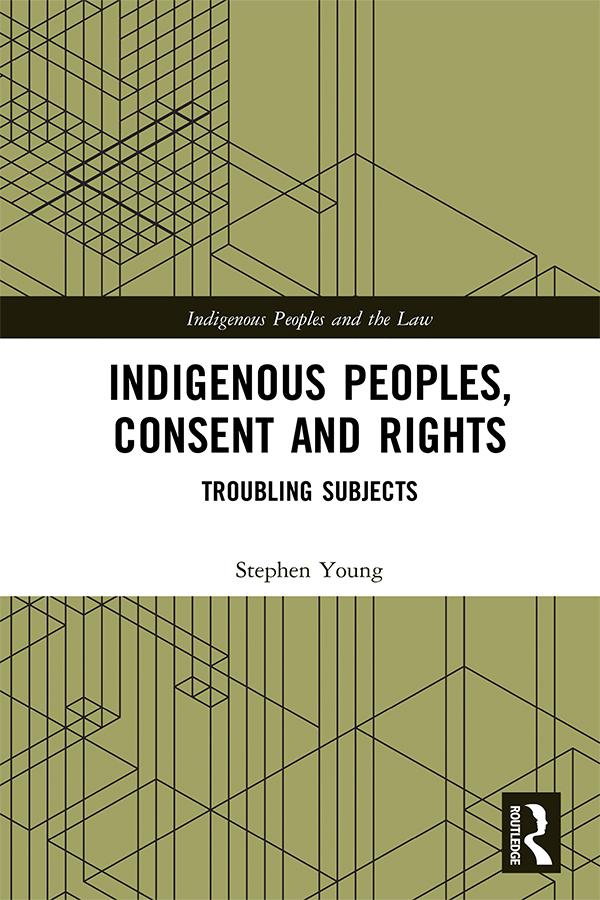
Analysing how Indigenous Peoples come to be identifiable as bearers of human rights, this book considers how individuals and communities claim the right of free, prior and informed consent (FPIC) as Indigenous peoples.
The basic notion of FPIC is that states should seek Indigenous peoples’ consent before taking actions that will have an impact on them, their territories or their livelihoods. FPIC is an important development for Indigenous peoples, their advocates and supporters because one might assume that, where states recognize it, Indigenous peoples will have the ability to control how non-Indigenous laws and actions will affect them. But who exactly are the Indigenous peoples that are the subjects of this discourse? This book argues that the subject status of Indigenous peoples emerged out of international law in the late 1970s and early 1980s. Then, through a series of case studies, it considers how self-identifying Indigenous peoples, scholars, UN institutions and non-government organizations (NGOs) dispersed that subject-status and associated rights discourse through international and national legal contexts. It shows that those who claim international human rights as Indigenous peoples performatively become identifiable subjects of international law – but further demonstrates that this does not, however, provide them with control over, or emancipation from, a state-based legal system. Maintaining that the discourse on Indigenous peoples and international law itself needs to be theoretically and critically re-appraised, this book problematises the subject-status of those who claim Indigenous peoples’ rights and the role of scholars, institutions, NGOs and others in producing that subject-status. Squarely addressing the limitations of international human rights law, it nevertheless goes on to provide a conceptual framework for rethinking the promise and power of Indigenous peoples’ rights.
Original and sophisticated, the book will appeal to scholars, activists and lawyers involved with indigenous rights, as well as those with more general interests in the operation of international law.
Paga fácilmente con tarjeta, Klarna, Apple Pay o Google Pay. ¿No estás contento? Siempre tienes 14 días de garantía de devolución. Lee más en nuestros términos. Si tienes preguntas, escríbenos a hello@memmo.org.
Memmo hace que estudiar sea más fácil, estés donde estés. Aquí tienes tus libros de texto y herramientas de estudio inteligentes en un solo lugar: resúmenes, quizzes, podcasts y flashcards. Y también a Ted, tu compañero de estudio que responde a todo lo que te preguntes. Más de 50 000 estudiantes ya estudian aquí. Está hecho para que aprendas más rápido y te estreses menos.