
How to plan your studying before the exam (without panicking)
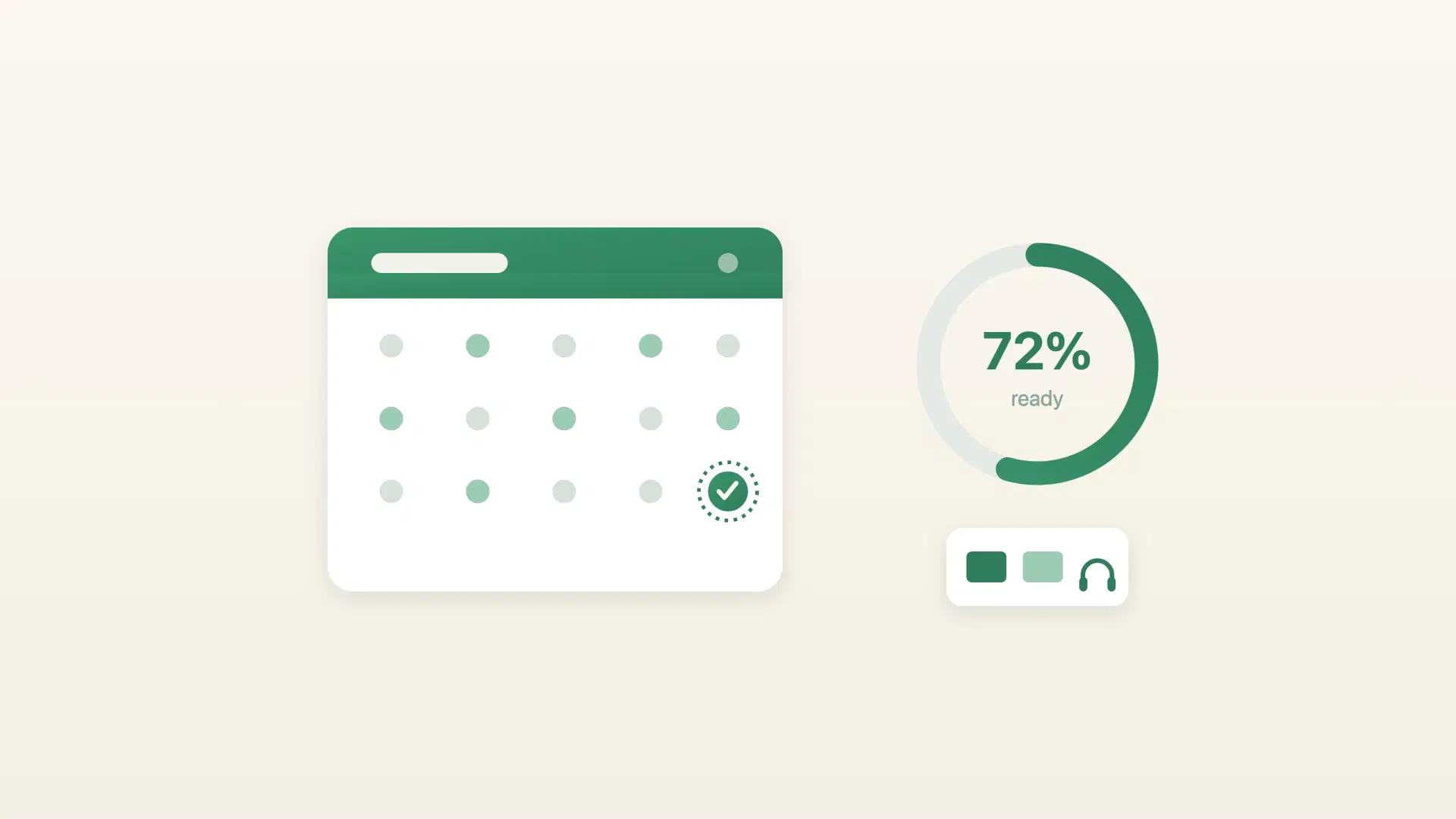
You know the feeling. The exam is three weeks away, you have a vague plan to "start studying soon," and every day that passes the deadline feels a little more like a train heading straight for you. Relax. This isn't yet another article that tells you to "plan better" and leaves you with a blank sheet of paper. Here you'll get a concrete study schedule you can copy, some research on why certain ways of studying actually work better, and an honest reminder of why most schedules fall apart.
Why you underestimate how long studying takes
There's a psychological phenomenon called the planning fallacy: we systematically underestimate how long a task will take, even when we know we tend to run late. You think "I'll knock out chapter 4 in one evening" – and then it takes three. The solution isn't to be more optimistic, but the opposite: plan with a buffer. A good rule of thumb is to add 30–50% extra time to everything you think you'll need.
The second mistake is to wait too long and then try to cram everything in the days before. The research is extremely clear here: spaced repetition beats cramming. As far back as the 1880s, Hermann Ebbinghaus mapped out the forgetting curve – how quickly we forget new information if we don't review it. By encountering the same material several times with intervals between them (the spacing effect), the curve flattens out and the knowledge sticks. In a major research review, Dunlosky et al. (2013) ranked precisely distributed practice and active recall as the two most effective study techniques of all those reviewed. Rereading the text and underlining – what we all do – ended up at the bottom.
A ready-made 3-week study schedule
Here's a realistic template for the three weeks before the exam. It's built on the principle "breadth first, depth next, testing last" – and has built-in rest days, because a schedule with no margin is a schedule that falls apart at the first cold.
| Week | Focus | Activity | Check-in |
|---|---|---|---|
| Week 1 (overview) | Build structure & understand the big picture | Go through the syllabus and lectures. Break it into sub-topics. Write a summary per chapter and build flashcards as you read. 3–4 sessions of 50 min. | Sunday: can I sketch a rough map of the whole course from memory? |
| Week 2 (deep dive) | Understand the hard parts & review | Active recall: test yourself with flashcards and quizzes before rereading. Spend most of your time on what you can't do yet. Mix subjects (interleaving). 1 rest day. | Wednesday & Sunday: which three areas are still weak? |
| Week 3 (testing & fine-tuning) | Simulate the exam & rest | Do past exams under timed conditions. Review the weak areas in short sessions. Wind down the last 2 days – no new material. Sleep. | The day before: calm, well-reviewed, well-rested – not cramming at 2 a.m. |
Notice how little "reread the chapter" actually appears in the schedule. Most of it is testing yourself. It feels harder – and that's exactly why it works. If you want to fine-tune the sessions themselves, we recommend the Pomodoro technique for focus, and our guides to spaced repetition and active recall for understanding why the schedule looks the way it does.
Be honest: an unrealistic schedule is worthless
The most beautiful study schedule in the world is worthless if you can't follow it. The most common trap is to fill every waking hour – and then give up on the entire plan the moment one day goes off the rails. So build in empty space on purpose: at least one completely free day a week, and a "buffer" each week for the things that take longer than you thought (because they will). If you need help protecting your study sessions from the rest of life, read our time management tips.
How much studying is actually enough? Let Memmo answer
The question that causes the most stress is often "have I studied enough?". It's hard to sense – and this is where Memmo's workspace comes in. The idea is simple: you create a workspace per course and gather everything in one place – your books, documents, summaries, flashcards, quizzes and podcasts. Then you set an exam date and a goal: do you want to pass, land in the middle, or aim for the top?
Based on that, the workspace shows your mastery – how ready you actually are, based on how you perform on your quizzes and flashcards, not on a gut feeling. It turns the fuzzy question "how much studying do I need before the exam?" into something concrete: if your mastery is below the goal you have more to do; if you've reached it you can spend the last days on review and sleep instead of panic. Today Memmo is used by 33,000+ students across over 5,000 courses – and the workspace is the hub that ties all this studying together into a plan you can actually follow.
FAQ
How much studying do I need before the exam?
It depends on the scope of the course and how much you already know – not on a magic number of hours. A common guideline is that a full-time university course corresponds to roughly 40 hours of study per week in total. But the most honest answer is: study until you actually know the material, measured by testing yourself. That's exactly what Memmo's mastery tracking is for – it shows when you've reached your goal so you don't have to guess.
How long before the exam should you start studying?
For a typical university course, two to three weeks of structured review is a good starting point – early enough to take advantage of spaced repetition, late enough to keep your motivation up. Heavy courses may require more. What matters isn't exactly when you start, but that you spread your studying out over several weeks instead of bunching it all up in the final days. The spacing effect needs time between reviews to work.
How do you make a study schedule?
Start at the end where the exam sits and count backwards. List everything you need to know, break it into sub-topics and distribute them across the weeks following the principle overview → deep dive → testing. Book concrete sessions (ideally 50 minutes with a break), schedule fixed check-ins where you test what you actually know, and – most importantly – leave a margin with at least one rest day a week. Use the table above as a template and adjust the number of weeks to fit your course.