
2026-04-16
Best study apps for university students (2026)
The best study apps for university students in 2026 — compared. From AI-powered platforms and flashcard tools to note-taking apps and focus timers.
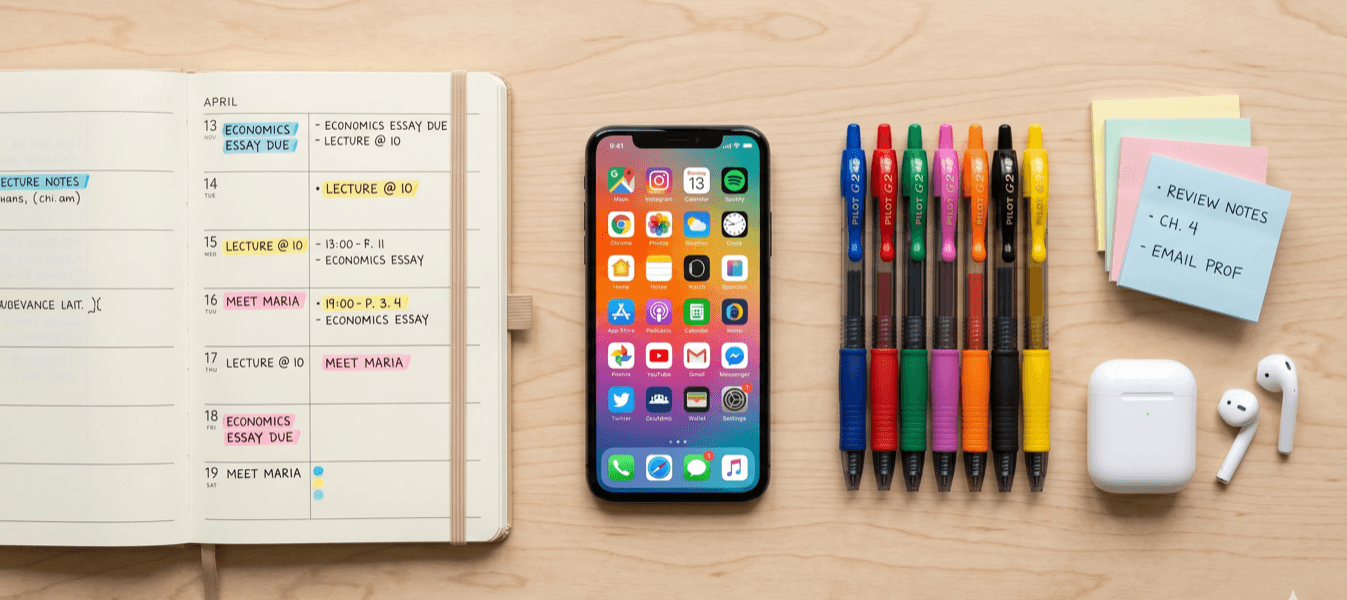
The right app can make your studying dramatically more efficient. But with hundreds of study tools available, it's hard to know which ones are actually worth your time. We've tested and compared the most popular study apps for university students in 2026 — from flashcard tools and AI assistants to note-taking apps and focus timers — so you can find the right combination for how you study.
Memmo — all-in-one study platform
Memmo combines digital textbooks, AI-generated quizzes, flashcards, summaries, podcast and an AI chat tutor in one platform. You can read your course literature, test yourself on it, and get answers to questions — all without switching apps.
- Best for: Students who want their study tools directly connected to their reading material
- Standout feature: AI quiz generation from your actual textbooks and course content
- Supports: Course books from over 500 publishers
Anki — spaced repetition flashcards
Anki is the gold standard for spaced repetition flashcards. It uses an algorithm to show you cards just before you're about to forget them, making review sessions highly efficient.
- Best for: Heavy memorisation subjects — medicine, law, languages
- Standout feature: Scientifically-backed spaced repetition algorithm
- Trade-off: Steep learning curve and time-consuming deck creation
Free on desktop and Android, paid on iOS.
Notion — flexible notes and organisation
Notion is a powerful workspace for organising notes, study plans, and project work. It's highly customisable — databases, kanban boards, calendars and linked notes.
- Best for: Students who want a single place for all academic planning
- Standout feature: Endlessly customisable workflows and templates
- Trade-off: Takes time to set up and can become overwhelming if over-engineered
Quizlet — quick flashcards and shared decks
Quizlet is one of the most popular flashcard apps worldwide, with millions of user-created decks across virtually every subject.
- Best for: Quick memorisation and finding pre-made study sets
- Standout feature: Massive library of shared decks
- Trade-off: Shared decks vary wildly in quality; limited AI features compared to dedicated tools
Forest — focus and screen-time management
Forest gamifies staying focused by growing a virtual tree while you study — if you leave the app, the tree dies. Simple concept, surprisingly effective.
- Best for: Students who struggle with phone distractions
- Standout feature: Gentle gamification that actually works
- Trade-off: Won't help you learn the material — purely a focus tool
Google Scholar — finding academic sources
Not strictly a study app, but essential for any student writing essays or theses. Google Scholar searches across academic journals, books and conference papers.
- Best for: Research and finding academic sources
- Standout feature: Free access to millions of academic papers and citation tracking
- Pro tip: Combine it with Zotero for a complete reference management workflow
Which study app should you use?
There's no single app that does everything perfectly. The best approach is to combine two or three tools that cover your main needs:
A good setup: One app for reading and course material + one for testing yourself + one for focus or planning. If you want the simplest setup, Memmo is the closest to an all-in-one solution.
Good luck with your studies!
Tried Memmo yet?
Memmo is your all-in-one study platform that helps students study smarter and get better grades. Try it for free today.