
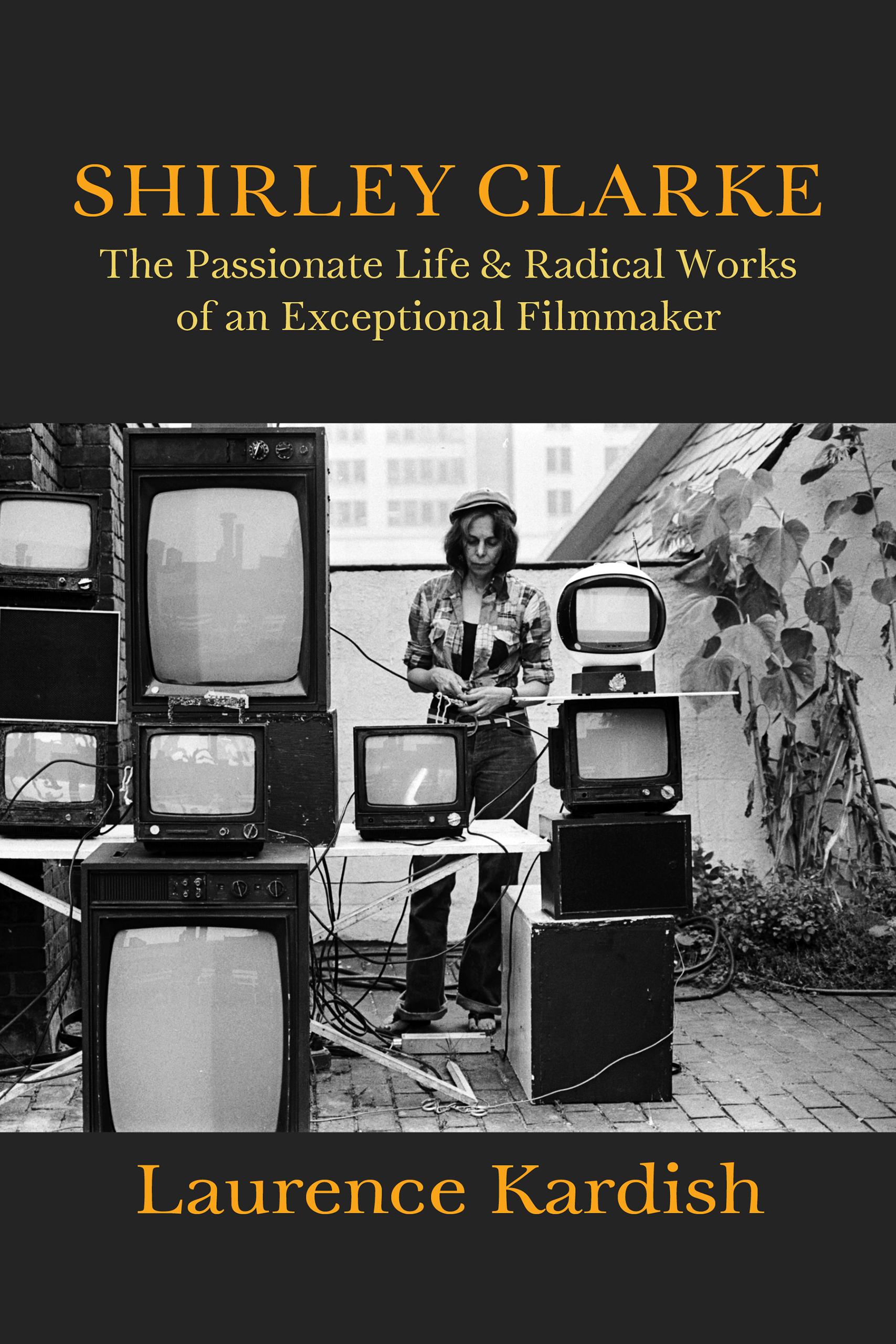
Shirley Clarke (1919–1997) was an American independent filmmaker, electronic media pioneer, and teacher who resisted the norm wherever life brought her. A decade after receiving her first camera as a wedding present, Clarke launched her film career with the short Dance in the Sun (1953). Her documentary Skyscraper (1959) garnered an Academy Award nomination, and her first feature film, The Connection (1961), adapted from Jack Gelber's off-Broadway play portraying artists with heroin addictions, sparked attention when the State of New York censored it for obscenity. While Clarke's documentary Robert Frost: A Lover's Quarrel with the World (1963) won an Oscar, she is perhaps best known for directing Portrait of Jason (1967), which features an interview with a gay Black man openly discussing his life as an entertainer and sex worker, his successes, and his experiences with discrimination. Until now, Clarke's legacy has been largely pushed to history's margins.
In Shirley Clarke, author Laurence Kardish presents a vivid portrait of a filmmaker whose life was often at odds with the societal expectations of a privileged woman born in twentieth-century New York City—a woman who admitted to being deeply conflicted about motherhood and who advocated for reproductive rights. Frequently allowing Clarke to speak through her diaries, this biography traces her life from birth to modern dance training, personal relationships, struggles with mental illness, video adventures on the roof of the Chelsea Hotel, and collaborations with creatives like Agnès Varda, Sam Shepard, and Ornette Coleman. Kardish offers an up-close account of a rebel who battled convention to depict the raw truth on screen, a filmmaker whose countercultural impact and innovations in diverse media deserve wider attention.
Pay easily by card, Klarna, Apple Pay or Google Pay. Not happy? You always have a 14-day money-back guarantee. Read more in our terms. If you have any questions, email us at hello@memmo.org.
Memmo makes studying easier – wherever you are in the world. We bring your course books and smart study tools together in one place: summaries, quizzes, podcasts and flashcards. Plus Ted, your study buddy who answers anything you wonder. Over 50,000 students already study here – built to help you learn faster and stress less.