
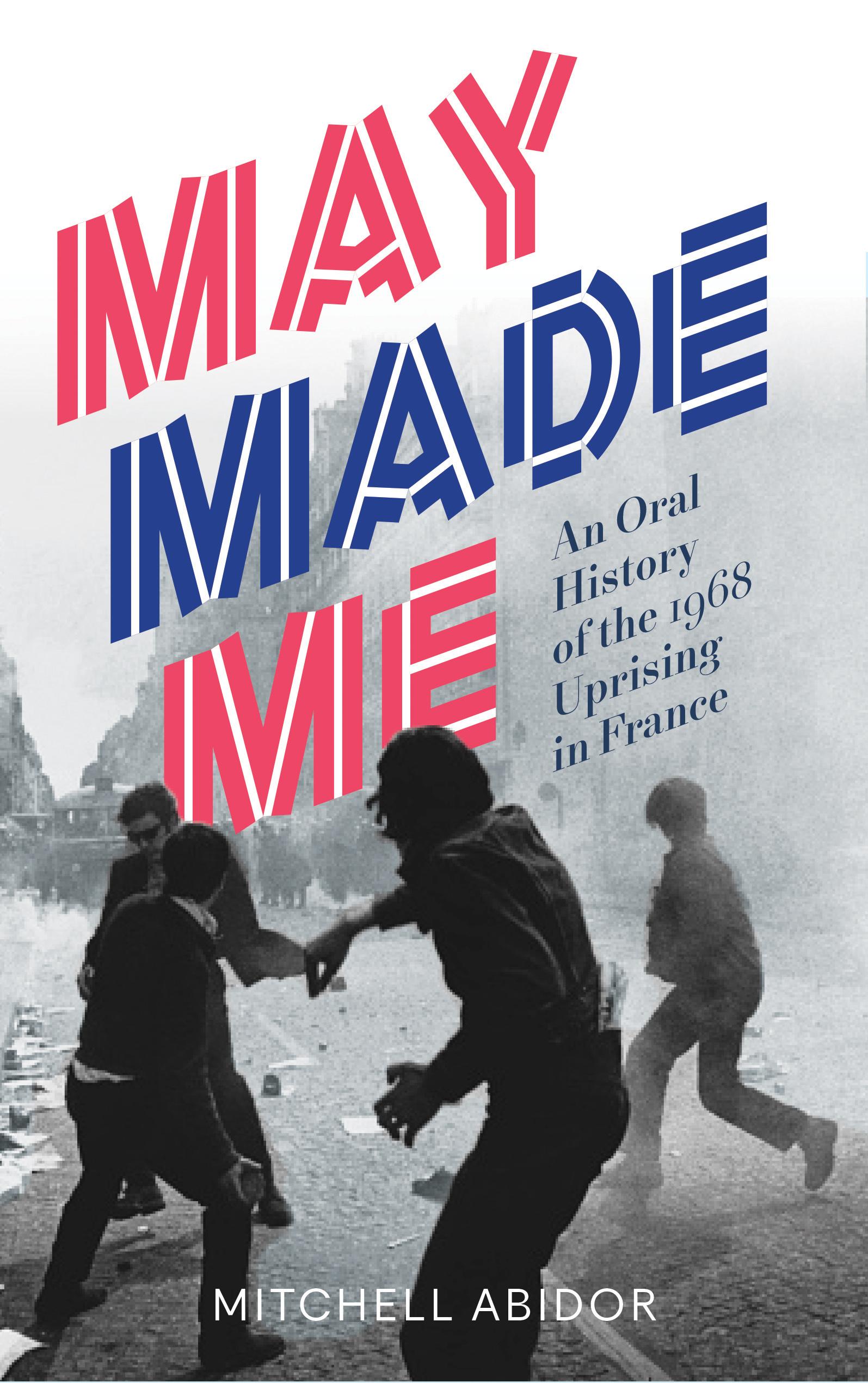
Jean-Jacques Lebel
Jean-Jacques Lebel was born in 1932 and so was older than the students by some ten years, but he "was never a student—Never went to university." He began his political life "on the left of the left" during the war in Algeria, protesting the war and doing support work for the FLN. But along with politics, Lebel, son of the important gallerist Robert Lebel, "was completely engaged as a so-called experimental artist" I thought art was a good way of expressing the non-belonging to the capitalist system and to try to invent and imagine alternatives not only to the dominant culture, but the dominant way of life.? He organized Happenings throughout Europe, befriended and translated the Beats?
So who was it that came up with the list of demands?
I did.
There?s a video of them being read to the press; was that you?
I read them to everybody from the stage. There were thousands of people there by then. What was extraordinary for me was not what we did, because actually it was extremely easy. What was really wonderful … was that people, middle-aged guys with beer bellies, came up crying on stage – we'd opened the stage to everybody – y'know: "I'm from the CGT, I've been in the Communist Party since I'm 18 and I realized it was bullshit and I didn't know what to do, and all of a sudden I realized there is an alternative and you're showing us there is an alternative; here's my party card," and he tore it up.
Guys were crying and I realized we were onto something really important, because they were transforming their very lives. People had been railroaded into being slaves, either of the boss in the factory or of the union or of the party, they were always subdued into obeying orders by the bureaucrats or the bosses. And all of a sudden they realized they could be freer if they joined forces with other human beings who wanted the same things. And we saw this in front of our own eyes. And we saw a social movement growing, thanks to this small little thing that we had done. We saw people coming from all walks of life, there was a general strike, and people hitchhiked from Marseilles, from all over France, and even from other countries to say "We're with you." People who were the age of our grandparents. And then we realized we were onto something really fundamental. I saw this happening right before my eyes, and I want to tell you that to this day it's the most important and radical thing I'd ever dreamt I could live in my whole life.
And for me it's the high point of my entire existence.
You were at the heart of all this, so at this point did you think something was going to be forever changed?
Yes. That was the problem. We did have some notions of history; we knew what had happened at the Commune, that there was the Bloody Week and on the anniversary of the Commune we took the Stock Exchange, though at first we were going to go to the Hotel de Ville, since it was the anniversary of the Paris Commune, but somebody in the police told us not to do it, that they had machine guns there. … So the police set up machine guns in the courtyard of the H?tel de Ville, and if they break down the doors, you shoot. In other words, a bloodbath. A fucking bloodbath. There would have been hundreds of dead. So we heard this and I think it was some of the Freemasons who were in the police who came up and said they're waiting for you, it's a trap. So we had a secret meeting of about twenty of us, and said we have to find an alternative and we have to celebrate the anniversary of the Commune, but we can't go to the H?tel de Ville, so I said we'll pretend we're going there, with a mass demonstration of 1,000,000 people, but just when we get to the right place on the Grand Boulevard we turn and head to the Stock Exchange instead. We don't tell anybody that, but at the last minute, when we pass near it, we say "This way" and we take over the Stock Exchange. It was as simple as that. There was nobody in the building, it was easy to break down the doors, and somebody took some gasoline and set it on fire. And the next day the stocks dropped 30%. We were right in the heart of capitalism, and it was a game, but it was also a serious game.
You were only three weeks into it at this point, and you're still optimistic that this is going to lead to something.
I was always optimistic. Even when things started getting bad. When I realized things were trapped into old models is when a bunch of Trotskyites formed a chain to try to stop the demonstrations. These young Trots were controlling and authoritarian in '68, just like the 1917 Bolchos were: it was a repetitive pattern.
So everything's going great, and there are things happening all over France?
It was going on all over. There was New York, with Columbia, there was Berlin... It was enormous.
So it would have been perfectly normal to think this is it.
Something's happening that is of a different quality. It's not revolution in the sense of armed revolution, because we know that leads to a bloodbath. … What we have to do is invent a way for these situations of personal, intimate subversion of peoples' lives without the military impact. In other words, we have to integrate the paranoia of the adversary into the game. And that was very difficult. And then we started realizing that the PCF was in fact the main enemy of his movement.
Pay easily by card, Klarna, Apple Pay or Google Pay. Not happy? You always have a 14-day money-back guarantee. Read more in our terms. If you have any questions, email us at hello@memmo.org.
Memmo makes studying easier – wherever you are in the world. We bring your course books and smart study tools together in one place: summaries, quizzes, podcasts and flashcards. Plus Ted, your study buddy who answers anything you wonder. Over 50,000 students already study here – built to help you learn faster and stress less.
You might also like
Buy the book0